


For the most reliable aurora forecast in Finland, start with two sources: the Finnish Meteorological Institute (FMI) auroras and space weather page and NLAlert’s Lapland-specific forecast. The FMI’s R-index, drawn from local magnetometer stations across Finland, gives you far more precise site-level guidance than the global Kp index alone. Right now, here is what to do:
- Open the FMI R-index map and look for yellow squares (possible activity) or red rhombuses (high probability) near your target region.
- Check an all-sky camera feed to confirm your northern horizon is actually clear of clouds.
- Enable push alerts on NLAlert so you get 30–60 minutes of lead time before a substorm peaks.
- Verify cloud radar for your specific site before you drive anywhere.
Table of Contents
- Where in Finland should you go, and when?
- The best real-time sources for a Finland aurora forecast
- How to read R-index, Kp, and magnetometer data for your site
- Your Finland aurora outing checklist
- How to monitor conditions through the night
- Key Takeaways
- The part most guides skip
- Plan your aurora nights from a Pyhä base with Sundaymorning
- Useful sources to bookmark
Where in Finland should you go, and when?
Lapland sits at the highest magnetic latitudes in Finland, which means it sees auroras far more often than central or southern regions. From Rovaniemi northward, you can realistically expect visible displays on many clear nights during the dark season. Central Finland catches strong events, and southern cities like Helsinki see auroras only during elevated geomagnetic activity.
March and early April are particularly favorable in Northern Finland, combining long dark hours with historically good weather windows, according to FMI’s seasonal guidance.
The practical season runs from late August through early April. Summer is a non-starter: the midnight sun keeps the sky too bright. Fall and spring equinox windows are especially productive because of how the solar wind interacts with Earth’s magnetosphere during those periods, producing stronger geomagnetic storms near the equinoxes. Nightly, the most active window is typically 10 PM–2 AM local time, though strong substorms can extend activity into the early morning hours.
The best real-time sources for a Finland aurora forecast
Finnish Meteorological Institute (FMI): The FMI auroras and space weather page is your primary tool. It displays the R-index as colored markers on a map of Finland’s magnetometer stations: yellow squares signal possible activity, red rhombuses indicate high probability. A 24-hour bar chart shows geomagnetic disturbance history at each station, so you can see whether activity is building or fading.
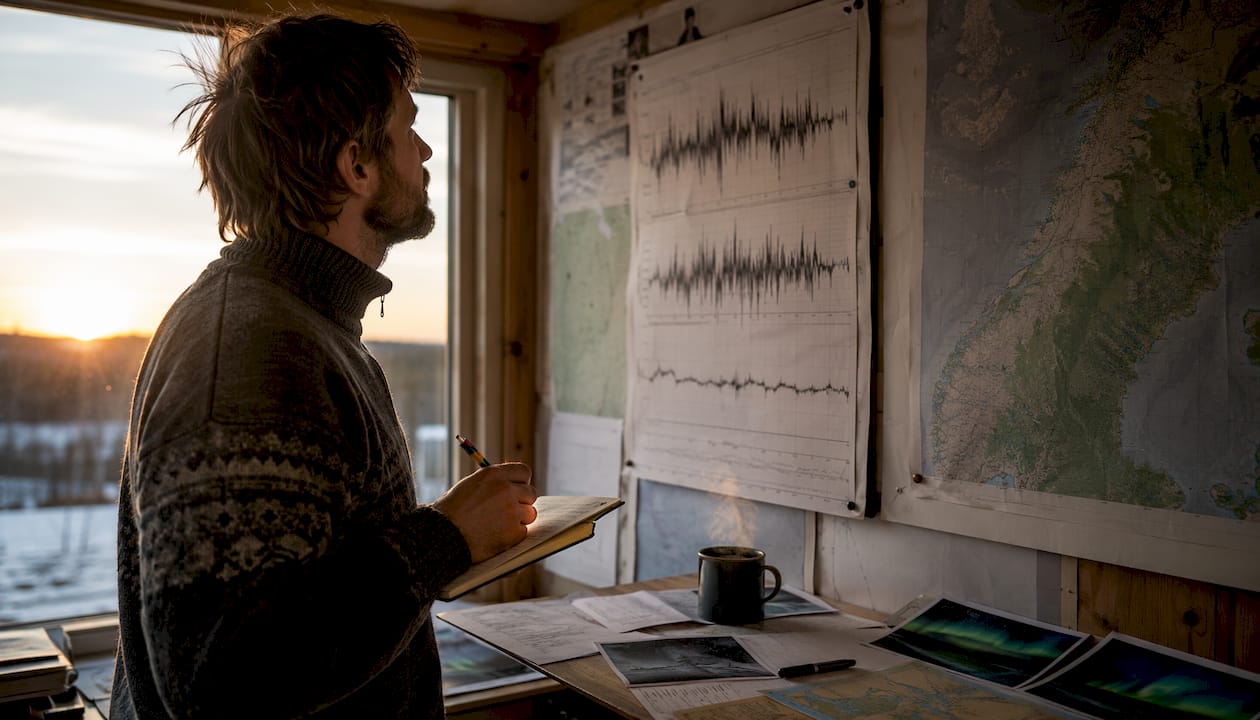
NLAlert: This service focuses specifically on Lapland and Finnish aurora conditions. It delivers local forecast points and push alerts calibrated to northern Finland’s geography, and it often differs from the global Kp picture when a localized substorm is underway.
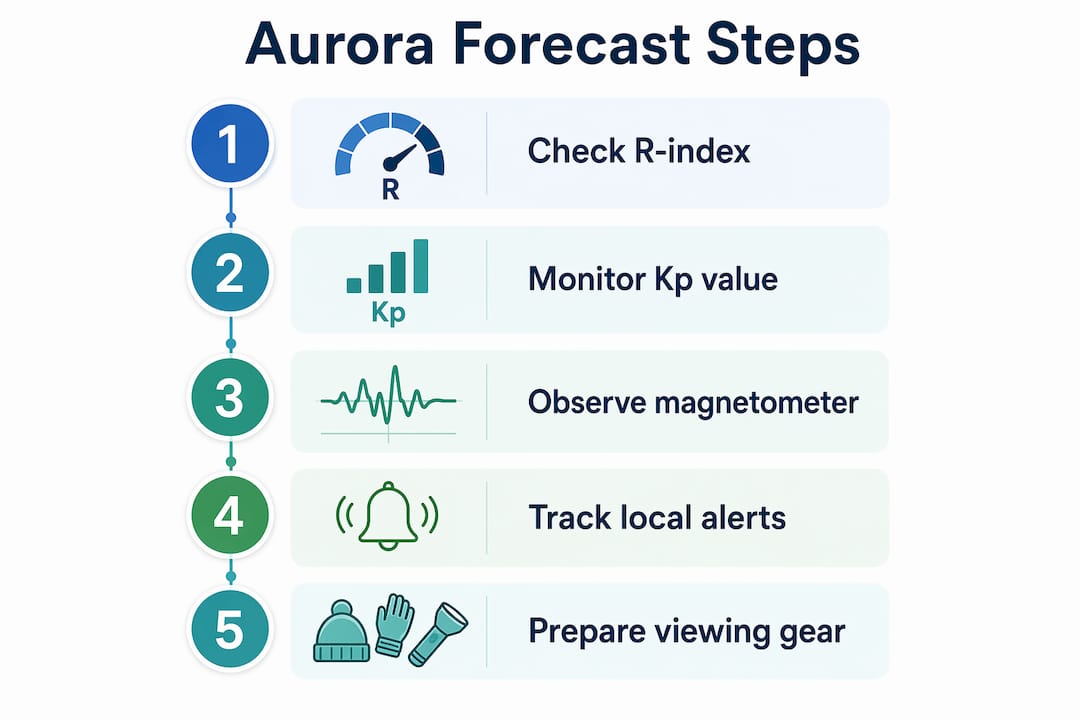
Sodankylä Geophysical Observatory: The observatory in northern Lapland publishes magnetometer data and all-sky camera images that are especially useful for confirming activity in the heart of Finnish Lapland.
Regional threshold pages: Services like Aurora Forecast Finland list magnetic latitudes and Kp thresholds for major Finnish cities and regions, giving you a quick reference for whether your specific location is in range.
How to check in three steps:
- Open the FMI R-index map and identify the nearest magnetometer station to your site.
- Pull up an all-sky camera for that region and confirm a clear northern horizon.
- Cross-check cloud radar and moon phase before committing to the drive.
How to read R-index, Kp, and magnetometer data for your site
The R-index measures the rate of magnetic field change over 10-minute intervals at each Finnish station. A yellow marker means the rate of change has crossed the lower threshold; red means it has crossed the higher one and aurora is likely visible overhead. This local measurement is what matters for deciding whether to leave your cabin tonight.
Kp is a global average, and it can mislead you. A Kp of 3 might look promising on a world map but produce nothing visible at your Finnish site if the activity is concentrated elsewhere. Conversely, a localized Finnish substorm can light up the sky with a Kp of just 2. Local magnetometer data consistently outperforms Kp for short-term, site-level decisions.
Pro Tip: Watch the rate-of-change pattern across multiple nearby stations over 30–60 minutes. A single spike at one station can be noise. When several stations show a simultaneous rapid rise, that coherent signal is a genuine substorm, and brightening overhead usually follows within minutes.
Your Finland aurora outing checklist
A good forecast only converts to a sighting if the rest of your plan holds together. Work through this before you head out:
- Sites: Pick a primary location and a backup within 30–50 km, both with an unobstructed northern horizon and minimal light pollution.
- Cloud radar: Check within 6 hours of your planned departure. Moving 30–50 km perpendicular to a cloud front often finds clearer skies.
- Moon phase: Aim for nights within 5–7 days of a new moon. A bright moon washes out faint aurora structure.
- Darkness window: Confirm nautical or astronomical twilight times for your latitude; in Lapland, full darkness arrives earlier in winter.
- Road and access conditions: Check Finnish road authority updates, especially for remote forest tracks in winter.
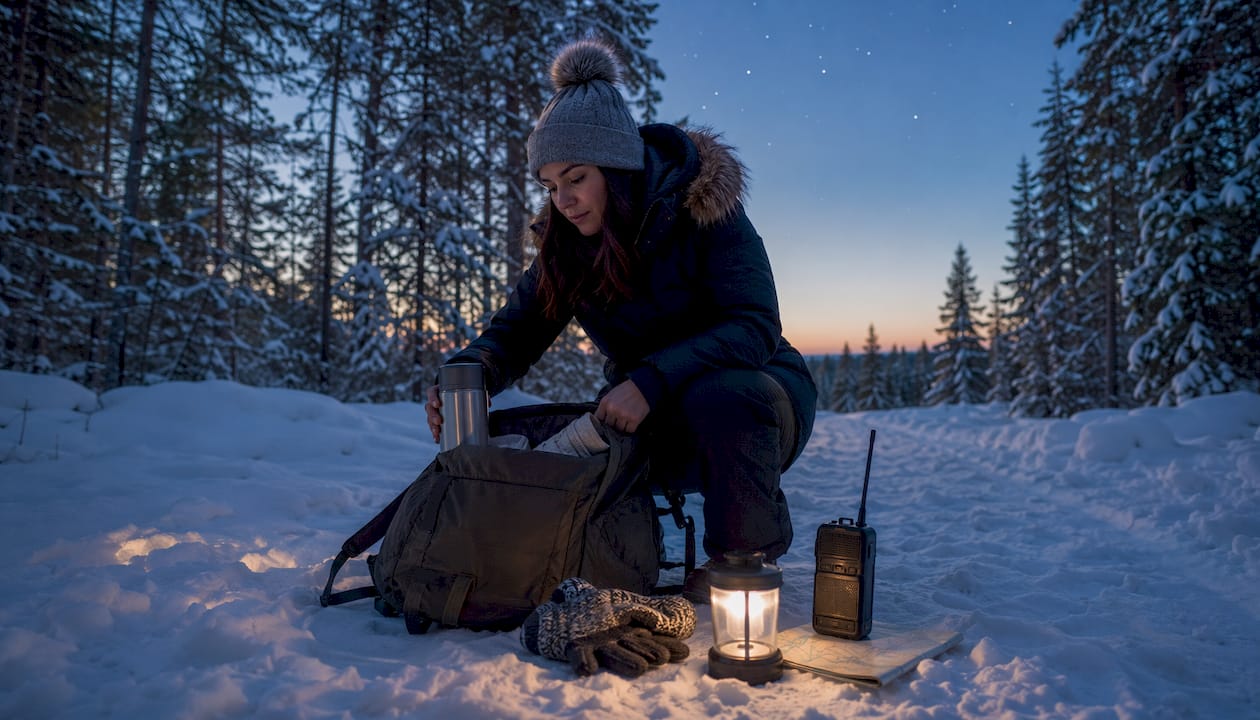
- Photography gear: Bring a sturdy tripod, a camera capable of manual settings, and extra batteries (cold drains them fast). Start with a moderate to high ISO setting, the widest aperture your lens allows, and exposures lasting a few seconds to tens of seconds. Long exposures reveal colors the naked eye often misses.
- Safety: Dress in proper Arctic layers, share your location plan with someone, and carry a charged power bank and emergency kit.
How to monitor conditions through the night
Once you are on-site and alerts are active, a simple 15–30 minute routine keeps you informed without gluing you to your phone.
| Check | What to look for | Frequency |
|---|---|---|
| FMI R-index map | Yellow or red markers at nearby stations | Every 15–30 min |
| All-sky camera | Clear northern horizon, faint glow or arc overhead | Every 15–30 min |
| Cloud radar | Cloud edge moving toward or away from your site | Every 30 min |
| NLAlert push notification | Substorm alert with predicted peak window | As received |
Predictive alerts that give 30–60 minutes of lead time are the most useful: they let you travel calmly to your dark site and set up before the substorm peaks, rather than scrambling after the fact. If the all-sky camera shows a clear horizon and the R-index is climbing at two or more nearby stations, stay put and keep watching.
Key Takeaways
For Finland aurora viewing, the FMI R-index combined with NLAlert push alerts gives you the most reliable, site-specific picture available.
| Point | Details |
|---|---|
| Use FMI R-index first | Yellow squares mean possible; red rhombuses mean high probability at that station. |
| Kp is a starting point only | Local magnetometer trends at Finnish stations are more reliable for site-level decisions. |
| March and early April stand out | FMI highlights these months as particularly favorable in Northern Finland. |
| Moon phase and cloud cover matter | Aim for new-moon windows and verify cloud radar within 6 hours of heading out. |
| Sundaymorning in Pyhä | Staying at a Sundaymorning property puts you minutes from dark sites with guided aurora tours timed to live forecasts. |
The part most guides skip
There is a gap between reading a forecast and actually seeing the lights, and it comes down to patience and positioning. Most people check Kp once, drive out, look north for ten minutes, and go home disappointed. The real skill is arriving 30–60 minutes early, letting your eyes dark-adapt for 15–20 minutes without white phone light, and then staying through at least two substorm cycles. A quiet night can erupt into a full-sky display at 1 AM after looking flat at midnight.
The other thing worth saying plainly: comfort and mobility are in tension on an aurora night. A warm car is tempting, but it resets your dark adaptation every time you open the door. A backup site matters more than most people realize. If clouds roll in and you have no plan B, you lose the night. Pick your two locations before you leave, know the drive time between them, and commit to moving if the cloud radar says to.
Plan your aurora nights from a Pyhä base with Sundaymorning
Staying close to your viewing sites makes every forecast more useful. Sundaymorning’s properties in Pyhä sit inside Pyhä-Luosto National Park, minutes from genuinely dark skies and well away from town light pollution. The Arctic Winter Getaway Package includes guided Northern Lights tours timed to live forecast windows, so you are not figuring out the R-index alone at midnight.
Guides at Sundaymorning monitor FMI alerts and NLAlert through the night and can wake you when conditions turn favorable, which is the single biggest advantage of a guided stay over a self-planned outing. Browse luxury accommodation options in Pyhä and check current package availability to plan your stay around the best forecast windows of the season.
Useful sources to bookmark
- FMI Auroras and Space Weather: R-index map, 24-hour magnetometer bars, and station-level thresholds for all of Finland. Your first stop every night.
- FMI Auroras in Finland: Seasonal context, historical frequency maps, and guidance on the best months by region.
- NLAlert: Lapland-focused push alerts and local forecast points; pairs well with FMI for real-time decisions.
- Sodankylä Geophysical Observatory: All-sky camera feeds and magnetometer data from the heart of Finnish Lapland.
- NOAA Space Weather Prediction Center: Kp maps, equatorward extent charts, and timing guidance for broader context.
- Sky & Telescope aurora guide: Practical photography settings and color-perception notes for first-time aurora photographers.
Recommended
- Aurora Tour Lapland | Northern Lights Tour in Pyhä | Sunday Morning Collection
- Autumn Aurora Package Finland: What to Expect | Sunday Morning Collection
- Where Are You Most Likely to See the Northern Lights in Lapland? (A Practical Guide) | Sunday Morning Collection
- Aurora Tour in Pyhä, Finnish Lapland | Sunday Morning Collection
