


TL;DR:
- A thorough family arctic packing checklist emphasizes the importance of a three-layer clothing system to stay warm in freezing temperatures. Proper insulated waterproof boots and daily skin protection are essential for outdoor comfort and safety. Organizing and renting gear for children helps reduce stress, ensure proper fit, and manage luggage costs during Arctic trips.
A thorough family arctic packing checklist is the single most important step before your trip to Finnish Lapland or any Arctic destination. The Arctic demands a three-layer clothing system for temperatures that regularly drop to -15°C and below, plus waterproof protection, skin care, and smart organization for every family member. Getting this right means your kids stay warm, dry, and happy through husky safaris, snowmobile rides, and Northern Lights walks. Get it wrong, and even a short time outdoors becomes uncomfortable fast. This guide covers every category your family needs, from base layers to boots to battery care.
1. What belongs on a family arctic packing checklist first: the three-layer system
The layering system is the foundation of every cold-weather packing list for Arctic family travel. It works by trapping warm air close to the body while moving moisture away from the skin. Each layer has a specific job, and skipping one creates a weak point in the whole system.
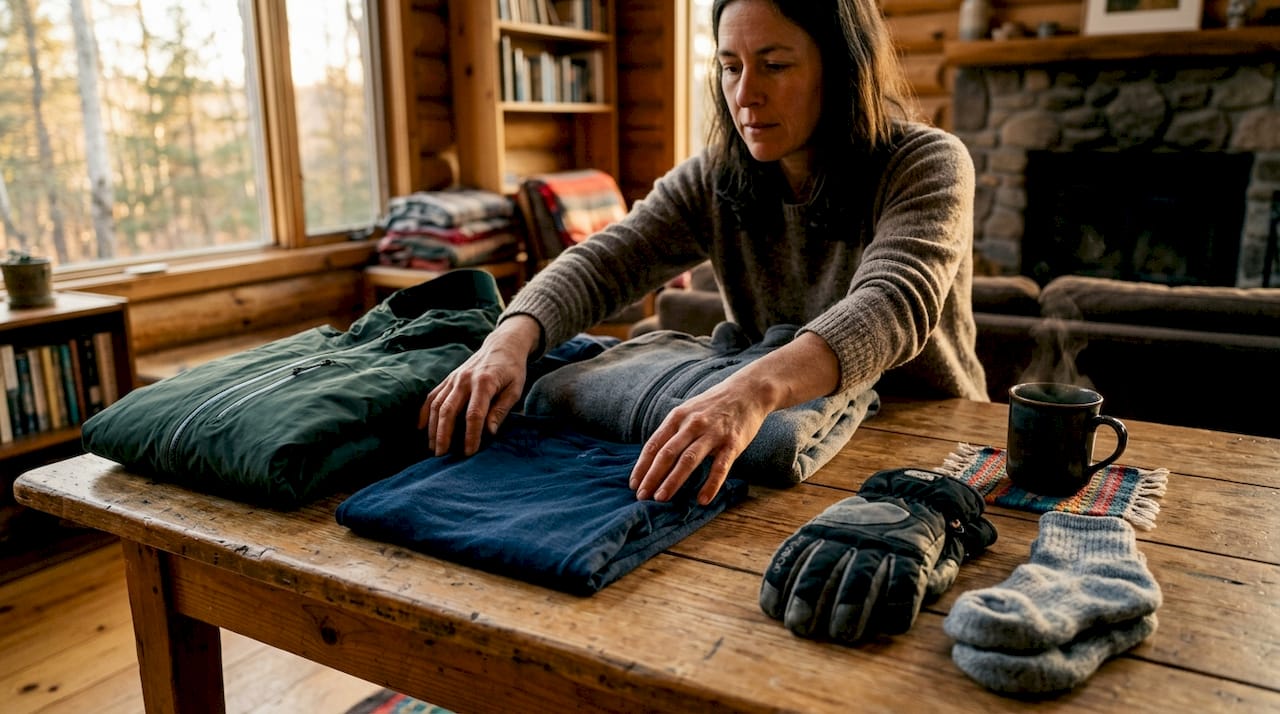
Base layer sits directly against the skin. It must be moisture-wicking to pull sweat away and keep your family dry. Merino wool or synthetic fabrics are the right choice here. Cotton is the wrong choice. Cotton holds moisture, which causes rapid heat loss in cold air. Pack at least 2–3 sets per person for a week-long trip so you always have a dry set ready.
Mid-layer provides insulation. A fleece jacket or a lightweight down jacket traps the warm air your body generates. A versatile fleece plus a lightweight puffy jacket makes an ideal mid-layer combination. This pairing lets you adjust warmth based on activity level, which matters when kids go from sitting on a reindeer sleigh to running around in the snow.
Outer layer is your shield against wind and moisture. Waterproof membranes like Gore-Tex are the standard for Arctic outerwear. Water-resistant fabrics are not enough for prolonged exposure to melting snow and wind. Your outer shell must be both windproof and fully waterproof with a breathable membrane.
- 2–3 moisture-wicking base layer sets per person (merino wool or synthetic)
- 1 fleece mid-layer jacket per person
- 1 lightweight down or synthetic puffy jacket per person
- 1 waterproof, windproof outer shell jacket per person
- 1 pair of waterproof outer shell pants per person
Pro Tip: Choose slim-fitting base layers and lightweight mid-layers. Bulky sweaters restrict movement and make it harder for kids to dress and undress quickly when going indoors.
Arctic packing logic differs from ski trip packing in one key way. Ski trips involve high-output activity that generates body heat. Arctic family activities like husky safaris and Northern Lights tours are often static, meaning your body generates less heat and you rely more on your layers to stay warm.
2. Boots, footwear, and keeping feet warm all day
Footwear is the item families most often underestimate on a winter family adventure checklist. Cold feet end outdoor activities faster than anything else, especially for young children.
Boots must have minimum 400g insulation and anti-slip soles for safe movement on icy surfaces. Thin fashion snow boots do not meet this standard. Look for boots rated for -30°C or lower to give yourself a real safety margin. For children, fit matters as much as insulation. A boot that is too large lets cold air circulate inside and causes blisters.
Snow pants worn over the top of boots prevent snow from getting inside. This detail is especially important for children, who tend to kneel, fall, and sit directly in the snow. Snow entering a boot melts quickly against warm skin and causes rapid cooling. Pulling pants over boots takes five seconds and prevents a lot of misery.
Pack at least two pairs of wool or thermal socks per person per day. Wet socks are the most common cause of cold feet, and having a dry pair ready makes a real difference. Quick-drying materials work best here.
3. Accessories that protect your family from Arctic conditions
Accessories complete your cold weather packing list and protect the parts of the body most exposed to wind and cold. Hands, heads, faces, and skin all need specific attention in Arctic conditions.
- Gloves and glove liners: Pack a waterproof outer glove and a thin liner glove for each person. The liner adds warmth and lets you use touchscreens without removing the outer glove.
- Beanies and neck warmers: A warm beanie that covers the ears is non-negotiable. A neck warmer or balaclava protects the face and neck during outdoor activities.
- Sunglasses: Snow reflects UV light intensely. Sunglasses protect eyes from glare and reduce fatigue on bright days.
- Sunscreen: Polar air and snow glare reflect UV radiation even in winter. Apply sunscreen to exposed skin every morning.
- High-factor moisturizer and lip balm: Arctic air is extremely dry. Apply moisturizer and lip balm morning, noon, and night to prevent painful cracking and chapping for every family member.
- Heat packs: Adhesive heat packs add warmth inside gloves or boots. Never apply heat packs directly on skin, especially on children. Always place them over at least two layers of clothing to avoid low-temperature burns.
Pro Tip: Buy a separate set of gloves and a beanie for each child and keep them in a single accessible pocket of your day bag. Kids lose accessories constantly, and having a backup set on hand saves the day.
The Sundaymorning what to pack guide for Lapland covers the three-layer system in detail and is worth reading alongside this list before you travel.
4. How to pack and organize Arctic gear for your whole family
Smart organization saves time and reduces stress when you are dressing children in cold conditions. The goal is to make every item easy to find and quick to put on.
- Bundle each child’s daily outfit. Pack one complete outfit, including underwear, thermals, and socks, into a labeled zip-lock bag or packing cube. Labeling and bundling daily outfits dramatically cuts dressing time and reduces cold exposure frustration.
- Use the roll method and vacuum compression bags. Bulky items like fleece jackets and down puffies compress well. Rolling clothes instead of folding them saves space and keeps items wrinkle-free.
- Wear your bulkiest items on the plane. Wear your outer shell jacket and heaviest boots during travel. This frees up significant luggage space for other gear.
- Store electronics and batteries inside inner pockets. Sub-zero temperatures drain batteries quickly. Keep your phone, camera, and spare batteries in an inner clothing pocket close to your body to maintain their charge.
- Keep outerwear separate and accessible. Store outer shell jackets and snow pants in a separate bag or at the top of your luggage. You will need them the moment you step off the transfer vehicle.
Pro Tip: Consider renting gear for children rather than buying full snowsuits. Kids outgrow expensive gear fast, and many high-end Arctic resorts offer rental packages that reduce both luggage weight and cost.
For families who want a ready-made packing framework, the StayOver seasonal packing guide offers useful general principles for organizing gear across different climates and trip types.
5. Special considerations for children’s Arctic gear and safety
Children need the same three-layer system as adults, but with a few extra considerations for safety and practicality. The minimum recommended age for Arctic family trips is 5 years old. Children younger than 5 face real challenges handling extreme cold safely, particularly during active outdoor experiences like husky sledding.
Key guidelines for dressing and equipping children:
- Prioritize function over brand. Windproof and waterproof qualities matter far more than labels. A well-fitted, fully waterproof snowsuit from a mid-range brand outperforms an expensive but poorly sealed premium one.
- Check fit carefully. Boots and gloves that are too large let cold air in. Clothing that is too tight restricts circulation and reduces warmth.
- Layer light indoors. Children overheat quickly when moving from cold outdoor air into warm buildings. Dress them in light layers indoors so they can cool down without removing everything.
- Keep children dry above all else. Wet clothing against skin causes rapid heat loss. Change wet base layers immediately, even if it means a short trip back indoors.
- Use heat packs safely. Place adhesive heat packs over at least two clothing layers, never directly on skin. Monitor children for any signs of discomfort.
For age-appropriate activity ideas and family-specific advice, the Sundaymorning family adventures guide covers what to expect with children of different ages in Finnish Lapland.
Key takeaways
A complete family Arctic packing checklist requires a three-layer clothing system, waterproof footwear with minimum 400g insulation, and daily skin protection against dry polar air and UV reflection.
| Point | Details |
|---|---|
| Three-layer system is non-negotiable | Pack moisture-wicking base layers, insulating mid-layers, and a waterproof outer shell for every family member. |
| Boots need real insulation | Choose boots rated for -30°C with anti-slip soles; pull snow pants over boots to block snow ingress. |
| Skin care is daily maintenance | Apply high-factor moisturizer, lip balm, and sunscreen morning, noon, and night in Arctic conditions. |
| Bundle kids’ outfits by day | Label daily outfit bundles with thermals and socks to speed up dressing and reduce cold exposure. |
| Rent gear for children | Rental snowsuits and boots save luggage weight and cost, since children outgrow Arctic gear quickly. |
Packing for the Arctic: what I’ve learned after many Lapland winters
The most common mistake families make is packing the same way they would for a ski trip. Ski trips involve constant movement and high body heat output. Arctic family activities are often slow and still. You stand watching the Northern Lights, sit on a reindeer sleigh, or wait quietly on a husky safari. Your body generates far less heat in those moments, and your layers carry all the work.
The second mistake is over-investing in children’s gear before the trip. Kids grow fast, and a snowsuit that fits perfectly in november may be too small by the following winter. Rental gear is the smarter call for most families, and the best Arctic resorts make it easy to arrange in advance.
The detail I see families skip most often is skin care. Moisturizer and lip balm feel like minor additions to a cold weather packing list, but the dryness of polar air is genuinely intense. Cracked lips and raw skin make everyone miserable by day two. Pack a small tube of high-factor moisturizer for each person and treat it as seriously as you treat your base layers.
Finally, the labeling system for children’s daily outfit bundles is the single most practical tip I can offer. When you are standing in a cold lodge trying to dress a five-year-old before a morning activity, having every item in one labeled bag is worth more than any piece of gear you packed.
— Juho
Your family’s Arctic adventure starts with the right base
Planning a family trip to Finnish Lapland is exciting, and having the right gear sorted in advance means you can focus on the experience itself. Sundaymorning, based in Pyhä-Luosto National Park, offers Arctic winter getaway packages designed specifically for families, with activities like husky safaris, reindeer rides, and Northern Lights tours built into each stay.

Sundaymorning’s boutique resort and Parkside Pyhä Apartments provide warm, comfortable accommodation where you can return from outdoor adventures to a cozy, well-equipped space. The team can also advise on local gear rental options so you arrive prepared without overpacking. Explore luxury accommodation in Lapland and find the right package for your family’s winter adventure.
FAQ
What is the most important item on a family Arctic packing checklist?
The three-layer clothing system is the most critical element. Every family member needs moisture-wicking base layers, an insulating mid-layer, and a fully waterproof outer shell to stay safe and warm in Arctic conditions.
What boot insulation rating do children need for Arctic travel?
Children’s boots need a minimum of 400g insulation and anti-slip soles for Arctic temperatures. Snow pants should be worn over the boots to prevent snow from entering and causing rapid cooling.
How do you protect children’s skin in Arctic weather?
Apply high-factor moisturizer, lip balm, and sunscreen to all exposed skin morning, noon, and night. Polar air is extremely dry, and UV reflection from snow intensifies sun exposure even in winter.
Is it worth buying full Arctic gear for young children?
Rental gear is the practical choice for most families with young children. Kids outgrow expensive snowsuits quickly, and many high-end Arctic resorts offer rental packages that reduce both cost and luggage weight.
What is the minimum age for children on an Arctic family trip?
The recommended minimum age is 5 years old. Children younger than 5 face greater challenges handling extreme cold safely, particularly during active outdoor activities like husky sledding.
