


TL;DR:
- True wilderness resorts combine luxury, remoteness, and minimal environmental impact for authentic experiences.
- Certifications like GER and REGENERA ensure genuine eco-consciousness and regenerative practices.
- In Lapland, these resorts offer exceptional Northern Lights viewing, Sámi culture, and sustainable Arctic nature experiences.
When most people hear “wilderness resort,” they picture a tent, a campfire, and a sleeping bag that’s seen better days. The reality is far more inviting. Today’s true wilderness resorts blend luxury accommodation in Lapland with raw, undisturbed nature in ways that feel both effortless and intentional. In Finnish Lapland, that means waking up to a snow-covered forest, stepping into a warm sauna, and watching the Northern Lights from the comfort of a private chalet. This guide breaks down exactly what defines a wilderness resort, how to spot the real thing, and why Lapland sits at the forefront of this growing movement.
Table of Contents
- The essential elements of a wilderness resort
- Standards and certifications: Beyond greenwashing
- Wilderness resort versus legal wilderness: A nuanced distinction
- Hallmarks of Arctic wilderness resorts in Finnish Lapland
- Why true wilderness resorts demand more than sustainability
- Experience authentic Lapland wilderness resorts
- Frequently asked questions
Key Takeaways
| Point | Details |
|---|---|
| Luxury meets nature | Wilderness resorts combine remote locations with world-class comfort and service. |
| Regenerative standards matter | The best resorts meet benchmarks like GER and REGENERA to ensure real environmental and social impact. |
| Lapland sets the bar high | Arctic wilderness resorts prioritize authentic experiences, sustainability, and the magic of the Northern Lights. |
| Regeneration over greenwashing | True eco-luxury resorts focus on restoring nature and benefiting local communities, not just preserving the status quo. |
The essential elements of a wilderness resort
Forget the image of roughing it. A genuine wilderness resort is, as luxury travel experts define it, “a luxury accommodation in a remote, natural setting that blends high-end comfort with immersion in pristine wilderness, emphasizing minimal environmental impact and authentic nature experiences.” That definition carries a lot of weight, and it’s worth unpacking each part.
The first element is remoteness. A true wilderness resort sits far from city noise, light pollution, and the usual tourist trail. You’re surrounded by untouched landscapes, whether that’s ancient boreal forest, frozen lakes, or open fell terrain. The sense of solitude is not accidental. It’s designed.
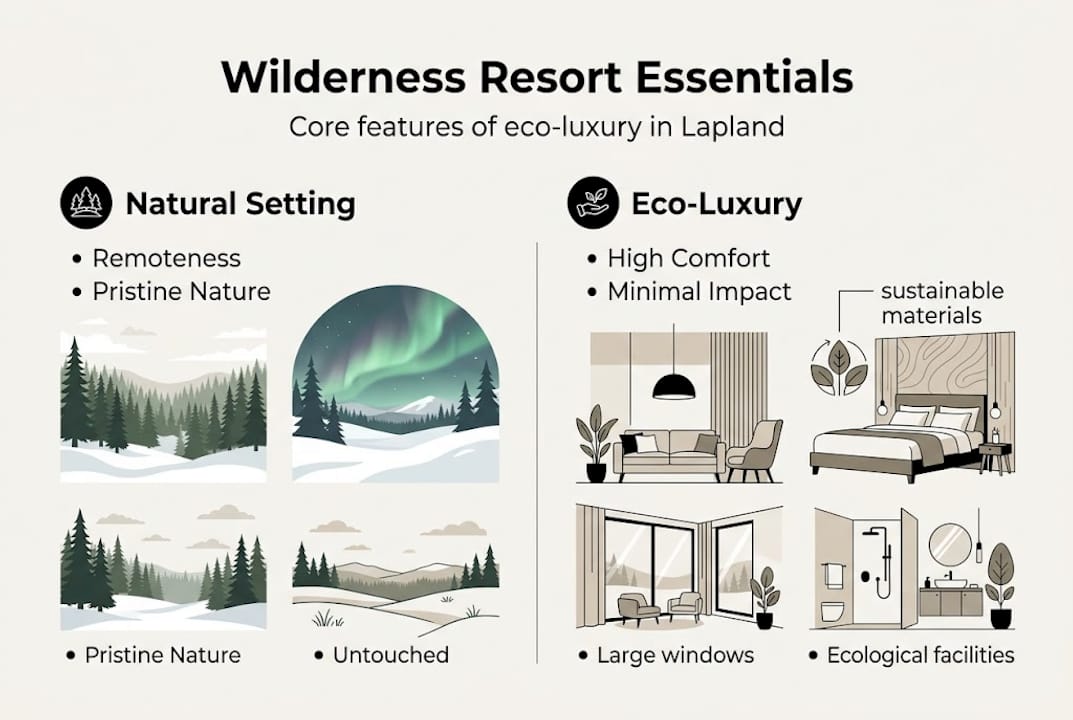
The second element is high-end comfort. Think private chalets with underfloor heating, gourmet meals built around local ingredients, and personalized service that anticipates your needs before you voice them. These are not compromises. They’re the point. Explore cozy Lapland getaways to see how comfort and wilderness genuinely coexist.
The third element is minimal environmental impact. This goes well beyond recycling bins and LED lighting. It means architecture that respects the landscape, construction that disturbs as little soil as possible, and operations that actively reduce carbon output. The best resorts treat the land as a partner, not a backdrop.
The fourth element is immersive nature experiences. Guided aurora tours, wildlife tracking, snowshoeing through silent forests, and evenings around a fire listening to the Arctic quiet. These are not optional extras. They are the core of what you’re there for.
Here’s a quick overview of what separates a wilderness resort from a standard luxury hotel:
- Location: Remote natural setting vs. urban or resort town
- Design philosophy: Blend into the landscape vs. stand apart from it
- Environmental approach: Active stewardship vs. basic compliance
- Guest experience: Nature immersion vs. amenity-driven comfort
- Cultural connection: Local traditions and food vs. generic international offerings
“The best wilderness resorts don’t just sit in nature. They become part of it, leaving the landscape better than they found it.”
Authentic connection to local culture is the fifth and often overlooked element. In Lapland, that means Sámi heritage, traditional Finnish food, and a deep respect for the rhythms of the Arctic seasons. These aren’t decorative touches. They shape every part of the guest experience.
Standards and certifications: Beyond greenwashing
Understanding what makes a resort “wilderness” is just the first step. Next, let’s see how industry standards ensure authenticity.
The word “eco-friendly” gets used so freely that it’s nearly lost its meaning. Savvy travelers know this. The good news is that a small number of rigorous frameworks now exist to separate genuine commitment from marketing language.
The most respected benchmark is the Global Ecosphere Retreat (GER) standard, which evaluates resorts across 125 criteria on four pillars: Conservation, Community, Culture, and Commerce. These are known as the 4Cs. A resort must demonstrate measurable progress across all four to earn and maintain certification. It’s not a one-time badge. It requires ongoing accountability.
A newer but equally demanding framework is REGENERA LUXURY, which pushes beyond sustainability toward active ecosystem restoration and meaningful community benefit. The distinction matters. Sustainability, at its core, means doing less harm. Regenerative luxury means actively restoring what has been depleted, whether that’s a forest ecosystem, a local food tradition, or a community’s economic resilience.
Here’s how these two approaches compare:
| Feature | Sustainability | Regenerative luxury |
|---|---|---|
| Core goal | Reduce negative impact | Restore and improve ecosystems |
| Community role | Minimal harm | Active benefit and inclusion |
| Certification rigor | Variable | GER / REGENERA frameworks |
| Guest experience | Eco-conscious comfort | Place-based, transformative stays |
| Long-term outcome | Status quo preserved | Land and culture actively improved |
It’s also worth noting a common source of confusion. In the United States, several large resort complexes use the name “Wilderness Resort” as a brand, complete with waterparks and entertainment complexes. These are fun family destinations, but they have no meaningful connection to eco-credentials or remote natural settings. The name is a marketing choice, not a philosophy.
Pro Tip: When evaluating any resort’s eco-claims, search specifically for GER or REGENERA certification. These are not easy to fake, and they signal a level of transparency that generic “green” labels simply don’t offer. You can also explore Arctic luxury stay types to understand the full range of options available in Lapland, and read more about Nordic luxury and sustainability to see how the region’s values align with these standards.
Wilderness resort versus legal wilderness: A nuanced distinction
Having defined authentic wilderness resorts and standards, it’s vital to address how these definitions differ from legal wilderness boundaries.
The word “wilderness” carries a precise legal meaning in some countries. Under the U.S. Wilderness Act, designated wilderness areas prohibit permanent structures and motorized access entirely. The land is legally protected from development of any kind. That’s a strict and important standard.
Hospitality uses the term differently, and that’s not inherently dishonest. A resort described as a “wilderness” property is communicating a feeling and a philosophy, not a legal classification. The best ones take that responsibility seriously.
Here’s how the two definitions compare in practice:
| Dimension | Legal wilderness | Hospitality wilderness resort |
|---|---|---|
| Permanent structures | Prohibited | Allowed with careful design |
| Motorized access | Prohibited | Limited and managed |
| Human presence | Minimal, transient | Intentional, low-impact |
| Primary goal | Land preservation | Guest experience plus conservation |
| Regulatory body | Government | Industry certifiers (GER, REGENERA) |
The best wilderness resorts close this gap as much as possible. They use local materials, build with minimal ground disturbance, and hide infrastructure so it doesn’t interrupt the landscape. Done well, a thoughtfully designed chalet can actually enhance your sense of being in wild nature rather than diminishing it.
“Sustainability is the floor. Regeneration is the ceiling. The best wilderness resorts are always reaching upward.”
Here are the steps that serious wilderness resorts take to preserve natural integrity while delivering genuine comfort:
- Site selection: Choosing locations that avoid sensitive habitats and minimize land clearing
- Material sourcing: Using local timber, stone, and insulation to reduce transport emissions
- Infrastructure concealment: Burying utilities and designing paths that follow natural contours
- Energy systems: Prioritizing renewable energy sources suited to the local climate
- Waste management: Composting, water recycling, and zero single-use plastics as standard practice
For a deeper look at how these principles play out in Lapland specifically, the Lapland eco-luxury guide is a useful resource.
Hallmarks of Arctic wilderness resorts in Finnish Lapland
With the distinctions in mind, let’s look at how Lapland’s best wilderness resorts embody these values in memorable experiences.
Finnish Lapland offers something genuinely rare: near-total darkness in winter, ancient forests, and a cultural heritage rooted in deep respect for the land. These qualities make it one of the world’s most compelling settings for a true wilderness resort experience.
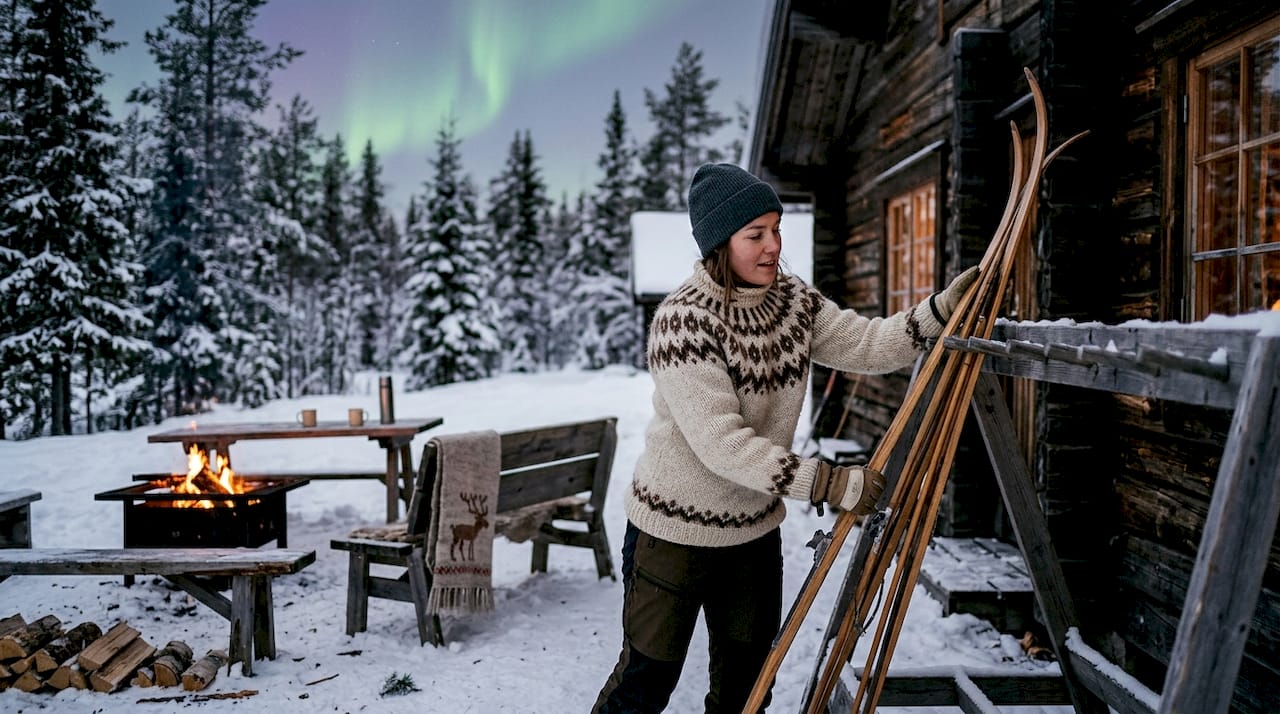
The most defining feature is light. Or rather, the absence of it. Resorts in Lapland that take aurora viewing seriously design their properties to eliminate artificial light pollution. This means dark-sky architecture, carefully positioned lighting, and glass-walled rooms or outdoor terraces oriented toward the northern sky. The result is superior aurora viewing that no urban hotel can replicate.
Here are the hallmarks that set Arctic wilderness resorts apart:
- Exclusive access to silence: Genuine quiet is increasingly rare. Lapland’s wilderness resorts protect it actively.
- Clean Arctic air: The air quality in Finnish Lapland is among the best in Europe, and guests notice it immediately.
- Sámi cultural connection: Authentic resorts engage with indigenous Sámi traditions through food, storytelling, and guided experiences, not as performance but as genuine exchange.
- Sustainable local food: Menus built around reindeer, Arctic berries, freshwater fish, and foraged ingredients connect guests to the land in a direct, sensory way.
- Place-based regeneration: The best resorts measure their impact on both the ecosystem and the local community, contributing to conservation programs and supporting local livelihoods.
Pro Tip: When choosing a Lapland wilderness resort, ask about the guest-to-staff ratio. A low ratio, often one-to-one or close to it, signals personalized service and a more intimate connection to the landscape. Also ask how the resort supports local employment and cultural preservation. Genuine answers, not brochure language, tell you a lot. You can learn more about Lapland local culture and explore how responsible tourism in Lapland is being practiced right now.
Why true wilderness resorts demand more than sustainability
Most travelers are satisfied when a resort recycles, uses solar panels, and prints its menus on recycled paper. That’s a reasonable starting point. But if you’re choosing a wilderness resort in Finnish Lapland, you deserve to expect more.
Sustainability, by definition, means maintaining the current state. It’s a worthy goal, but it’s not enough when ecosystems are already under pressure. The resorts that genuinely matter are those practicing what The Long Run calls “place-based regeneration,” actively restoring biodiversity, strengthening local traditions, and creating measurable positive outcomes for the land and its people.
Lapland has a real opportunity here. The region’s combination of intact wilderness, indigenous culture, and growing eco-tourism interest makes it a natural proving ground for what regenerative luxury can look like at its best. We believe the resorts that lead in this space won’t just attract more guests. They’ll help define the future of responsible travel globally. Choosing a resort that holds itself to that standard is one of the most meaningful decisions you can make as a traveler. Explore more about sustainable Lapland travel to see what that looks like in practice.
Experience authentic Lapland wilderness resorts
Everything covered in this guide points toward one practical question: where do you actually go to experience it? Sunday Morning Finland offers luxury accommodations in Lapland within Pyhä-Luosto National Park, combining the eco-conscious values and immersive Arctic experiences described above with genuine comfort and Nordic warmth.

If you’re ready to put these principles into practice, the Arctic Winter Getaway package is a great starting point. It brings together Northern Lights experiences, local cuisine, and carefully curated activities in a setting that takes both your comfort and the landscape seriously. This is what a real wilderness resort stay feels like.
Frequently asked questions
What makes a wilderness resort different from a regular luxury hotel?
A wilderness resort offers luxury in a remote natural setting, with a strong emphasis on environmental responsibility and authentic local experiences, rather than urban convenience or amenity-driven comfort.
How can I tell if a resort is truly eco-friendly or just greenwashing?
Look for recognized certifications like Global Ecosphere Retreat or REGENERA LUXURY, which require transparent, measurable practices that go well beyond surface-level green claims.
Are wilderness resorts in Lapland suitable for viewing the Northern Lights?
Yes. Many Lapland wilderness resorts are specifically designed for minimal light pollution, providing excellent aurora viewing conditions directly from your accommodation.
What kinds of activities can guests enjoy at wilderness resorts?
Typical experiences include guided aurora tours, snowshoeing, wildlife spotting, sauna rituals, reindeer encounters, and local food tastings, all rooted in authentic nature and Arctic culture.
Recommended
- Cozy Lapland getaways: luxury, sustainability & Arctic experiences | Sunday Morning Collection
- Luxury Accommodation in Lapland | Sunday Morning Collection
- Lapland experiential travel guide 2026: eco luxury Arctic | Sunday Morning Collection
- What Is Experiential Luxury and Why It Matters - Corrado Manenti
