


TL;DR:
- Pyhä-Luosto National Park features ancient quartzite fells, Isokuru gorge, and the interactive Lampivaara amethyst deposit in Finnish Lapland. It offers diverse trails and activities across seasons, combining accessibility with conservation efforts. Visitors should follow marked paths and respect zoning to preserve its delicate ecosystems.
Pyhä-Luosto National Park is defined as one of Finland’s most geologically dramatic protected areas, covering 142 square kilometers of quartzite fells, ancient gorges, and boreal forest in Finnish Lapland. Created in 2005 by merging Pyhätunturi National Park with the Luosto tourism area, the park sits in Pelkosenniemi municipality, south of Saariselkä. It draws nature enthusiasts and adventure travelers with a combination found nowhere else in Finland: a rare working amethyst mine, a gorge carved by glaciers over billions of years, and well-marked trails that work in every season. If you are asking why visit Pyhä-Luosto National Park, the short answer is that it delivers genuine wilderness with accessible infrastructure, making it rewarding for first-timers and seasoned hikers alike.
Why Pyhä-Luosto’s geology and landscapes are unlike anywhere else in Finland
The park’s defining feature is its Precambrian quartzite bedrock, which is roughly 2 billion years old. Glacial erosion over millennia shaped these ancient rocks into steep-sided fells, exposed cliff faces, and the dramatic Isokuru gorge. Isokuru is the deepest gorge in Finland, and its sheer quartzite walls create a microclimate that supports plant species rarely found this far north. The gorge is a restricted area where visitors must stay on marked trails, using boardwalk paths to protect the fragile vegetation clinging to the rock faces.
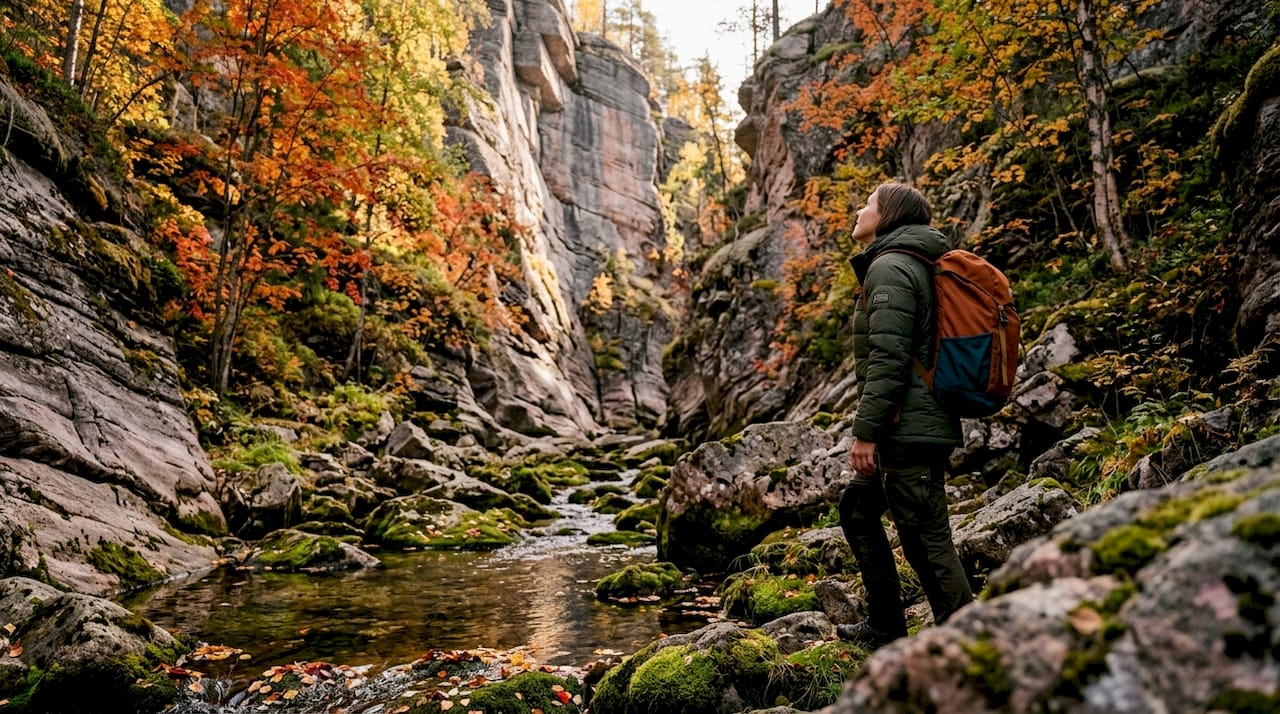
The ecosystem transitions across the park are equally striking. You move from dense Norway spruce and Scots pine forest at lower elevations through open mires and boggy wetlands, then up into sparse alpine vegetation near the fell summits. This layering creates a patchwork of habitats that supports brown bear, wolverine, lynx, golden eagle, and Siberian jay. Spotting a Siberian jay on a quiet morning trail is one of those small moments that stays with you long after the trip.
The park’s geology also produced something genuinely rare: the Lampivaara amethyst deposit, one of the largest in Europe. The crystals formed within the quartzite during ancient volcanic activity, and their purple color comes from trace amounts of iron and natural irradiation over geological time. This is not just a scenic backdrop. It is a hands-on attraction that lets you take a piece of 2-billion-year-old geology home with you.
- Isokuru gorge: Finland’s deepest gorge, with boardwalk access to protect rare plant communities
- Lampivaara: Europe-scale amethyst deposit embedded in ancient quartzite
- Fell summits: Exposed alpine zones with wide panoramic views across Lapland
- Mires and wetlands: Rich birdwatching habitat, especially during spring migration
- Boreal forest zones: Home to wolverine, lynx, and brown bear
Pro Tip: Visit Isokuru gorge in late September when the birch trees turn gold and the crowds thin out. The light at that time of year is low and warm, making the quartzite walls glow in a way that summer visits simply cannot match.
Which hiking routes and outdoor activities are most popular in the park?
Pyhä-Luosto offers trails for every fitness level, from short family walks to full-day fell traverses. The park is designed for accessible exploration with marked routes and visitor infrastructure, so you do not need backcountry experience to enjoy dramatic scenery. Here are the key routes and activities worth planning around:
- Ukko-Luosto peak loop (6.5 km): This is the park’s signature hike. The route involves climbing 575 steps to a viewing platform at the summit, where you get an unobstructed 360-degree view across the fell landscape. The step count is deliberate. It frames the ascent as a physical challenge with a clear reward at the top, and it works. The loop is marked for snowshoeing in winter, though the peak section is unmaintained off-season.
- Isokuru gorge trail: A shorter but more intense route that descends into the gorge along boardwalks. The trail requires careful footing and respect for the restricted zones. This is the route that most clearly shows you the park’s geological character.
- Tunturiaapa nature trail (10 km): A relatively flat route marked with blue squares and accessible from the Naava Visitor Centre. It takes two to three hours at a comfortable pace and works well for families or anyone who wants a winter walk without steep terrain. You can cover it on foot, snowshoes, or a fatbike.
- Cross-country skiing and snowshoeing: The park maintains a network of groomed ski trails connecting the Pyhä and Luosto resort areas during winter. These trails pass through forest and open fell terrain, giving you a full sense of the subarctic environment.
- Fatbiking: An increasingly popular winter option on the Tunturiaapa trail and connecting forest paths. Fatbikes handle packed snow well and let you cover more ground than snowshoeing in the same time.
Pro Tip: Check the trail maintenance status before heading out in winter. Some routes, including sections of the Ukko-Luosto loop, are not maintained between seasons and can be icy or unmarked. The Naava Visitor Centre posts current conditions.
How can visitors experience the Lampivaara Amethyst Mine?
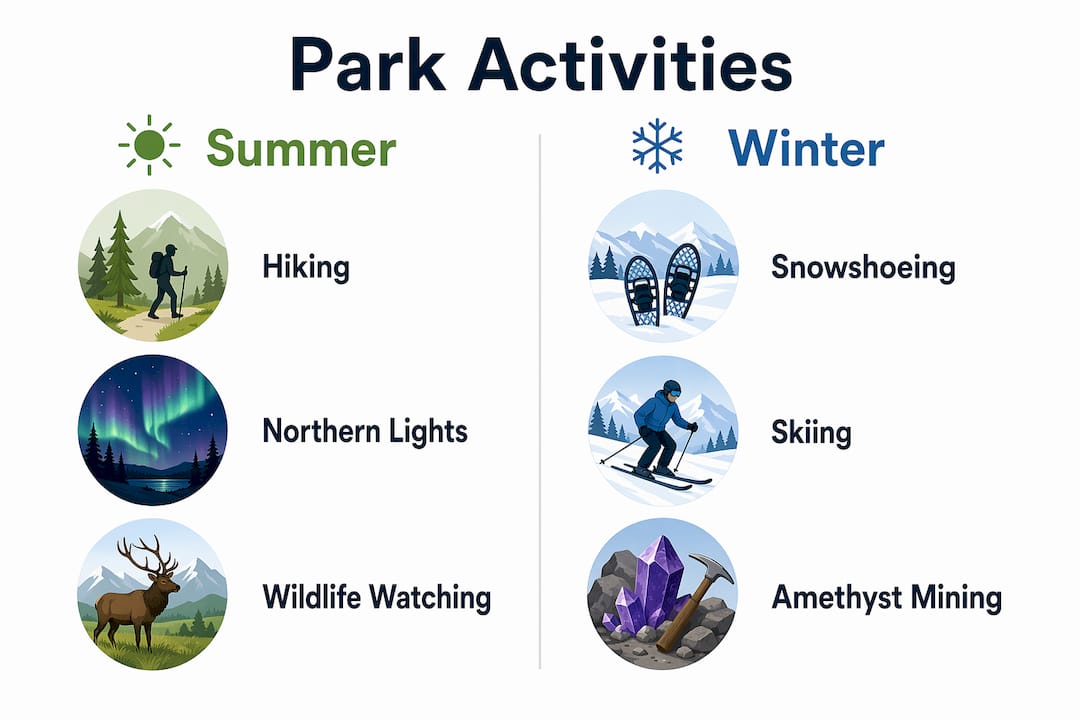
The Lampivaara Amethyst Mine is one of the most distinctive attractions in all of Finnish Lapland, and it is genuinely interactive. This is not a museum exhibit. You dig in the actual mine and keep what you find. The guided tours include storytelling about how the crystals formed 2 billion years ago, which gives the digging activity real context rather than just novelty.
The mine operates year-round, with the digging area partly covered for winter visits so you are not working in open snowfall. In winter, the transfer to the mine uses the Amethyst pendolino, a snow train that travels through the forest from Luosto village. The snow train ride is part of the experience, not just logistics. It sets the mood before you even arrive at the mine.
Key details for planning your visit:
- Guided tours run from the Luosto area and include return transfer
- The digging activity is suitable for adults and older children
- You keep any amethyst crystals you find, making this a genuinely personal souvenir
- The tour includes educational content on the geology of the deposit
- Winter visits use the Amethyst pendolino snow train for transfer, which is a highlight in itself
The mine combines education, physical activity, and a tangible takeaway in a way that very few attractions anywhere manage. It is particularly well-suited to travelers who want their experiences to mean something beyond a photograph.
When is the best time to visit Pyhä-Luosto National Park?
The best time to visit Pyhä-Luosto depends entirely on what you want from the trip. The park offers genuinely different experiences across all four seasons, and each has a strong case.
Summer (June to August) is peak hiking season. Temperatures range from around 10°C to 20°C, the trails are fully accessible, and the midnight sun gives you long daylight hours for exploring. Wildflowers cover the fell slopes, and birdwatching is at its richest during June migration. This is the best time for the Isokuru gorge trail and the Ukko-Luosto summit loop.
Autumn (September to October) brings the ruska season, when the birch and rowan trees turn vivid shades of orange, red, and yellow. The colors peak in mid-September and last about two weeks. Trails are quieter, the air is crisp, and the low-angle light is exceptional for photography.
Winter (November to March) transforms the park into a snow-covered fell landscape with opportunities for snowshoeing, cross-country skiing, and Northern Lights viewing. Winter preparations require warm layered clothing, awareness of which routes are maintained, and travel insurance given the demanding terrain. Polar night in December means very limited daylight, which some visitors find atmospheric and others find challenging.
Practical logistics to know before you go:
- The Naava Visitor Centre is the main gateway for maps, exhibitions, and route planning. Note that Metsähallitus announced the sale of Naava Visitor Centre ownership in March 2026, so verify current services before your visit.
- The nearest airports are Rovaniemi and Kittilä, both within reasonable driving distance.
- Accommodation ranges from resort hotels in Pyhä and Luosto villages to wilderness cabins within the park boundary.
Pro Tip: Autumn is the most underrated season for this park. You get the full trail network, no snow gear required, and the ruska colors make every viewpoint from the fell summits look extraordinary. Book accommodation early because the two-week color peak fills up fast.
How does Pyhä-Luosto balance visitor access with conservation?
Pyhä-Luosto uses a zoning system to manage the tension between welcoming visitors and protecting its ecosystems. The park divides into hiking and nature tourism zones, remote zones, and restricted zones. Isokuru gorge sits in a restricted zone where boardwalks and marked trails minimize ecological damage to rare vegetation and fragile rock formations. Stepping off the path in these areas is not just discouraged. It causes real harm to plant communities that take decades to recover.
The coexistence of ski resorts and a national park within the same area is unusual and worth understanding. The Pyhä and Luosto ski areas operate within and adjacent to the park boundary, which brings infrastructure and visitor numbers that conservation management must account for. Reindeer herding also continues across the park, as it has for centuries, and grazing patterns affect vegetation in ways that park managers monitor closely.
“Visitors who stay on marked trails and follow campfire rules are the single most effective conservation tool the park has.” This reflects the park management philosophy at Pyhä-Luosto, where human behavior on the ground matters more than any policy document.
For responsible visits, follow these guidelines:
- Stay on marked and signed trails at all times, especially in gorge and fell summit areas
- Use designated fire sites only; open fires are prohibited outside these areas
- Carry out all waste, including food scraps
- Keep dogs on a leash in the park at all times
- Respect reindeer and wildlife by maintaining distance and keeping noise low
Sustainable travel in this region is not just an ethical preference. It is what keeps the park worth visiting. Sundaymorning’s approach to sustainable Lapland travel reflects this same principle: the wilderness experience only stays authentic if the wilderness stays intact.
Key takeaways
Pyhä-Luosto National Park rewards visitors who combine geological curiosity with physical activity, offering dramatic quartzite landscapes, year-round trails, and a rare hands-on amethyst mine experience across 142 square kilometers of Finnish Lapland.
| Point | Details |
|---|---|
| Geological uniqueness | Precambrian quartzite fells and Isokuru gorge offer scenery found nowhere else in Finland. |
| Trail variety | Routes range from the flat Tunturiaapa trail to the 575-step Ukko-Luosto summit loop, suiting all fitness levels. |
| Amethyst mine | Lampivaara lets visitors dig and keep real amethyst crystals formed 2 billion years ago. |
| Best season | Autumn ruska (mid-September) and summer offer the richest hiking conditions; winter adds snowshoeing and Northern Lights. |
| Conservation responsibility | Staying on marked trails and respecting zoning rules is the most direct way visitors protect the park’s ecosystems. |
What I have learned from spending time in this fell landscape
I have walked a lot of national parks across Scandinavia and the Arctic, and Pyhä-Luosto consistently surprises people who arrive expecting a standard forest hike. The quartzite fells have a different quality to them. The rock is old in a way you can feel, and the gorge at Isokuru has a stillness that is hard to describe without sounding dramatic. But it genuinely stops you.
What most visitors miss is the microclimate variation across the park. The gorge bottom is measurably cooler and more humid than the fell summit just a few hundred meters away. That difference supports entirely different plant communities within a short walk of each other. If you slow down and look at the vegetation changing as you descend, the park tells you its own geological story without any signage required.
My honest advice: do not try to cover everything in one day. The Ukko-Luosto loop and the amethyst mine together make a full and satisfying day. Save Isokuru for a separate morning when you have time to sit at the gorge edge and actually take it in. The birdwatching along the Tunturiaapa trail in early morning is also worth the early start, particularly if you want to spot a Siberian jay or a golden eagle circling the fell ridge.
Respect the trail rules here more than you might elsewhere. The restricted zones exist because the ecosystems are genuinely fragile. A single season of careless foot traffic can set back decades of plant recovery. The park stays extraordinary because enough people treat it that way.
— Juho
Stay close to the park in genuine comfort
If you are planning a trip to Pyhä-Luosto, where you stay shapes the entire experience. Sundaymorning offers luxury accommodation near the park that puts you within easy reach of the trails, the amethyst mine, and the fell summits, without sacrificing comfort after a long day outdoors.
From Northern Lights tours to reindeer safaris and gourmet Nordic dining, Sundaymorning’s Lapland holiday packages are built around the park’s seasonal rhythms. Whether you are visiting in the golden autumn or the deep of winter, the team handles the logistics so you can focus on the experience. Browse current packages and availability to plan your Pyhä-Luosto adventure with a trusted local host.
FAQ
What is Pyhä-Luosto National Park?
Pyhä-Luosto National Park is a 142-square-kilometer protected area in Finnish Lapland, created in 2005 by merging Pyhätunturi National Park and the Luosto tourism area. It is known for its ancient quartzite fells, Isokuru gorge, and the Lampivaara Amethyst Mine.
How long does it take to hike the Ukko-Luosto peak loop?
The Ukko-Luosto peak loop covers roughly 6.5 km and takes most hikers two to three hours, including the 575-step ascent to the summit viewing platform. Allow extra time if you plan to stop for views or photography.
Is Pyhä-Luosto suitable for families with children?
Yes. The Tunturiaapa nature trail is a flat, well-marked 10 km route accessible on foot, snowshoes, or fatbike, making it a practical option for families. The Lampivaara Amethyst Mine digging activity is also popular with older children.
When is the best time to visit for Northern Lights?
The Northern Lights are most visible between late September and March, when nights are long and dark enough. Clear skies and low light pollution in the Pyhä-Luosto area make it one of the better locations in Finnish Lapland for aurora viewing.
Do I need a permit to visit Pyhä-Luosto National Park?
No permit is required to enter the park or hike its marked trails. Some activities, such as camping outside designated areas or lighting fires outside designated fire sites, are restricted. Always check current rules with the Naava Visitor Centre before your visit.
