


A guided snowshoe trip in Finland is a 1 to 4 hour walk through snowy forest, fell, or lakeshore terrain, led by someone who handles the route, the pace, and the safety calls. Most participants describe it as scenic, social, and easier than they expected once the guide sets the rhythm.
- What people love most: knowledgeable guides, quiet winter scenery, a relaxed pace that welcomes beginners
- What catches people off guard: deep snow is more tiring than a normal walk, hands and feet get cold faster than expected, weather can shift the plan
A well-run guided trip trades effort for comfort. You still get the workout, but someone else worries about the route, the weather, and whether the group is warm enough.
Key Takeaways
Guided snowshoe trips in Finland succeed when a skilled guide manages pace, safety, and weather, letting guests focus on the scenery instead of the logistics.
| Point | Details |
|---|---|
| Guide quality drives satisfaction | Reviews consistently rate attentive, well-organized guides higher than scenery alone. |
| Deep snow is more tiring | Snow resistance raises energy cost versus normal walking, especially for beginners. |
| Pack for cold extremities | Spare gloves, warm boots, and a power bank solve the most common complaints. |
| Ask about safety planning | Confirm the guide’s contingency plan for weather and navigation before booking. |
| Sunday Morning bundles the logistics | The Arctic Winter Getaway Package pairs guided snowshoeing with boutique lodging and dining. |
Table of Contents
- Lumikenkäretki Kokemuksia: What Reviews Actually Say
- What Happens on a Typical Guided Snowshoe Trip?
- Lumikenkäily Varusteet: Gear and Clothing That Matter
- Do You Need to Be Fit for Snowshoeing?
- Why a Guide Changes the Safety Equation
- Where to Try Lumikenkäily in Finland
- Booking a Guided Snowshoe Trip: What to Check First
- Why Sunday Morning Guests Gravitate Toward Guided Snowshoeing
- Book a Ready-Made Guided Snowshoe Experience
- Frequently Asked Questions
- Sources
Lumikenkäretki Kokemuksia: What Reviews Actually Say
Read enough Finnish snowshoe trip reviews and the same handful of details keep resurfacing. Guests praise guides who explain binding adjustments clearly, time the snack breaks well, and read the group’s energy before anyone gets too cold or too tired. Testimonial pages collecting Finnish lumikenkäretki kokemuksia consistently mention these small operational touches as the difference between a forgettable outing and a memorable one.
The complaints cluster just as predictably. Deep or wet snow surprises people who expected something closer to a regular hike, and cold extremities show up in nearly every mixed review. Visibility on open fells can also change fast, which shifts a guide’s plan mid-trip.
- Praise: attentive guides, forest or fell views, well-timed warm drinks, beginner-friendly pacing
- Complaints: unexpected leg fatigue in ungroomed snow, cold fingers or toes, weather-dependent visibility
Most feedback lands in the four- and five-star range, with the guide’s attentiveness doing more to shape the rating than the scenery itself.
What Happens on a Typical Guided Snowshoe Trip?
Trip length varies by design. A short outing runs 1 to 2 hours and suits families or first-timers. A half-day trip, roughly 3 to 4 hours, usually adds a longer route and a proper snack stop. Full-day options exist for groups wanting a deeper forest or fell traverse, sometimes combined with other activities.
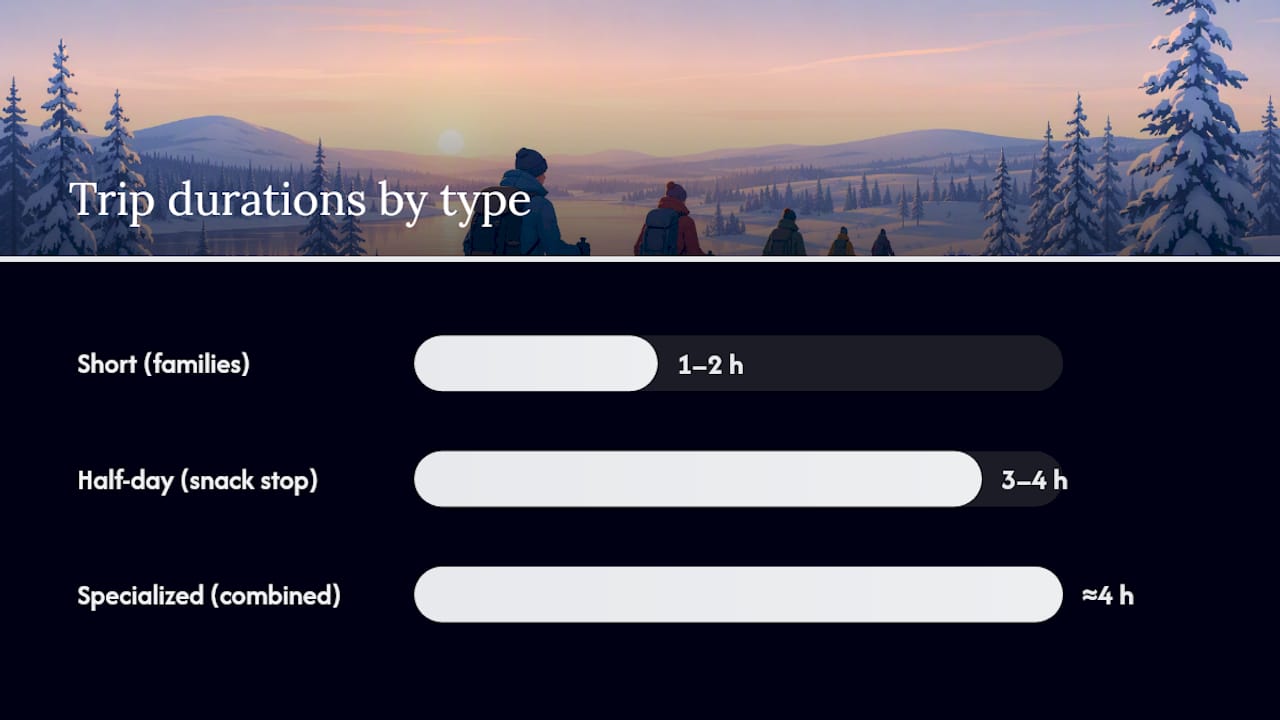
Group sizes tend to stay small, often under ten people, so the guide can watch everyone’s pace and pull stragglers along without losing the group. Specialized guided excursions that combine snowshoeing with other winter activities commonly run about four hours, long enough to cover real ground without exhausting a mixed-ability group.
A typical schedule looks like this:
- Meet at the pickup point or lodge and get fitted for snowshoes and poles
- Short briefing on technique, terrain, and what to expect
- Guided walk at a pace set for the slowest comfortable member
- Mid-trip pause for a warm drink or snack, often with photo time
- Return leg, usually shorter and slightly faster than the outbound walk
Lumikenkäily Varusteet: Gear and Clothing That Matter
Most operators supply the technical gear so you do not need to own anything specialized. Snowshoes and poles come standard, gaiters show up on some trips, and a thermos of hot drink is common on anything past two hours.
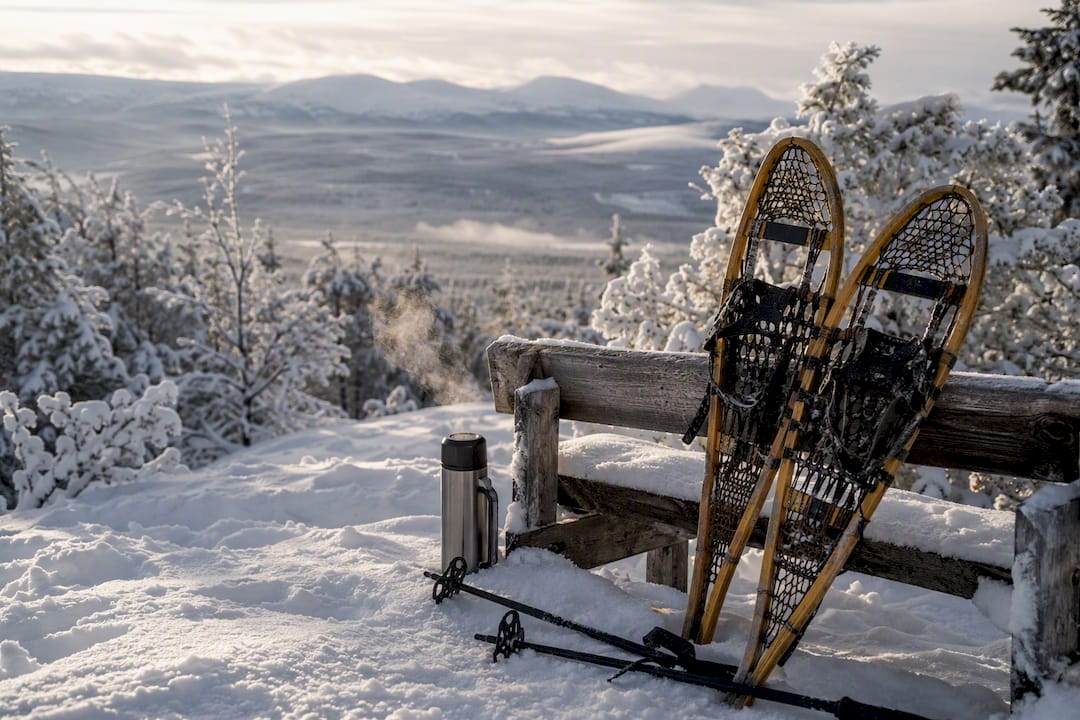
What you bring matters more than what you rent. Layered clothing, warm waterproof boots that actually fit the snowshoe bindings, a spare pair of gloves, and a small snack are the essentials guides mention most often. A portable power bank helps too, since cold drains batteries fast.
Packing checklist:
- Insulated, waterproof boots (check binding compatibility beforehand)
- Base layer, insulating mid layer, wind and waterproof outer shell
- Spare gloves or mittens
- Snacks and a refillable water bottle
- Power bank for your phone or camera
Sizing and features like toe spikes or heel lifts genuinely affect comfort on uphill sections, and equipment guides covering size bands are worth a quick read if you are renting rather than borrowing.
Pro Tip: Keep your phone in an inside pocket, not an outer one. Cold drains lithium batteries fast, and a dead phone means no photos and no backup navigation if you get separated from the group.
Do You Need to Be Fit for Snowshoeing?
Most guided trips suit anyone who can comfortably walk for 1 to 4 hours at a relaxed pace. Snowshoeing is accessible across a wide range of fitness levels, but snow resistance raises the energy cost compared with a normal walk on cleared ground. Deep or wet snow makes this more noticeable, which is exactly why beginners often find the first 20 minutes harder than they expected.
- Families with kids: pick shorter, flatter routes and confirm terrain with the operator first
- Older adults: half-day trips on groomed or forest terrain tend to work better than fell routes
- Limited mobility: call ahead, since pace and terrain flexibility vary a lot between operators
Why a Guide Changes the Safety Equation
A guide’s real value shows up in decisions you never see: which route to skip because of thin ice, when to turn back before a whiteout rolls in, how to keep a spread-out group together on a fell. Local guidance from Luontoon flags real hazards, including thin ice on lakes and avalanche risk on steep terrain, both of which trained guides are watching for even when guests are focused on the scenery.
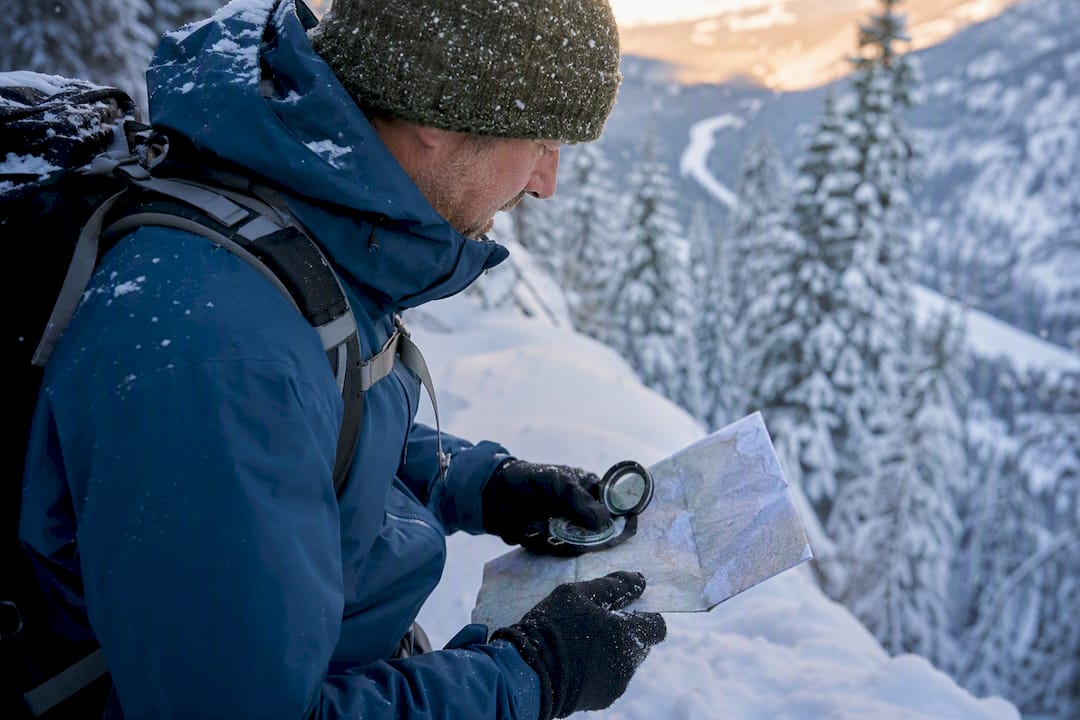
Good guides run a consistent checklist before departure: fitting equipment properly, checking current trail and snow conditions, tracking daylight hours, and carrying a contingency plan if the weather turns. First-person guide accounts describing trips into places like Seitsemistän national park detail exactly this kind of prep work, including route checks the day before and active forecast monitoring.
Before you book, it is fair to ask what the safety briefing covers, whether the guide carries navigation gear and first aid, and what the plan is if the weather shifts mid-trip.
Pro Tip: A guide who explains the contingency plan before you leave, not just the route, is the strongest signal you are in good hands.
Where to Try Lumikenkäily in Finland
Landscape shapes the experience more than most people expect. Saariselkä, on open tunturi terrain, delivers wide panoramas and a real sense of scale. Koli, also fell country, offers dramatic lake and ridge views. Pirkanmaa trips lean into quiet forest and bog terrain instead of open vistas, while Lappeenranta outings work the lakeshore, and Seitsemistän national park mixes suo and forest for a more sheltered walk.
Operator formats vary too: some run structured day trips similar to listings you would find through international booking platforms, others are local guide-hosted forest and bog outings, and some are casual rental-and-brief-guidance setups aimed at families wanting a short, low-commitment outing.
Booking a Guided Snowshoe Trip: What to Check First
Confirm what the price actually covers, snowshoe rental, snacks, transport, and what language the guide speaks. Ask about the cancellation policy and any minimum group size before you pay.
- Meeting point and punctuality expectations
- Boot compatibility with rental bindings
- Cold-weather battery care for your phone
- Transport or hotel pickup arrangements
Why Sunday Morning Guests Gravitate Toward Guided Snowshoeing
Guided snowshoeing fits how Sunday Morning guests travel: comfortable, safety-minded, and curious about Lapland without wanting to manage the logistics themselves. Our curated Arctic activity packages reflect that same local expertise.
Book a Ready-Made Guided Snowshoe Experience
If reading these accounts has you leaning toward trying it yourself, the easiest path is a package that already includes guided outdoor time instead of piecing one together. The Arctic Winter Getaway Package pairs boutique lodging with guided nature excursions, so the route planning, gear questions, and weather-watching are already handled before you arrive.
- Arctic Winter Getaway: guided outdoor activities plus sauna and Lappish dining, built around a relaxed winter pace
- Family Package: shorter, flatter outings suited to kids and mixed-ability groups
Check availability for your dates and confirm a guided snowshoe add-on directly at booking through our luxury accommodation in Lapland page.
Frequently Asked Questions
Is a guided snowshoe trip suitable for beginners? Yes. Most guided trips are built around a moderate pace suited to first-timers, and guides adjust the route or speed based on how the group is doing.
How cold does it get, and what should I wear? Layered clothing with a waterproof outer shell handles most conditions. Warm, waterproof boots that fit your rented bindings matter more than any single layer.
Do I need my own snowshoes? No. Most operators, including local rental spots referenced in first-hand accounts, provide snowshoes and poles with a short fitting session on site.
What happens if the weather turns bad mid-trip? Guides monitor forecasts and snow conditions throughout the trip and have contingency routes ready if visibility or weather worsens.
How long is a typical guided lumikenkäretki? Short trips run 1 to 2 hours, half-day trips run 3 to 4 hours, and full-day options exist for more experienced groups wanting longer routes.
Sources
- Snowshoeing trip | Visit Finland
- Snowshoeing (lumikenkäily) | UKK Institute
- Lumikengillä hohtaville hangille – opastaminen ja retki | Retkipaikka
- Luontoon
