


TL;DR:
- A sauna experience involves sitting in heated rooms to induce sweating and promote physical and mental relaxation. Regular use offers notable health benefits, including lower risks of mortality and neurodegenerative diseases, supported by long-term research. The authentic Finnish sauna emphasizes community, ritual, and contrast therapy with cold plunges to enhance wellness.
A sauna experience is defined as a therapeutic session of sitting in a heated room to induce sweating, promote relaxation, and support physical wellness through controlled heat exposure. The practice spans thousands of years and sits at the heart of Finnish culture, where it carries deep social and spiritual meaning. Modern research now backs what Finns have known for generations: regular sauna sessions produce measurable benefits for your heart, brain, and mental health. Whether you are stepping into a traditional wood-fired sauna for the first time or looking to get more from your sessions, this guide covers everything you need to know.
What is a sauna experience, and what types exist?
A sauna experience is the practice of exposing your body to high heat in an enclosed space, triggering sweating, increased heart rate, and deep muscle relaxation. The term covers several distinct formats, each with a different feel and set of benefits.
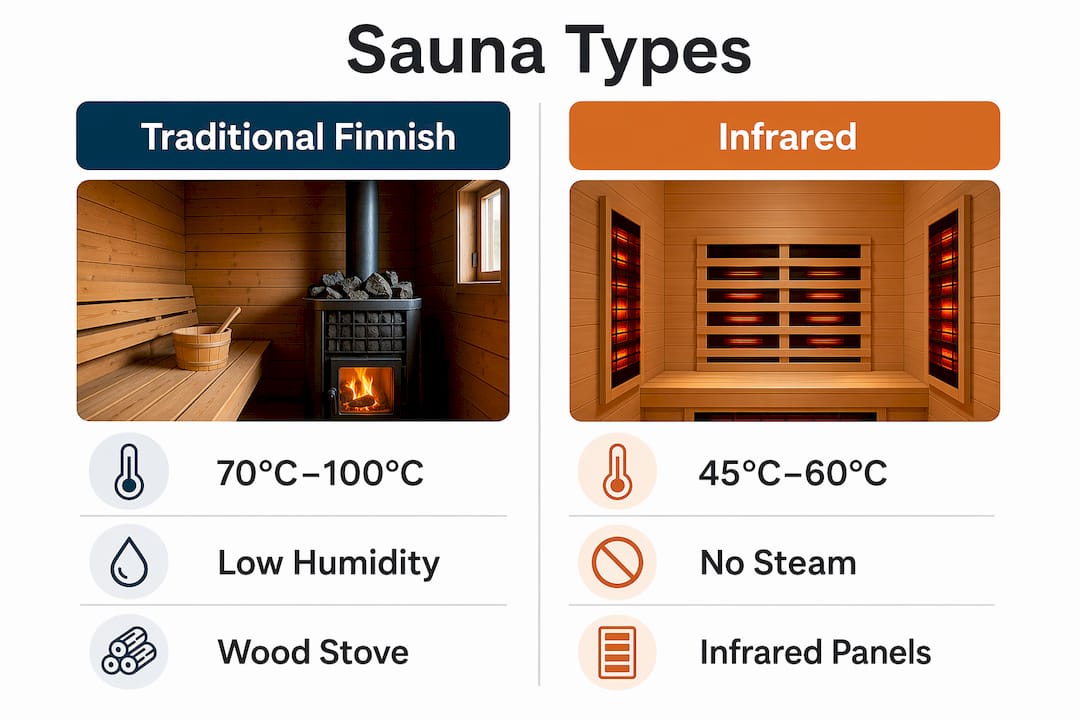
Traditional Finnish sauna is the original format and the gold standard for authenticity. A wood-burning stove heats a stack of stones to temperatures between 70°C and 100°C (158°F–212°F). The defining ritual is löyly, the act of throwing water onto the hot stones to create a burst of steam. That steam raises the perceived heat and opens your pores. Humidity stays relatively low between rounds, making the heat feel dry and penetrating rather than suffocating. The Finnish sauna experience in Lapland follows this exact tradition, with birch wood, stone stoves, and lake access for cooling off.
Infrared saunas work differently. Instead of heating the air around you, infrared panels emit light waves that warm your body directly. Temperatures run lower, typically 45°C–60°C (113°F–140°F), making them more accessible for people sensitive to intense heat. The experience feels gentler and less humid.
Steam saunas and Turkish baths push humidity to nearly 100%, with air temperatures around 40°C–50°C (104°F–122°F). The wet heat feels heavier on the skin and lungs. Many people find steam rooms soothing for respiratory health, though the cardiovascular intensity differs from a dry Finnish sauna.
| Sauna type | Temperature range | Humidity | Key feature |
|---|---|---|---|
| Traditional Finnish | 70°C–100°C | Low to moderate | Löyly steam ritual, wood stove |
| Infrared | 45°C–60°C | Very low | Direct body heating, gentle entry |
| Steam room | 40°C–50°C | Near 100% | Wet heat, respiratory comfort |
Pro Tip: If you are new to sauna sessions, start with an infrared sauna or a lower bench in a traditional Finnish sauna. Heat rises, so sitting lower gives you a noticeably milder experience while your body adjusts.
What are the scientifically documented health benefits of sauna use?
The health benefits of sauna use are among the most well-supported in wellness research. Regular sauna use four to seven times per week reduces all-cause mortality by 40%, cuts Alzheimer’s risk by 65%, and lowers stroke risk by 61% over 15 years. Those numbers come from long-term observational studies and represent some of the strongest data in preventive health.
The mechanism behind the cardiovascular benefits is straightforward. Sauna heat triggers an acute stress response similar to light exercise, increasing heart rate, dilating blood vessels, and improving arterial stiffness over time. Your heart works harder to pump blood to the skin for cooling, which trains the cardiovascular system without the impact stress of running or cycling.
That said, the research carries an important nuance. Frequent sauna users also tend to maintain healthier diets, exercise more, and drink less alcohol, which makes isolating sauna-only benefits statistically difficult. Randomized controlled trials are limited. The association is strong, but the causal chain is still being refined.
Mental health benefits are clearer and more immediate. The sauna functions as a digital detox space for relaxation, social connection, and stress relief. Stepping away from screens and sitting in quiet heat lowers cortisol and creates a meditative state that most people feel within a single session.
Key documented effects of regular sauna bathing include:
- Reduced resting blood pressure over time
- Improved circulation and arterial flexibility
- Lower risk of neurodegenerative disease
- Reduced symptoms of anxiety and mild depression
- Faster muscle recovery after physical activity
“The sauna’s cardiovascular effects are genuinely analogous to light exercise. The heart rate increases, blood vessels dilate, and over time the system adapts.” — Dr. Setor Kunutsor, cardiovascular researcher
What does the authentic Finnish sauna experience involve?
The authentic Finnish sauna experience is built around community, simplicity, and respect for heat. Finland has a population of roughly 5.5 million people and an estimated 3 million saunas. The sauna is not a luxury there. It is where families gather, friendships deepen, and stress dissolves.
The löyly ritual sits at the center of every traditional session. You ladle water onto heated stones, the steam rises, and the room fills with a wave of intense warmth. Birch branches called vihta or vasta are sometimes used to gently brush the skin, improving circulation and adding a fresh, woody scent. Temperatures typically sit between 80°C and 100°C, with sessions lasting 10–20 minutes per round.
Finnish sauna culture follows unspoken but clear social norms:
- Shower before entering. Cleanliness is a sign of respect for other bathers.
- Sit on a towel. Always place a towel between yourself and the bench.
- Keep conversation calm and quiet. The sauna is a place for peace, not loud debate.
- Let the most experienced person manage the löyly. Throwing too much water too fast overwhelms newcomers.
- Cool off between rounds. Step outside, jump in a lake or cold pool, or simply sit in fresh air for 10–15 minutes.
Contrast therapy, alternating between intense heat and cold water, is a core part of the Finnish approach. The cold plunge after a hot round shocks the body in a positive way, tightening blood vessels and creating a rush of alertness and calm that follows.
Pro Tip: Ask before throwing water on the stones in a shared sauna. In Finland, the person managing the löyly holds a quiet authority. A simple nod or question keeps the experience comfortable for everyone.
What practical tips and protocols optimize the sauna experience?
Getting the most from a sauna session comes down to preparation, pacing, and listening to your body. These steps apply whether you are a first-timer or a regular visitor.
Beginners should start at 150°F–160°F (65°C–71°C) for 8–12 minutes, sitting on a lower bench. Drink 16–24 oz of water in the hour before your session. Avoid eating a heavy meal within two hours of entering. Your body needs blood flow directed to the skin for cooling, not to the stomach for digestion.
Follow this sequence for an ideal session:
- Shower before entering to remove lotions, sunscreen, and sweat.
- Enter and sit low on the bench for your first round, especially if the temperature is new to you.
- Stay for 8–15 minutes, then exit before you feel uncomfortable.
- Cool down for 10–15 minutes before re-entering. Let your heart rate and skin temperature normalize fully.
- Drink water or an electrolyte drink between rounds.
- Repeat for two to four rounds, increasing bench height as your tolerance grows.
- End with a final cool-down and at least 20 minutes of rest before resuming normal activity.
Safety signals matter more than session length. Exit immediately if you feel dizzy, nauseous, or short of breath. Heat endurance is not a goal. Comfort and safety are. Pushing through warning signs turns a relaxing ritual into a health risk.
Pro Tip: Leave your phone outside. Experts consistently note that strict sauna routines and performance-minded thinking reduce the mental benefits. The sauna works best when you treat it as rest, not a workout.
Key Takeaways
A sauna experience delivers its strongest benefits when you combine authentic heat rituals, proper hydration, and respectful cooling periods between rounds.
| Point | Details |
|---|---|
| Core definition | A sauna experience is controlled heat exposure that induces sweating and promotes physical and mental relaxation. |
| Health evidence | Regular use four to seven times weekly links to 40% lower all-cause mortality and 65% reduced Alzheimer’s risk. |
| Finnish tradition | The löyly ritual, cold contrast therapy, and communal calm define the authentic Finnish sauna experience. |
| Beginner protocol | Start at 150°F–160°F for 8–12 minutes, hydrate well beforehand, and cool down fully between rounds. |
| Safety first | Exit at the first sign of dizziness or nausea. Heat endurance is never the goal. |
Why the sauna changed how I think about rest
I have spent time in saunas across Finland, from public city saunas in Helsinki to small lakeside cabins in Lapland. The experience that shifted my thinking most was not the hottest sauna or the most dramatic cold plunge. It was a quiet evening session at a wood-fired sauna in Pyhä, where the only sounds were the crackle of birch logs and the hiss of steam from the stones.
What struck me was how little effort it required. You sit. You breathe. You sweat. And somewhere in that simplicity, your nervous system stops bracing for the next thing. Most wellness practices ask you to perform. The sauna asks you to stop.
I have also noticed that people who get the most from sauna sessions are the ones who treat it as a social ritual rather than a solo health intervention. Finns understand this intuitively. The sauna is where real conversations happen, where relationships are maintained, and where the boundary between work and rest becomes clear.
My honest advice: ignore the pressure to stay in longer than feels good. The research on sauna health benefits is built on regular, comfortable sessions, not endurance contests. Two rounds at a temperature you enjoy will do more for you than one punishing round that leaves you lightheaded. Start gentle, go often, and let the ritual build naturally.
— Juho
Authentic sauna and Arctic wellness at Sundaymorning
Sundaymorning brings the full Finnish sauna tradition to the heart of Finnish Lapland, inside Pyhä-Luosto National Park. Guests at the Sunday Morning Resort and Parkside Pyhä Apartments have access to authentic wood-fired saunas, cold-water plunges, and the kind of quiet wilderness setting that makes every session feel complete.
The luxury accommodation in Lapland at Sundaymorning pairs sauna culture with gourmet Arctic dining, Northern Lights experiences, and guided winter adventures. Whether you are planning a romantic escape or a restorative solo retreat, the sauna is woven into every stay as a genuine cultural experience, not an afterthought. Browse the Arctic Winter Getaway Package to see how a Lapland sauna session fits into a full Arctic itinerary.
FAQ
What is a sauna experience for a first-time visitor?
A sauna experience is a session of sitting in a heated room, typically 150°F–212°F, that induces sweating and promotes relaxation. First-timers should start at lower temperatures for 8–12 minutes and cool down fully between rounds.
How long should a sauna session last?
Most sessions run two to four rounds of 10–20 minutes each, with 10–15 minute cooling breaks between rounds. Total time in the heat rarely exceeds 60 minutes for most people.
Is sauna good for relaxation and mental health?
Yes. The sauna functions as a digital detox space that lowers cortisol, reduces anxiety, and promotes a calm mental state. The effect is noticeable even after a single session.
What are the main health benefits of sauna use?
Regular sauna use links to reduced cardiovascular mortality, lower stroke risk, decreased Alzheimer’s risk, and improved arterial flexibility, based on long-term observational research.
What should you expect in a traditional Finnish sauna?
Expect dry heat between 80°C and 100°C, the löyly steam ritual, communal quiet, and a cold plunge or outdoor cool-down between rounds. Bring a towel to sit on and shower before entering.
