


TL;DR:
- Reindeer sledding is a slow, culturally rich Arctic tradition that offers a peaceful experience of animal connection and storytelling.
- The activity lasts for a few minutes in a full tour that can take several hours, with the focus on silence rather than speed or distance.
Reindeer sledding is defined as the practice of riding a wooden sled pulled by one or more reindeer across snow-covered terrain, guided by a handler on foot or skis. This tradition is the oldest form of Arctic transport, maintained by the Sami people for over 4,000 years across northern Scandinavia and Finland. Today it functions as both a living cultural heritage and one of the most distinctive winter experiences available to travelers in Lapland. The ride itself is slow and quiet, moving through birch forests and open fells at a pace that feels nothing like modern tourism. If you are curious about what the experience actually involves, this guide covers everything from the history to the practical details.
What is reindeer sledding and how does it work?
Reindeer sledding, also called a reindeer sleigh ride in some regions, involves sitting or lying in a low wooden sled while a single reindeer pulls you along a prepared trail. A Sami handler walks or skis alongside, guiding the animal and narrating the route. The reindeer walk at about 6–7 km/h, which creates a calm, almost meditative pace through the Arctic landscape. That pace is not a limitation. It is the whole point.
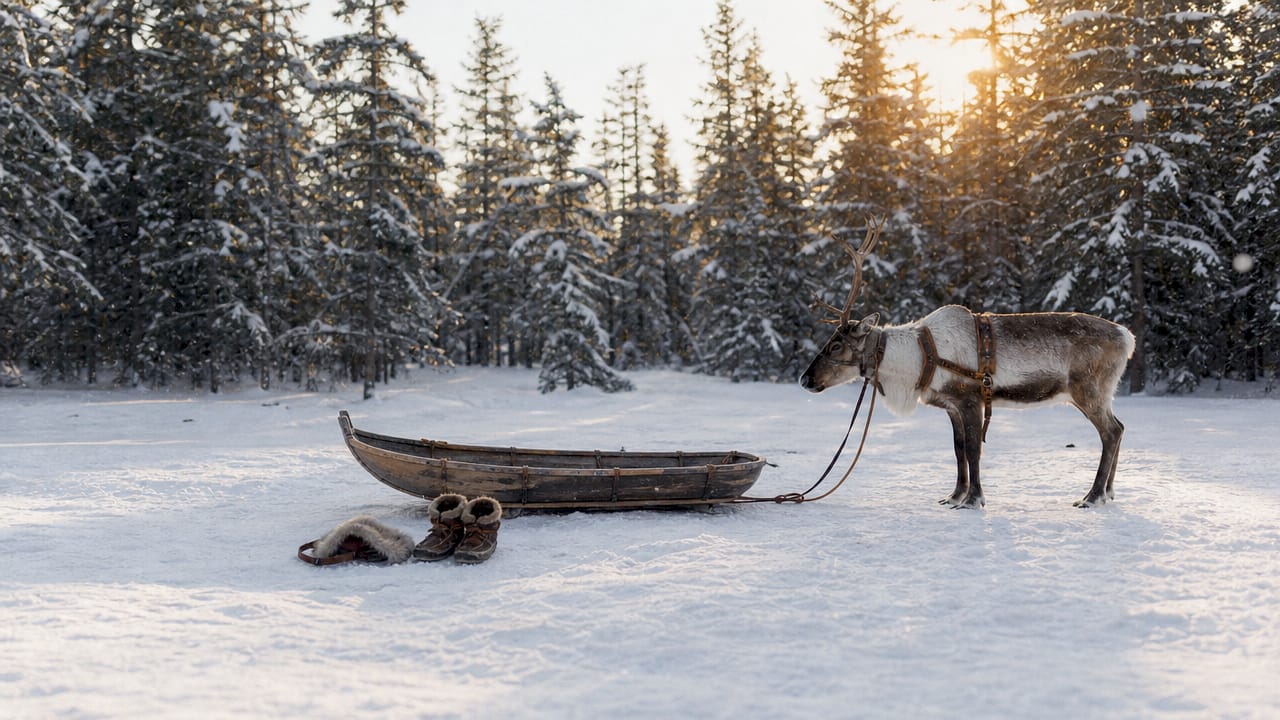
The industry term for the sled used is a pulka or ahkio, a shallow, boat-shaped vessel traditionally made from wood and reindeer hide. Modern versions are often fiberglass-lined for warmth, but the shape remains the same. You sit low to the ground, wrapped in blankets or a thermal suit, with the sound of the reindeer’s clicking tendons as the only consistent soundtrack. That clicking is a natural sound produced by the tendons in a reindeer’s legs, and it is one of the sensory details most visitors remember long after the trip.
Typical herds used for tourism number 200–300 reindeer, concentrated in northern Scandinavia and Finland. Each animal has its own temperament, which affects the pace and feel of your specific ride. No two tours are identical for this reason.
What does a typical reindeer sledding experience involve?
A full reindeer sledding tour lasts 2–4 hours in total, but the actual sled ride is often only 5–40 minutes depending on the package. The rest of the time is filled with activities that are equally valuable. Visitors should treat the whole program as the experience, not just the sled portion.
A standard tour typically includes:
- Sled ride: 10–40 minutes on a prepared forest or fell trail
- Reindeer feeding: Guests hand-feed the herd, which builds a direct connection with the animals
- Cultural storytelling: A Sami guide shares the history of reindeer herding and the relationship between the Sami people and their animals
- Traditional meal: Many tours include a warm meal cooked over an open fire, often featuring local ingredients
- Equipment: Thermal suits and hot drinks are generally supplied by the operator
The total tour time includes storytelling, meals, and transfers, which is why many first-time visitors are surprised by how short the actual ride feels. Knowing this in advance helps you arrive with the right mindset.
Pro Tip: Book a tour that explicitly includes a meal and storytelling session. These elements deliver the cultural depth that makes reindeer sledding different from any other snow activity.
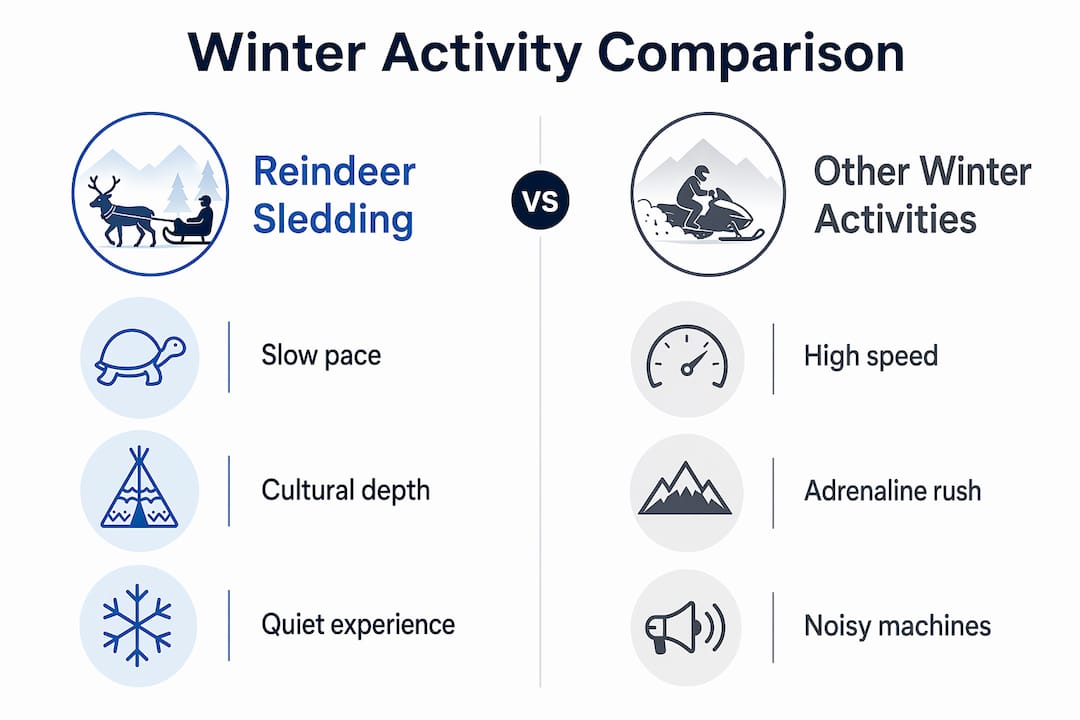
The pace of the experience is deliberately slow. Reindeer sledding is not designed to give you an adrenaline rush. It is designed to give you stillness, which is far rarer and, for many travelers, far more valuable.
How does reindeer sledding compare to other winter activities?
Reindeer sledding occupies a very different space from dog sledding or snowmobile rides. The table below shows the key differences across the most common winter sledding activities.
| Feature | Reindeer sledding | Dog sledding | Snowmobile ride |
|---|---|---|---|
| Speed | 6–7 km/h (walking pace) | 15–25 km/h | 40–80 km/h |
| Participant role | Passive rider | Active musher or rider | Active driver or passenger |
| Primary appeal | Cultural immersion, calm | Adventure, physical engagement | Speed, terrain coverage |
| Noise level | Near silent | Moderate (dogs barking) | Loud (engine) |
| Cultural connection | Deep (Sami heritage) | Moderate | Low |
| Typical ride duration | 10–40 minutes | 1–3 hours | 1–4 hours |
You can explore reindeer and husky experiences side by side to decide which fits your travel style. Many visitors to Finnish Lapland choose both on separate days, since they deliver completely different feelings.
Reindeer sleigh rides and reindeer sledding refer to the same activity in most contexts. The word “sleigh” tends to appear in Christmas-themed marketing, while “sled” or “pulka” is the more accurate term used by operators and the Sami community. The experience is the same regardless of the label.
Where and when can you go reindeer sledding?
The best places for reindeer sledding are concentrated in the Arctic regions of northern Europe. The core destinations include:
- Finnish Lapland: Rovaniemi, Pyhä-Luosto, Saariselkä
- Norwegian Lapland: Tromsø, Alta, Karasjok
- Swedish Lapland: Jokkmokk, Abisko, Kiruna
Finnish Lapland, particularly the area around Pyhä in Finnish Lapland, offers some of the most authentic experiences because many operators work directly with Sami herding families. The national park setting adds a layer of natural beauty that is hard to match.
The season runs from late november to april, with peak snow conditions from mid-december to mid-march. This window gives you the best combination of reliable snow cover, short daylight hours ideal for atmosphere, and the possibility of seeing the Northern Lights on evening tours.
Tour pricing varies by format:
- Group excursions: $80–$180 per person
- Private or full-day trips: $250–$500 per person
Booking 2–4 weeks in advance is recommended, especially for december and january. Peak Christmas season fills up fast, and the best Sami-run operators have limited capacity by design.
Pro Tip: Morning or midday tours offer the best light for photography and the calmest atmosphere. Morning tours are better for photography; evening tours focused on aurora sightings can feel rushed.
What should you expect and how do you prepare?
The single most important thing to understand before your reindeer sledding activity is that the ride will be shorter than you expect. The value is not in the distance covered. It is in the full sensory and cultural experience surrounding the ride.
Practical preparation checklist:
- Layer your clothing: Base layer, mid-layer, and a windproof outer layer are the minimum. Most operators supply a thermal suit over your own clothes.
- Protect your extremities: Wool socks, waterproof boots, and thick gloves matter more than your jacket. Cold feet end the experience early.
- Arrive with flexibility: Sled ride pacing depends on individual reindeer temperament and daily weather. Your guide may adjust the route or duration on the day.
- Respect the animals: Do not approach reindeer from behind. Follow your guide’s instructions on feeding and touching.
- Choose ethical operators: Ethical tour operators limit group size and involve local Sami herding families. Ask directly whether the operator is Sami-run or Sami-partnered before booking.
A full packing guide for Arctic conditions is available through Sundaymorning’s Lapland winter clothing guide, which covers layering in detail for outdoor activities in sub-zero temperatures.
Safety on a reindeer sled is straightforward. Keep your hands and feet inside the sled runners at all times. The animals are calm and accustomed to tourists, but sudden movements can startle them. Children are welcome on most tours, and the slow pace makes the activity genuinely accessible for all fitness levels.
Choosing operators who are part of the Sami community guarantees better animal care and a more authentic experience. This is not a minor detail. It is the difference between a photo opportunity and a genuine cultural exchange.
Key takeaways
Reindeer sledding is a slow, culturally rich Arctic tradition that delivers its greatest value through storytelling, animal connection, and silence, not speed or distance.
| Point | Details |
|---|---|
| Cultural depth over speed | Reindeer walk at 6–7 km/h; the calm pace is the defining feature, not a drawback. |
| Total tour vs. ride time | Full tours last 2–4 hours; the sled ride itself is typically 10–40 minutes. |
| Best season to visit | Mid-december to mid-march offers peak snow and optimal conditions for the experience. |
| Ethical operator choice | Book with Sami-run or Sami-partnered operators for authentic cultural exchange and better animal welfare. |
| Preparation matters | Layered clothing and realistic expectations are the two factors that most affect visitor satisfaction. |
Why the silence is the whole point
I have guided and accompanied travelers through a lot of Arctic activities over the years. Snowmobiles, husky safaris, ice fishing, Northern Lights chases. All of them are worth doing. But reindeer sledding is the one that consistently surprises people, and not for the reason they expect.
Visitors arrive thinking the ride will be the highlight. What actually stays with them is the quiet. Standing in a birch forest at midday in january, with snow on every branch and a reindeer breathing steadily in front of you, produces a kind of stillness that is genuinely hard to find anywhere else. The clicking of the tendons. The creak of the sled. Nothing else.
The cultural storytelling matters too, but only if you choose the right operator. A Sami guide who grew up herding reindeer tells you think no travel brochure contains. The names of individual animals. The way a herd moves before a storm. The difference between a reindeer that trusts you and one that does not. That knowledge changes how you see the whole experience.
My honest advice: resist the urge to film everything. Put the phone away for at least part of the ride. The experience of reindeer sledding in Lapland is not improved by a screen between you and the forest. It is improved by paying attention.
— Juho
Plan your Arctic stay around the experience
Reindeer sledding works best as part of a longer Arctic stay, not a single-day trip. The experience deserves time before and after it.

Sundaymorning offers luxury accommodation in Finnish Lapland within Pyhä-Luosto National Park, where reindeer herding families operate nearby and the wilderness is right outside your door. The Arctic Winter Getaway package combines reindeer experiences with husky safaris, Northern Lights tours, and Nordic dining in a setting designed for travelers who want authenticity alongside comfort. Sustainability is built into every part of the stay, from the locally sourced meals to the eco-certified accommodations. If you are planning a trip to Lapland, Sundaymorning is a natural base for the full experience.
FAQ
What is the difference between a reindeer sled and a reindeer sleigh?
A reindeer sled, or pulka, is a low, boat-shaped vessel used in traditional Sami herding culture. The term “sleigh” is used more broadly in tourism marketing but refers to the same basic experience.
Is reindeer sledding safe for children?
Reindeer sledding is safe for children of most ages. The animals walk at a slow pace, and reputable operators provide thermal suits and full safety briefings before the ride begins.
How far in advance should you book a reindeer sledding tour?
Booking 2–4 weeks in advance is recommended for most of the season. December and january tours, especially around Christmas, fill up significantly faster and may require booking months ahead.
What should you wear for a reindeer sledding experience?
Wear a base layer, a warm mid layer, and a windproof outer layer. Most operators supply a thermal suit over your own clothing, but wool socks and waterproof boots are your responsibility.
Do you need any experience or fitness level to go reindeer sledding?
No prior experience or special fitness is required. You ride as a passenger in the sled while the reindeer and guide do the work, making it one of the most accessible Arctic activities available.
