


TL;DR:
- Nordic cuisine emphasizes seasonality, local sourcing, and preservation techniques rooted in the region’s climate. It focuses on clarity of flavor, highlighting ingredients like fish, grains, and berries, with methods like pickling and fermenting. The movement promotes ethical eating, sustainable practices, and cultural preservation, influencing global gastronomy and travel experiences.
Nordic cuisine is the culinary expression of Denmark, Finland, Iceland, Norway, and Sweden, built on local, seasonal ingredients and traditional preservation techniques that sustain flavor and nutrition year-round. What makes this food culture distinct is its deep respect for the natural world. The region’s long winters and short summers shaped every cooking method, every pantry staple, and every meal. The 2004 New Nordic Manifesto formalized these principles into a global movement, but the roots run far deeper than any restaurant trend. If you want to understand what to eat in Nordic countries, start with the land itself.
What is Nordic cuisine and its core principles?
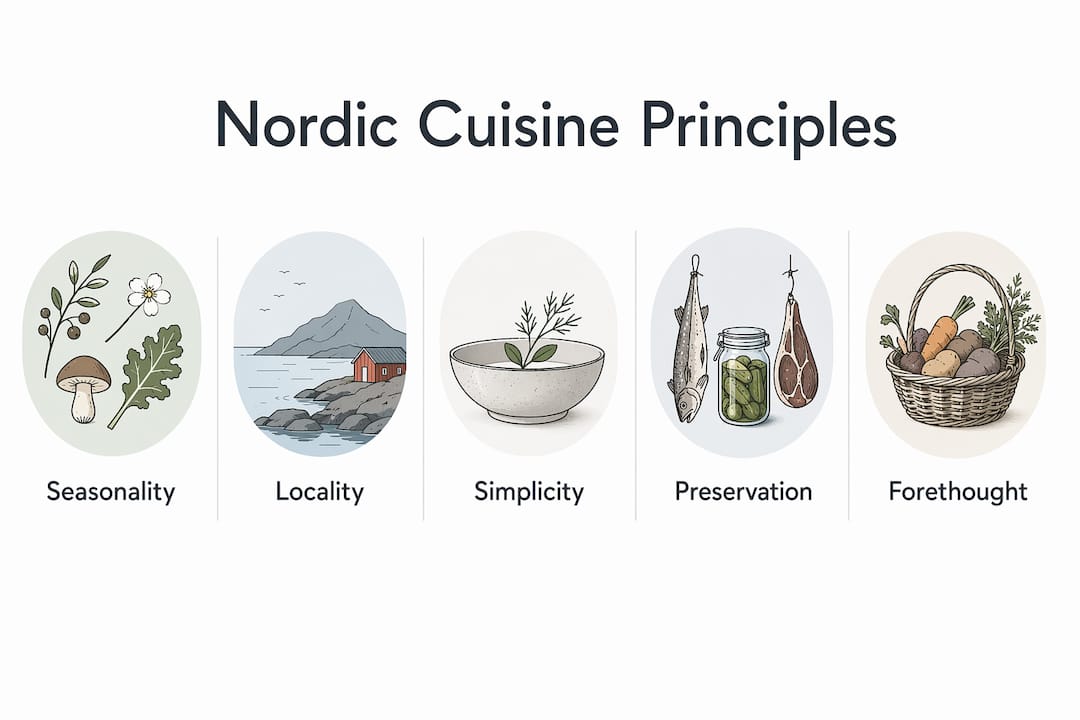
Nordic cuisine is defined by four principles: seasonality, locality, simplicity, and preservation. These are not stylistic choices. They are direct responses to a climate that delivers abundance for a few months and scarcity for the rest. The year-round seasonal cycle drives every decision in the Nordic kitchen, from what gets harvested in july to what gets pulled from the cellar in february.
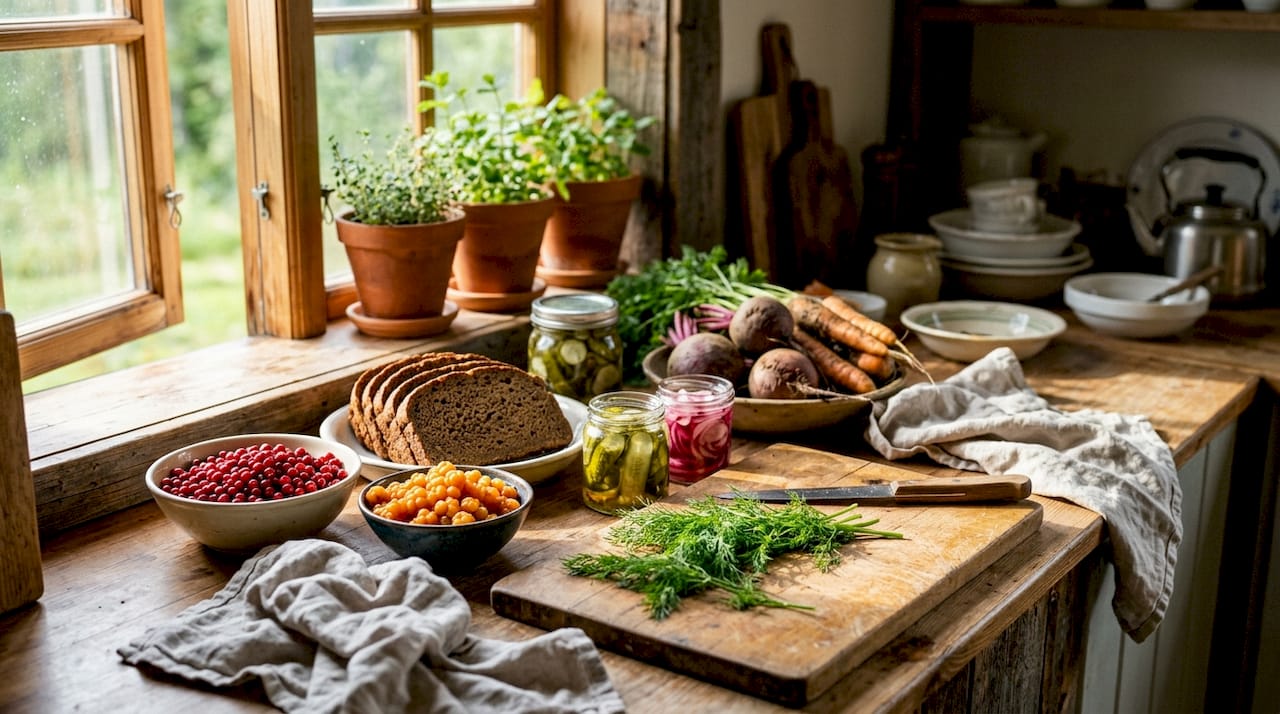
Purity is the word Nordic chefs return to again and again. The goal is never to mask an ingredient but to reveal it. A piece of cured salmon should taste like the sea. A bowl of root vegetable soup should taste like the earth. This philosophy separates North European cooking from richer, more heavily spiced culinary traditions.
The five Nordic countries share this foundation, but each brings its own character. Finland leans on rye, game, and foraged mushrooms. Iceland centers its table on lamb and Arctic fish. Denmark has built a global reputation for open-faced sandwiches and fermented dairy. Norway and Sweden contribute some of the world’s most recognized cured and smoked fish traditions.
What are the core ingredients and preservation methods?
The Nordic pantry is built around ingredients that either grow in cold climates or survive long storage. Knowing these staples gives you a clear picture of traditional Nordic dishes and why they taste the way they do.
Core ingredients include:
- Fish: Salmon, herring, and mackerel are the backbone of Nordic protein. Heart-healthy diets recommend eating fish 2–3 times per week to maximize omega-3 intake, and Nordic food culture has practiced this for centuries.
- Grains: Rye and oats dominate. Dense rye bread is eaten daily across Denmark, Finland, and Sweden.
- Root vegetables: Turnips, beets, parsnips, and potatoes fill the winter table when fresh produce disappears.
- Berries: Lingonberries, cloudberries, and bilberries appear in sauces, jams, and desserts. They are harvested in late summer and preserved for months.
- Dairy: Skyr, a thick Icelandic cultured dairy product, delivers protein and a clean, tangy flavor.
Preservation is where Nordic cuisine becomes an art form. Pickling, fermenting, and drying are not relics of the past. They are active techniques that add acidity, depth, and complexity to dishes that would otherwise taste flat. Smoking fish over birch wood, curing gravlax with salt and dill, and fermenting vegetables in brine are all methods that transform simple ingredients into something memorable.
The concept of “forethought” defines the Nordic approach to food storage. Managing seasonal abundance means filling a dedicated pantry with pickled, fermented, and dried goods before winter arrives. These reserves then add brightness and contrast to the mild, earthy flavors of cold-weather cooking.
Pro Tip: Build your own Nordic-style pantry by starting with three jars: pickled red onions, fermented cucumber, and lingonberry jam. These three items will transform simple fish and grain dishes immediately.
How did the New Nordic Cuisine movement change everything?
The New Nordic Cuisine movement began formally in 2004 when 12 Nordic chefs signed a manifesto committing to local, ethical, and radically seasonal food production. This was not a marketing exercise. It was a direct challenge to the dominance of French and Mediterranean fine dining, and it worked.
The manifesto set out clear goals:
- Source ingredients exclusively from the Nordic region
- Reflect the changing seasons on every plate
- Promote animal welfare and sustainable fishing
- Collaborate with local farmers, foragers, and producers
- Revive forgotten Nordic ingredients and cooking techniques
The impact was immediate and lasting. Nordic countries became global gastronomic destinations. Norway’s performance in the Bocuse d’Or competition placed Scandinavian cooking at the highest level of international recognition. Restaurants in Copenhagen, Stockholm, and Helsinki began attracting food travelers from every continent.
The movement also changed how people think about Nordic food culture at home. Suddenly, rye bread and pickled herring were not humble peasant food. They were expressions of a sophisticated, ethical food philosophy. This reframing gave home cooks permission to take their own traditions seriously.
What is the cultural role of Nordic cuisine in travel?
Nordic cuisine drives what the travel industry now calls “slow luxury.” Finnish Lapland and the Lofoten Islands are two regions where culinary tourism has grown into a full travel category, built around foraging, artisanal market halls, and immersive local food experiences. This is not about Michelin stars. It is about sitting in a reindeer herder’s cabin and eating smoked meat that was prepared the same way three generations ago.
Food halls play a central role in this experience. Torvehallerne in Copenhagen and the Hakaniemi Market Hall in Helsinki are hubs for authentic ingredients and modern Nordic food culture. You can find rye bread baked that morning, cloudberry preserves from small producers, and cured meats that never reach export markets. These venues are where local food culture stays alive and accessible.
The role of local cuisine in tourism extends beyond pleasure. Culinary tourism actively supports rural communities and heritage preservation. When you buy directly from a Finnish market vendor or join a foraging walk in Lapland, you participate in regenerative tourism that keeps traditional food knowledge from disappearing. Travelers who engage with local food culture support community resilience in a direct, meaningful way.
Modern travelers increasingly seek wellbeing linked to nature. Silence, minimalist spaces, and locally sourced food have replaced traditional luxury markers for a growing segment of visitors to the Nordic region. The food on the plate and the landscape outside the window are part of the same experience.
Pro Tip: When visiting Nordic countries, skip the tourist-facing restaurant menus and head straight to a local market hall. You will find ingredients and producers that never appear in guidebooks, and the prices are far more reasonable.
How can you experience Nordic cuisine at home?
Bringing Nordic food culture into your kitchen does not require specialty imports or professional training. The principles are simple enough to apply with ingredients available at most grocery stores or farmers markets.
- Start with seasonal produce. Seasonality drives Nordic cooking, so buy what is actually in season near you. Root vegetables in winter, fresh herbs and berries in summer. This single habit shifts your cooking toward the Nordic mindset.
- Learn one preservation technique. Pickling is the easiest entry point. A basic brine of water, vinegar, salt, and sugar transforms cucumbers, beets, or onions in 24 hours. Once you have pickled vegetables in your fridge, you will use them constantly.
- Use herbs sparingly. Dill, chives, parsley, and mustard are the primary seasonings in Nordic cooking. They complement rather than overpower. Over-seasoning is the most common mistake home cooks make when attempting Nordic recipes.
- Cook fish twice a week. Salmon and herring are the most accessible Nordic proteins outside the region. Cured gravlax requires only salt, sugar, dill, and 48 hours in the refrigerator. No cooking required.
- Source beyond the supermarket. Regional food markets and local producers carry ingredients that supermarkets do not stock. Specialty stores often carry rye flour, skyr, and Scandinavian-style crispbreads that make authentic Nordic cooking much more accessible.
Pro Tip: Gravlax is the perfect first Nordic recipe. Coat a salmon fillet in equal parts salt and sugar, add fresh dill, wrap tightly in plastic wrap, and refrigerate for 48 hours. Slice thin and serve on rye bread with mustard.
Key Takeaways
Nordic cuisine is defined by seasonality, local sourcing, and preservation techniques that together create a food culture rooted in the landscapes of Denmark, Finland, Iceland, Norway, and Sweden.
| Point | Details |
|---|---|
| Seasonality is the foundation | Nordic cooking follows a year-round cycle where winter relies on preserved foods and summer on fresh, foraged ingredients. |
| Preservation is an art form | Pickling, fermenting, smoking, and curing add flavor complexity and were historically essential for winter survival. |
| The 2004 manifesto changed everything | Twelve chefs signed the New Nordic Manifesto, elevating Nordic food to global gastronomic status through ethical, local sourcing. |
| Food culture drives travel | Culinary tourism in regions like Finnish Lapland supports rural communities and preserves traditional food knowledge. |
| Home cooks can start simply | Seasonal produce, one preservation technique, and minimal seasoning are enough to bring Nordic principles into any kitchen. |
Nordic cuisine as a model for how we should all cook
I have spent time in Finnish Lapland eating meals that most food writers never mention. Not the tasting menus. The simple ones. A bowl of salmon soup made with fish caught that morning, served with dense rye bread and a small dish of lingonberry jam on the side. That meal cost almost nothing to produce. It was also one of the most satisfying things I have ever eaten.
What strikes me about Nordic food culture is that it never tries to impress you. The goal is always clarity. You taste the fish, the grain, the berry. Nothing is hidden. That purity is not a trend or a manifesto point. It is a survival instinct that became a philosophy.
The preservation traditions fascinate me most. A jar of pickled herring or fermented vegetables represents months of planning and patience. Nordic cooks have always understood that abundance is temporary. You store what you have, and you eat thoughtfully through the lean months. That is not just good cooking. It is a model for how we should all think about food and resources.
Nordic cuisine also shows what happens when a food culture resists homogenization. The Lapland culinary tourism scene exists precisely because local producers and hospitality providers chose to protect their food identity rather than replace it with global convenience. That choice benefits everyone who visits.
— Juho
Nordic flavors and luxury Arctic stays with Sundaymorning
Nordic cuisine tastes best when you experience it where it was created. Sundaymorning brings together luxury accommodation in Lapland and authentic Nordic culinary experiences inside Pyhä-Luosto National Park. Guests at the Sunday Morning Resort and Parkside Pyhä Apartments enjoy gourmet dining rooted in local ingredients, alongside foraging activities and access to the wild Arctic landscape that inspires every dish.

Whether you are drawn to the Northern Lights, a reindeer safari, or a quiet evening meal featuring smoked Arctic fish and cloudberry dessert, Sundaymorning builds the full Nordic experience around you. Every stay connects you to the food culture, the wilderness, and the slow luxury that defines the best of Nordic hospitality. Browse current packages and find the stay that fits your season.
FAQ
What is Nordic cuisine in simple terms?
Nordic cuisine is the traditional food culture of Denmark, Finland, Iceland, Norway, and Sweden, built on seasonal ingredients, local sourcing, and preservation techniques like smoking, pickling, and fermenting.
What are the most common traditional Nordic dishes?
Gravlax, smoked salmon, rye bread, pickled herring, and root vegetable soups are among the most recognized traditional Nordic dishes across the region.
What makes the New Nordic Cuisine movement different?
The New Nordic movement, formalized by 12 chefs in 2004, added a commitment to ethical sourcing, radical seasonality, and sustainability to traditional Nordic cooking principles.
How does Nordic cuisine connect to travel experiences?
Nordic food culture drives culinary tourism in regions like Finnish Lapland and the Lofoten Islands, where foraging, market halls, and locally sourced meals are central to the travel experience.
Can you cook Nordic food at home without specialty ingredients?
Yes. Seasonal root vegetables, fresh dill, salmon, rye bread, and a basic pickling brine are enough to practice core Nordic cooking principles in any home kitchen.
Recommended
- Cozy Lapland getaways: luxury, sustainability & Arctic experiences | Sunday Morning Collection
- Lapland experiential travel guide 2026: eco luxury Arctic | Sunday Morning Collection
- Luxury family adventures in Lapland: Complete guide | Sunday Morning Collection
- What is Nordic luxury? Sustainable Arctic elegance guide | Sunday Morning Collection
