


TL;DR:
- Finnish Lapland luxury focuses on sustainability with strict eco-certifications and local sourcing.
- Designs incorporate indigenous culture and Arctic elements like glass igloos for Aurora viewing.
- Experiences blend wellness, Arctic adventures, and authentic local cuisine for meaningful stays.
Most travelers assume luxury means marble countertops, a rooftop pool, and a minibar. Finnish Lapland accommodation quietly challenges that idea at every turn. Here, certified eco-properties source locally over 85% of their ingredients, run on renewable energy, and still deliver an experience that feels genuinely indulgent. The difference isn’t just in the details. It’s in the intention. This guide walks you through exactly what separates Finnish luxury stays from everything else, covering sustainability standards, architectural design, Arctic cuisine, and the kind of wilderness experiences you simply cannot replicate elsewhere.
Table of Contents
- How sustainability sets Finnish luxury hospitality apart
- Unique designs: Modern comfort meets Arctic tradition
- Conscious cuisine: Sourcing and savoring Arctic flavors
- Experiential luxury: Wellness, nature, and Arctic adventures
- Why the Finnish model redefines luxury travel
- Plan your stay: Discover Finnish Lapland’s most unique retreats
- Frequently asked questions
Key Takeaways
| Point | Details |
|---|---|
| Rigorous sustainability | Finnish accommodations set the bar globally with eco-certifications requiring high local sourcing and renewable energy. |
| Immersive design | Modern comfort blends with Arctic traditions for authentic, scenic experiences. |
| Conscious dining | Expect innovative cuisine with at least 85 percent of ingredients locally sourced. |
| Experiential luxury | Wellness, nature adventures, and aurora viewing are central to every stay. |
| Authentic impact | Travelers contribute to sustainability and local culture simply by booking and staying. |
How sustainability sets Finnish luxury hospitality apart
Sustainability is a word that gets used a lot in travel. In Finnish Lapland, it actually means something specific and measurable. The two leading eco-certifications here are Green Key and STF (Sustainable Travel Finland). Both require properties to meet rigorous standards before they earn, and keep, their certification.
What do those standards actually look like in practice? Think annual eco-audits, strict energy reporting, and documented waste management plans. Eco-certifications mandate that properties source 85% or more of their ingredients locally, rely on renewable energy sources, and minimize waste at a level that exceeds comparable Nordic properties. That’s not a marketing claim. It’s a condition of certification.
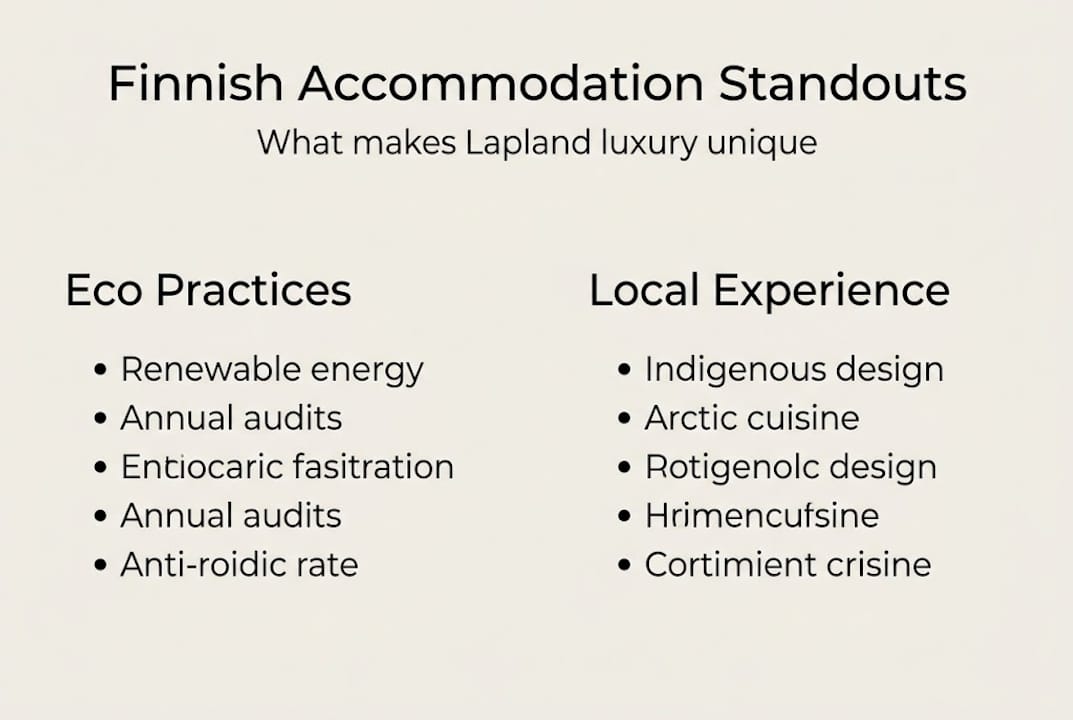
For you as a traveler, this translates into a stay where your comfort and your conscience are genuinely aligned. The heating system running under your timber floor likely draws from a local biomass plant or geothermal network. The reindeer on your dinner plate came from a nearby farm, not a distant supply chain. Even the cleaning products used in your room are reviewed for environmental impact.
This commitment to Nordic luxury principles means that authenticity and sustainability are inseparable. You’re not trading comfort for eco-credentials. You’re getting a richer, more meaningful experience because of them.
“True luxury in Lapland isn’t about excess. It’s about living well without taking more than you need from the place that makes the experience possible.”
Here’s what to look for when comparing properties:
- A visible Green Key or STF certification logo, not just vague “eco-friendly” language
- A sourcing policy that names local farms or suppliers
- On-site renewable energy infrastructure such as solar panels or biomass heating
- Waste reduction practices, including compostable packaging and recycling stations
- Staff hired from the local community, not just seasonal imports
Pro Tip: Before booking, ask the property directly what percentage of their energy comes from renewable sources. Certified properties are required to track this and will answer clearly. If the answer is vague, that tells you something important.
Exploring sustainable travel in Lapland before you book will help you distinguish properties that genuinely walk the talk from those that simply use the right words in their marketing.
Unique designs: Modern comfort meets Arctic tradition
Step inside a Finnish luxury property in Lapland and you’ll notice something immediately. The design isn’t trying to impress you with grandeur. It’s trying to connect you to the place. That’s a deliberate choice, and it shapes every element of the space.
Finnish accommodations combine indigenous Lapland design elements with modern luxury in a way that feels immersive rather than decorative. You’ll find structures built from local spruce and pine, traditional joiku-inspired textile patterns on cushions and throws, and layouts that orient every primary window toward the forest or the sky.
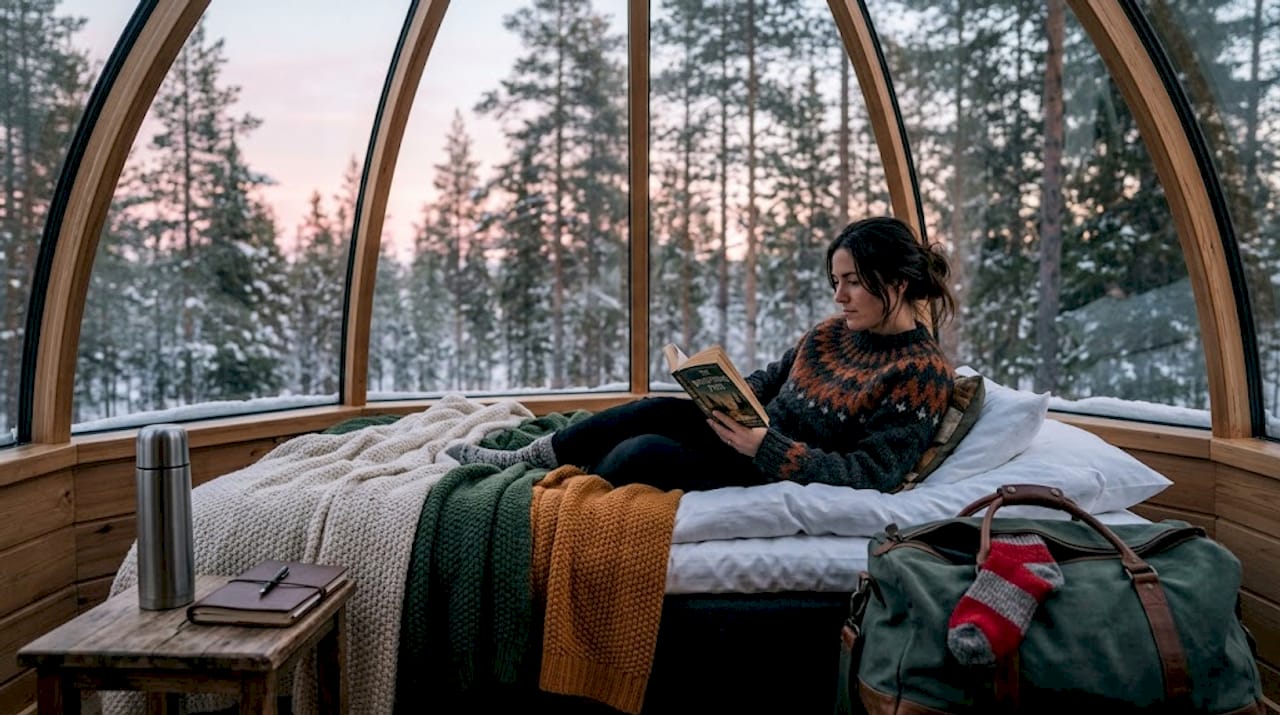
The most distinctive architectural feature in the region is, of course, the glass igloo or aurora cabin. These structures use specially coated thermal glass that keeps the interior warm even at minus 20 degrees Celsius, while giving you a completely unobstructed view of the night sky. Lying in bed watching the Northern Lights ripple overhead is an experience that no amount of room service can replicate.
Here’s a useful comparison of what you’ll typically find across accommodation styles:
| Feature | Traditional Lapland cabin | Modern Finnish luxury stay |
|---|---|---|
| Heating | Wood-burning fireplace | Biomass or geothermal underfloor heating |
| Walls and structure | Log construction | Insulated timber with triple glazing |
| Aurora viewing | Standard windows | Glass roof panels or panoramic walls |
| Sauna | Basic wood sauna | Private infrared or smoke sauna |
| Lighting | Functional overhead | Warm, dimmable ambient lighting |
| Bathroom | Simple and functional | Rainfall shower, heated floors, natural stone |
The sustainable construction techniques used in Lapland are also worth noting. Many properties use cross-laminated timber (CLT) structures, which store carbon rather than emitting it during construction. Rooflines are designed to shed heavy snow loads without mechanical assistance, reducing energy use further.
Pro Tip: For the best chance of seeing the Northern Lights from your room, request an accommodation with a glass ceiling panel or panoramic north-facing windows. Check the property layout carefully on their booking page before you confirm.
Exploring Arctic accommodation types gives you a clear sense of what each style offers so you can match the design experience to your priorities. If you’re looking for visual inspiration, cozy Lapland getaway ideas showcase how design and comfort come together beautifully in this region.
Conscious cuisine: Sourcing and savoring Arctic flavors
Dining in Finnish Lapland isn’t just eating well. It’s eating with context. Every plate carries a story about where the ingredients came from and why that matters in a landscape as sensitive as the subarctic.
Certified properties in this region are required to source over 85% of their ingredients locally. That’s not a soft aspiration. It’s a documented requirement of their eco-certification. In practice, it means your breakfast lingonberry jam was made from berries picked within a short drive. Your dinner features reindeer herded by Sámi families who have worked this land for generations. Your foraged mushroom risotto uses varieties collected from the surrounding forest by the kitchen’s own foraging guide.
The Arctic pantry is genuinely unusual. Here’s what you might find on a typical tasting menu at a Lapland luxury property:
- Poronkäristys (sautéed reindeer with mashed potato and lingonberry sauce), one of Lapland’s most celebrated traditional dishes
- Smoked Arctic char from local rivers, served with wild herb oil
- Cloudberry desserts, using berries that grow only in northern wetlands and ripen for just a few weeks each summer
- Birch-smoked butter and pine needle vinaigrette, made in-house from foraged materials
- Rye bread baked fresh daily using heritage Finnish grain varieties
Beyond the ingredients, the dining venues themselves are part of the experience. Many properties offer outdoor fire cooking, where you prepare food over an open flame in a wilderness setting. Others run intimate chef-led experiences where you learn to prepare a traditional Lapland dish from scratch, usually paired with local craft spirits or Nordic wines.
The benefits for you as a guest are layered. You’re eating food that is fresher and more nutrient-dense than anything that traveled a long supply chain. You’re supporting local farmers and producers who keep traditional practices alive. And you’re gaining a genuine understanding of what Arctic food culture actually looks and tastes like.
Exploring Lapland culinary experiences gives you a thorough preview of the dining highlights you can expect, including chef profiles and signature dishes across the region.
Experiential luxury: Wellness, nature, and Arctic adventures
A Finnish luxury stay is defined as much by what you do outside the building as what you enjoy inside it. The accommodation is your warm, comfortable base. The landscape is your actual living room.
Wellness in Lapland starts with the sauna. Every serious property here has one, and many have several. The traditional Finnish smoke sauna (savusauna) is the original form: a wood-heated room with no chimney, where the smoke fills the space and is ventilated before bathing. It produces a softer, more humid heat than modern saunas and is widely regarded as the most restorative sauna experience available. Paired with a roll in fresh snow or a dip in an ice-cut lake hole, it delivers a reset that no spa treatment can match.
Beyond the sauna, Finnish luxury properties pair their amenities with access to authentic Arctic experiences, from guided snowshoe hikes through birch forests to reindeer sledding with local herders who share knowledge that has been passed down over centuries. The key word here is guided. Local guides don’t just take you somewhere. They help you understand what you’re seeing, and that understanding deepens the experience significantly.
Here’s how to get the most from your Lapland accommodation stay:
- Arrive unhurried. Plan at least four to five nights. The landscape rewards time.
- Book your activities through the property. Local guides connected to your accommodation know conditions, routes, and timing better than anyone.
- Prioritize the sauna on your first evening. It adjusts your body to the cold and sets the tone for the whole stay.
- Join an aurora safari rather than just watching from your room. A guide takes you to darker, clearer spots away from any property lighting and explains what you’re seeing.
- Ask about the less-obvious experiences. Ice fishing, reindeer farm visits, and traditional handicraft (duodji) workshops are often available but not heavily promoted.
“Spending even one night in the forest under the Northern Lights changes how you think about what you actually need to feel well.”
The Lapland sauna experience is something every visitor should understand before they arrive. And if you want a broader view of everything available, the Lapland experiential travel guide for 2026 covers the full range of activities and how to plan around them.
Why the Finnish model redefines luxury travel
Most luxury travel is still built on a familiar formula: more space, more services, more amenities. The Finnish model asks a different question entirely. What if luxury meant being genuinely connected to a place, rather than insulated from it?
That shift is not subtle. It changes everything from how a building is heated to how dinner is sourced to how an evening’s activity is guided. Finnish accommodations don’t offer luxury as a layer placed on top of nature. They offer it as something that grows directly from the landscape, the culture, and the people who live here year-round.
Elsewhere, you can find a hotel that is technically impressive but leaves you with no particular sense of where you were. That rarely happens in Lapland. The reasons to visit Arctic Finland are rooted in exactly this kind of intentional, place-based design. Travelers who come here seeking transformation, rather than just relaxation, consistently find it. That’s not an accident. It’s the result of a hospitality approach that takes both the guest and the environment seriously.
Plan your stay: Discover Finnish Lapland’s most unique retreats
Now that you understand what genuinely sets these properties apart, the next step is finding the right one for your own Arctic escape.
At Sunday Morning Finland, we’ve built our entire offering around this philosophy. Our luxury accommodations in Lapland sit within Pyhä-Luosto National Park, where every detail from sourcing to design reflects the standards described in this guide. If you’re still exploring your options, our overview of top Arctic accommodation types will help you decide which style fits you best. Ready to plan a specific trip? The Arctic Winter Getaway package is a strong starting point for a fully curated, sustainable Lapland experience.
Frequently asked questions
What eco-certifications should I look for in Finnish accommodations?
Look for Green Key or STF certifications, which signal the highest sustainability standards in Finland. These certifications require eco-audits, local sourcing, and verified use of renewable energy, making them the most reliable indicators of genuine eco-practice.
Are Finnish luxury accommodations suitable for seeing the Northern Lights?
Many Finnish luxury accommodations are designed specifically for aurora viewing, featuring glass roofs, panoramic north-facing windows, or dedicated aurora-watching terraces. Staying within a national park like Pyhä-Luosto also reduces light pollution significantly, which improves your chances further.
How do Finnish hotels support local communities?
They prioritize hiring local staff, sourcing ingredients locally, and partnering with Sámi and other local guides for cultural experiences. Certified properties must demonstrate 85% local sourcing and ongoing community engagement as part of their certification requirements.
Is it easy to access outdoor activities from Finnish eco-luxury hotels?
Yes. These accommodations are typically located adjacent to nature reserves and provide direct access to guided excursions such as snowshoeing, reindeer sledding, husky safaris, and ice fishing. Most properties have in-house or closely affiliated activity programs so you can arrange everything without leaving your base.
Recommended
- 10 reasons to visit Arctic Finland for a luxury retreat | Sunday Morning Collection
- Cozy Lapland getaways: luxury, sustainability & Arctic experiences | Sunday Morning Collection
- Luxury Accommodation in Lapland | Sunday Morning Collection
- What is Nordic luxury? Sustainable Arctic elegance guide | Sunday Morning Collection
