


TL;DR:
- Families should select winter activities based on age, ability, weather, and budget to ensure an enjoyable experience. Outdoor options like sledding, ice skating, and skiing are exciting but weather-dependent, while indoor activities such as crafts and games offer reliable alternatives. Combining outdoor adventure with indoor relaxation creates memorable, safe, and balanced family winter outings.
Winter is full of opportunity for family bonding, but finding winter activities for families that work for every age group takes a little planning. A toddler and a teenager have very different energy levels and attention spans, and the same goes for the adults in the group. This guide covers both outdoor and indoor options, gives you a clear framework for choosing what fits your family, and shares practical safety and budget tips so you can spend less time planning and more time enjoying the season together.
Table of Contents
- Key takeaways
- 1. How to choose winter activities for families
- 2. Classic outdoor winter activities for families
- 3. Engaging indoor winter activities for families
- 4. Indoor vs. outdoor family winter activities compared
- 5. Pro tips and safety for family winter fun
- What I’ve learned about winter family adventures
- Plan your family’s winter adventure with Sundaymorning
- FAQ
Key takeaways
| Point | Details |
|---|---|
| Match activities to age and ability | Choose options that work across age ranges to keep everyone engaged and comfortable. |
| Outdoor rentals depend on conditions | Equipment like skis and snowshoes typically requires 4+ inches of snow to operate. |
| Indoor options are always available | Sensory play, crafts, and active venues like trampoline parks work regardless of the weather outside. |
| Safety thresholds matter outdoors | Most municipal programs cancel outdoor events when windchill drops below -25°F. |
| Flexibility is your best tool | Build buffer time into any winter day plan so kids and adults can shift activities without stress. |
1. How to choose winter activities for families
Before you book anything or pack the car, it helps to run through a few quick filters. The right activity for your family depends on more than just the weather.
Age and ability range. A sled hill works for a four-year-old and a forty-year-old. A backcountry snowshoe trail probably does not. Think about who the least experienced person in the group is and plan around their comfort level first.
Indoor versus outdoor preference. Some kids thrive in cold air and beg to stay outside all afternoon. Others hit a wall after twenty minutes. Knowing your family’s threshold for cold and physical exertion helps you choose activities with realistic time expectations.
Budget and equipment costs. Outdoor activities often come with rental costs. Cross-country ski rentals at places like arboretums range from $17 for kids to $25 for adults per two-hour session. Indoor activities like bowling or trampoline parks carry per-person fees too. Set a number before you go.
Here are the core questions worth asking before picking any activity:
- Can every member of the family participate, or will someone be sitting out?
- Do you need to rent equipment, and what does that actually cost?
- What is your backup plan if weather or energy levels change mid-activity?
- Is the location accessible for strollers, mobility aids, or younger kids?
- How much physical effort is involved, and is that right for your group today?
Pro Tip: Always check current weather forecasts and facility conditions the morning of your outing. Rental programs at outdoor venues can suspend operations mid-season if snow depth drops below what they need.
2. Classic outdoor winter activities for families
Snow opens up a category of family winter fun that simply does not exist any other time of year. These are the outdoor options that consistently work across age groups.
Sledding and snow forts. Nothing beats a good hill with a plastic sled. It costs almost nothing, requires no skill level, and kids from age three to thirteen will stay entertained for hours. Snow forts and snowball fights extend the outdoor session without needing any equipment at all.
Ice skating. Rinks with rental skates are beginner-friendly and affordable. If your area has a natural frozen pond or lake, check ice thickness guidelines from your local parks department before venturing out. Most families find that a public rink with warming huts nearby is the easiest starting point.
Skiing and snowshoeing for beginners. Family-friendly ski resorts thoughtfully separate beginner terrain from advanced slopes, which makes a real difference when you have mixed skill levels in one group. Snowshoeing is even more accessible. Most trails are walkable if you can walk, and rentals are typically inexpensive.
- Snow tubing: faster than sledding, requires no technique, and most parks run dedicated family lanes
- Fat-tire biking: an emerging winter sport that lets families explore snow-covered trails on specially equipped bikes, suitable for older kids and adults
- Candlelight hikes: lantern-lit trails at parks like Mitchell State Park run Friday evenings from January through mid-February, creating a memorable and peaceful experience for the whole family
- Wildlife watching: winter mornings are surprisingly good for spotting deer, foxes, and birds without leaves obscuring the view
- Sled dog experiences and winter ziplining: popular at adventure parks across the Midwest, these work well for families with older children looking for something more exciting
Pro Tip: Layer clothing in threes: a moisture-wicking base, an insulating mid-layer, and a waterproof outer shell. Kids lose heat faster than adults, so check in on them every thirty minutes during outdoor activities.
3. Engaging indoor winter activities for families
Cold or stormy days call for creative indoor plans. The good news is that some of the most memorable family moments happen when you are stuck inside and have to get inventive.
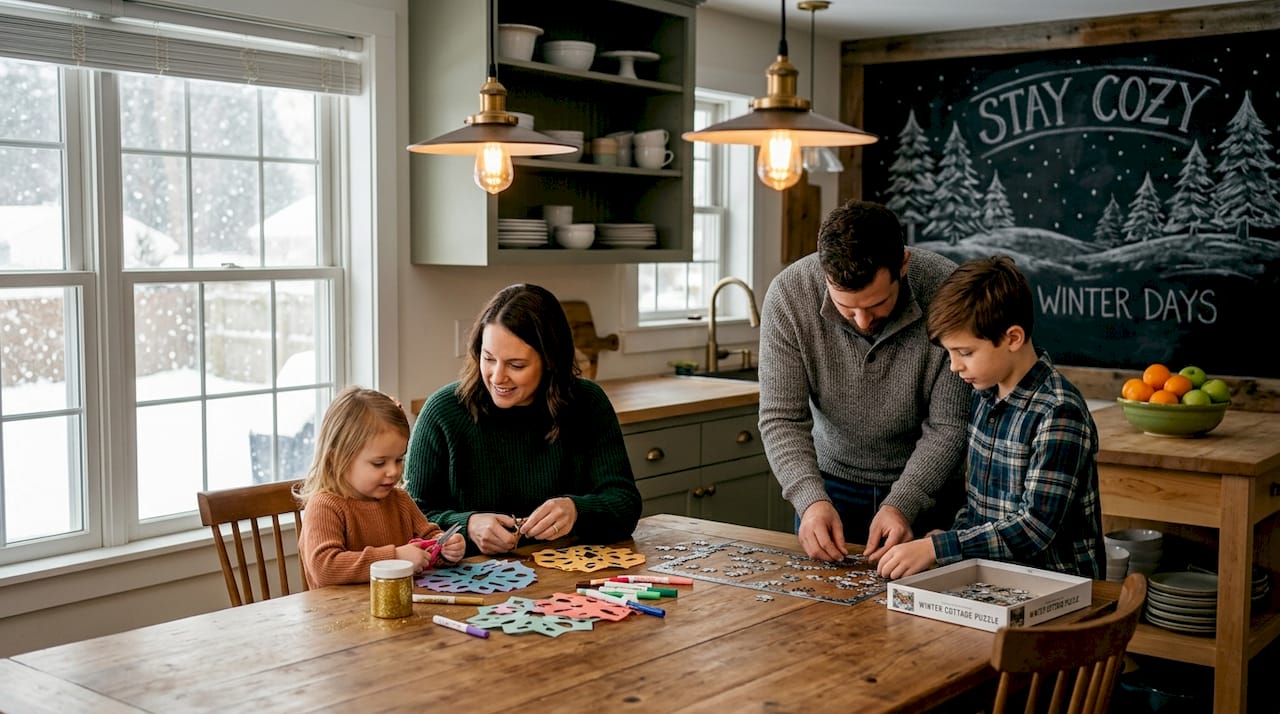
Sensory play for toddlers. Ice rescues with frozen toys and indoor water play are low-prep and highly effective for toddlers. Freeze small plastic animals into a block of ice the night before and let younger kids chip them out with safe tools the next morning. It keeps little hands busy for a surprisingly long time.
Indoor winter crafts. Snowflake cutting, watercolor winter scenes, and salt dough ornaments all work for ages four and up. These do not require special supplies. Most can be done with paper, paint, and things already in your kitchen.
Here are some tried-and-true indoor options sorted by age group:
- Toddlers (2 to 5): sensory bins with fake snow, ice melting experiments, and simple paper crafts
- School-age kids (6 to 12): board games, puzzle challenges, indoor scavenger hunts, and cooking simple winter recipes together
- Teens and adults: escape room kits, trivia nights at home, or tackling a large jigsaw puzzle together as a group project
- All ages: movie marathon with a winter theme, bowling at a local alley, or trampoline park visits that guarantee physical activity regardless of what is happening outside
Pro Tip: Mix screen time with active play. A movie afternoon lands better if it follows an hour of active indoor games. Kids who have moved their bodies are happier sitting still afterward.
4. Indoor vs. outdoor family winter activities compared
Choosing between indoor and outdoor comes down to more than just the thermometer. Here is a direct comparison to help you weigh the options:
| Factor | Outdoor activities | Indoor activities |
|---|---|---|
| Weather dependence | High. Ice, snow depth, and windchill all affect safety and access. | None. Always available regardless of conditions outside. |
| Physical activity level | High. Skiing, sledding, and hiking burn real energy. | Varies. Trampoline parks and bowling are active; crafts and games are not. |
| Setup and prep time | Moderate to high. Layers, equipment, and travel to a venue required. | Low. Most indoor activities require minimal preparation. |
| Cost | Variable. Rentals, lift tickets, and trail fees add up quickly. | Generally lower. Many indoor crafts and games use items you already own. |
| Social interaction | Strong. Outdoor group activities encourage teamwork and shared excitement. | Also strong, especially for board games, group crafts, and team challenges. |
| Accessibility | Dependent on terrain and weather. Not all trails or rinks suit every mobility level. | Usually higher. Most indoor venues and home activities suit all ability levels. |
| Seasonal memorability | Very high. Snow experiences are unique and hard to replicate. | Good, but less tied to the season’s distinctive feeling. |
The best family snow adventures tend to combine both. Plan outdoor time for the morning when energy is high and temperatures are at their peak, and reserve indoor activities for the afternoon or any day when the weather does not cooperate.
5. Pro tips and safety for family winter fun
Getting the most out of your winter season requires a bit of preparation. These practical steps make a real difference.
- Check windchill before heading out. Municipal parks departments commonly use a windchill threshold of -25°F to cancel outdoor programs. Apply the same rule at home.
- Dress every family member in proper layers. Waterproof boots, insulated gloves, and a warm hat are non-negotiable for any outdoor activity lasting more than thirty minutes.
- Plan around energy, not just time. Younger kids hit a wall fast. Schedule the most physically demanding activities first, when everyone is fresh, and keep lighter activities for later in the day.
- Rent before you buy. If your family is trying skiing or snowshoeing for the first time, rent gear rather than purchasing it. Equipment that does not fit properly leads to discomfort and a shorter outing.
- Bring warm drinks and snacks. Hot chocolate or warm soup mid-activity extends how long kids stay happy outdoors. Cold bodies need fuel.
- Have an indoor backup ready. Even a well-planned outdoor day can change quickly. Knowing your fallback keeps frustration low for everyone.
- Include everyone in the planning. Letting each family member pick one activity for the season builds buy-in and reduces the classic “I don’t want to” response at the trailhead.
What I’ve learned about winter family adventures
By Juho
I’ve spent a lot of winters watching families try to pack too much into a single day and come home exhausted rather than happy. The instinct to maximize every winter outing is understandable. The snow is there, the kids have the day off, and you want to make it count. But in my experience, the families who enjoy winter most are the ones who pick one or two activities and do them well, rather than rushing through five.
What I’ve also noticed is that indoor and outdoor experiences are not competing options. They are complementary. A morning on skis followed by an afternoon making hot cocoa and playing board games by a fire is a better day than six hours outdoors pushing everyone past their limit. The indoor moments are often where the real conversations happen. That’s where kids wind down and start talking.
The other thing worth saying directly: safety is not a buzzkill. It’s what lets families go back out the next day. Checking conditions, dressing properly, and knowing when to call it are the habits that turn winter into a season everyone looks forward to rather than dreads. Building those habits early means your kids will carry them into adulthood.
Winter is genuinely one of the best times to be together as a family. You just have to meet it on its own terms.
— Juho
Plan your family’s winter adventure with Sundaymorning
If you are looking for a winter experience that brings outdoor adventure and cozy indoor comfort together in one place, Finnish Lapland delivers both in a way that is hard to find anywhere else. Sundaymorning offers families an authentic Arctic setting with access to guided husky safaris, reindeer rides, snowshoeing trails, and Northern Lights experiences.

The Arctic Winter Getaway Package includes curated activities for different age groups and ability levels, with on-site equipment rental so you do not need to worry about packing or sourcing gear. After a day out in the Pyhä-Luosto wilderness, you return to warm, eco-friendly accommodation with a sauna and Nordic cuisine waiting. It is the kind of winter trip that removes the usual logistics stress and lets you focus entirely on your family. Explore everything Sundaymorning has on offer through the winter activities page and start planning your stay.
FAQ
What are the best winter activities for families with young kids?
Sledding, snow play, ice skating on a rink, and indoor sensory crafts like frozen toy rescues are all excellent options. They require minimal skill and keep younger children engaged safely.
How do I know if outdoor winter activities are safe for my family?
Check the windchill forecast before heading out. Most municipal programs move activities indoors or cancel them when windchill falls below -25°F, which is a practical safety guideline for families too.
How much do winter activity rentals typically cost?
Costs vary by activity. Cross-country ski rentals typically run $17 for children and $20 to $25 for adults per two-hour session at facilities like arboretums, with snowshoe rentals generally at similar rates.
What are good indoor winter crafts for school-age kids?
Snowflake paper cutting, watercolor winter scenes, and salt dough ornaments work well for children aged four to twelve. They are low-cost, easy to set up, and keep kids creative on days when going outside is not practical.
What is the best family winter trip destination?
Finnish Lapland is one of the top choices for families seeking authentic winter experiences, with activities like husky safaris, reindeer rides, snowshoeing, and Northern Lights viewing all available in a single destination.
