


TL;DR:
- Genuine boutique hotels are small, design-focused, and offer personalized, local experiences.
- They differ from chains by emphasizing authenticity, intimacy, and community ties.
- Understanding the true definition helps travelers find meaningful, responsible, and memorable stays.
You’ve probably seen the word “boutique” on hotel websites more times than you can count. It sounds appealing, personal, and a little exclusive. But here’s the honest truth: the term has become so widely used that it no longer guarantees anything specific. Large chains sometimes market big properties as “boutique,” which leaves travelers genuinely confused about what they’re booking. If you’re planning a luxury Arctic escape or a meaningful Lapland adventure, knowing the real definition of a boutique hotel helps you make smarter, more satisfying choices. This article gives you the clarity and practical tools to spot the genuine article every time.
Table of Contents
- What is a boutique hotel? Core characteristics explained
- How boutique hotels differ from chain and luxury hotels
- The boutique hotel experience: What sets it apart for discerning travelers
- Evolution of the boutique hotel: Trends and the future of authentic hospitality
- A traveler’s take: Why the real boutique hotel definition matters more than ever
- Discover your own boutique Arctic adventure in Finnish Lapland
- Frequently asked questions
Key Takeaways
| Point | Details |
|---|---|
| Small and personal | Boutique hotels are intimate properties with a focus on personalized service and unique atmosphere. |
| Beyond the label | Not all hotels claiming to be ‘boutique’ fit the true definition—look for independent ownership and authentic design. |
| Memorable experiences | Genuine boutique stays prioritize immersive local culture, sustainability, and curated guest journeys. |
| Trends to watch | Sustainability, tech adoption, and adventure-driven experiences are shaping the future of boutique properties. |
What is a boutique hotel? Core characteristics explained
With the confusion around “boutique” branding set, let’s clarify what truly defines a boutique hotel and why it matters to you as a discerning traveler.
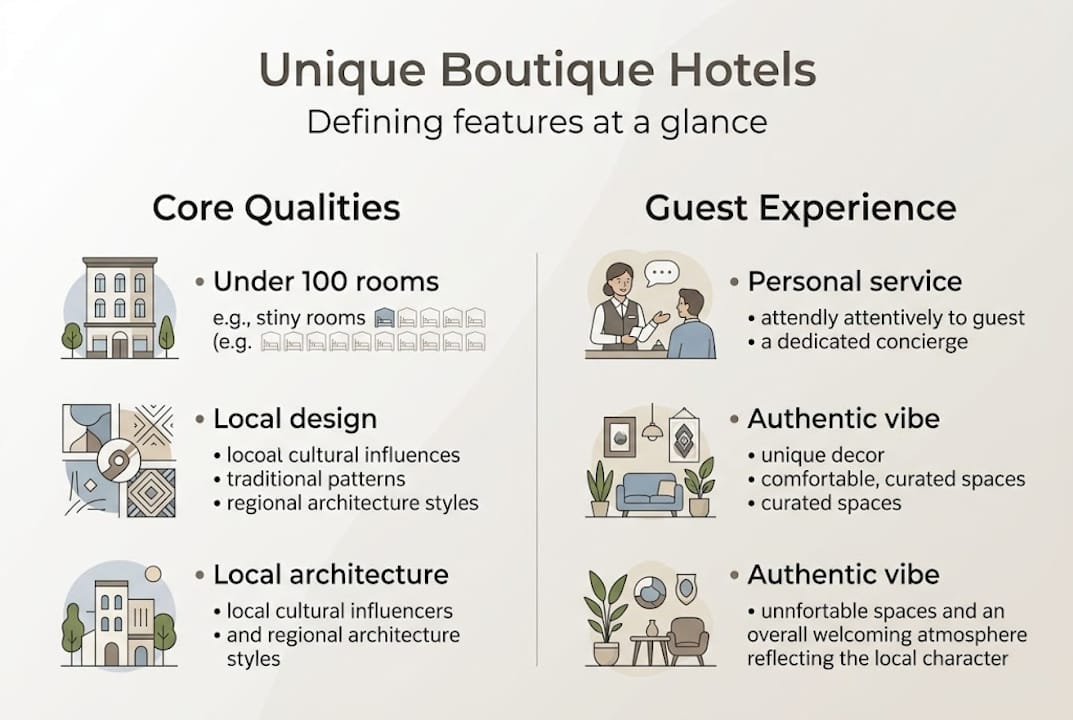
At its simplest, a boutique hotel is a small, characterful property that offers personalized service and a strong sense of place. These are not cookie-cutter accommodations. Each one reflects a specific location, design philosophy, or cultural identity. You feel it the moment you walk through the door. The lobby tells a story. The staff knows your name. The details feel chosen, not mass-produced.
Here are the core characteristics that define a genuine boutique hotel:
- Intimate size. Most boutique hotels have fewer than 100 rooms. Many have far fewer, sometimes as few as 10 to 30. This keeps the experience personal and prevents the anonymity you often feel in large properties.
- Design-led ambiance. Boutique hotels invest heavily in interior design, often working with local artists, architects, or craftspeople. Every room may look slightly different, and that variety is intentional.
- Independent ownership or strong local flavor. Many boutique hotels are independently owned, which means decisions are made by people who genuinely care about the guest experience rather than corporate metrics.
- Curated experiences. Rather than offering every possible amenity, boutique hotels curate what they offer. You might find a carefully selected wine list, a locally inspired menu, or local culture and wellness programming that connects you to the destination.
- Community and environmental relationships. Authentic boutique hotels often have meaningful ties to their surrounding community, supporting local suppliers, artisans, and conservation efforts.
One important and often overlooked detail: true boutique hotels avoid large meeting spaces to focus on intimacy and character. If a hotel has a convention hall that seats 500 people, it’s probably not operating with a boutique philosophy, regardless of what its marketing says.
“A boutique hotel is defined not just by its size, but by its intention. It exists to create a genuine connection between guest, place, and experience.”
If you’re curious about what this looks like in practice, Lapland boutique experiences offer a wonderful real-world example of how these principles come together in a remote, nature-rich setting.
How boutique hotels differ from chain and luxury hotels
Now that you know the essentials, let’s see how boutique hotels measure up to their chain and luxury counterparts. The differences are real, and they matter when you’re choosing where to spend your time and money.
Large hospitality chains have appropriated the “boutique” label, but their properties often lack the intimacy and authenticity of independent boutiques. Some chain properties with 200 or more rooms now market themselves as boutique simply because they’ve added stylish furniture or a rooftop bar. That’s not boutique. That’s branding.
Here’s a side-by-side comparison to help you see the differences clearly:
| Feature | True boutique hotel | Major chain hotel | Classic luxury hotel |
|---|---|---|---|
| Room count | Under 100 (often under 50) | 200 to 1,000+ | 100 to 500+ |
| Ownership | Independent or small group | Corporate | Corporate or branded |
| Design | Unique, locally inspired | Standardized | Opulent but uniform |
| Service style | Personalized, relationship-based | Efficient, scripted | Formal, hierarchical |
| Eco-practices | Often central to identity | Increasingly added | Varies widely |
| Meeting spaces | Minimal or none | Extensive | Extensive |
| Atmosphere | Intimate, discovery-oriented | Predictable, familiar | Grand, impressive |
When you use this table as a reference, you can quickly assess whether a property claiming to be boutique actually delivers on that promise.
Here’s a practical checklist you can use before booking:
- Does the hotel have fewer than 100 rooms?
- Is the design unique to its location or cultural context?
- Are there signs of independent ownership or local management?
- Does the hotel support local suppliers, artisans, or conservation programs?
- Are wellness-focused hotels amenities tied to the local environment rather than generic spa packages?
Pro Tip: Ask about meeting facilities before you book. If the hotel has large conference rooms or ballrooms, it’s operating more like a chain than a boutique property. Genuinely boutique spaces like boutique conference spaces are small, intimate, and designed for connection rather than corporate convention.
Understanding these differences protects your investment and helps you find experiences that truly match what you’re looking for.
The boutique hotel experience: What sets it apart for discerning travelers
Understanding the basics is helpful, but what do guests honestly feel when staying in a true boutique hotel? The answer goes well beyond comfortable beds and good coffee.
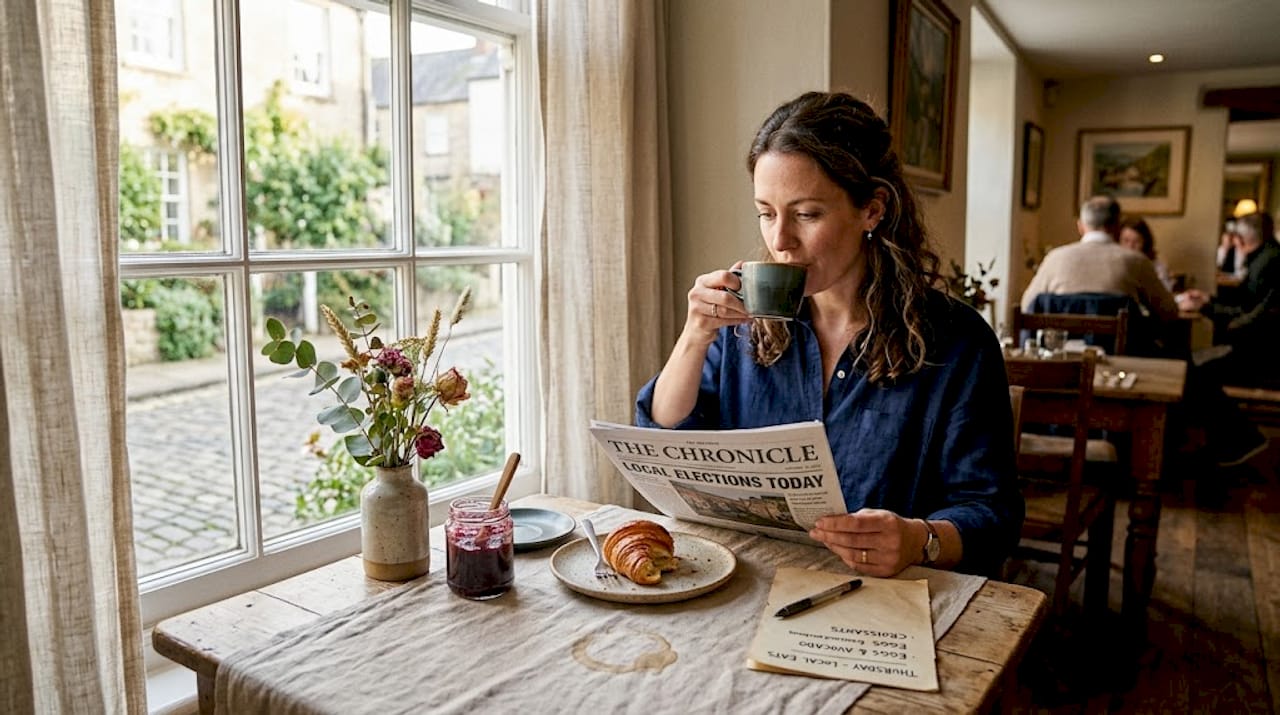
Boutique hotels stand out for their focus on intimacy and avoidance of large, impersonal spaces. That focus translates directly into the guest experience. You notice it in small, thoughtful details: a handwritten welcome note, a locally sourced breakfast, a staff member who remembers your preferred morning drink by day two.
Here are five guest experiences that typify the boutique ethos:
- Chef-led dining with a local story. Rather than a buffet designed to feed hundreds, boutique hotels often feature intimate dining rooms where the chef personally curates the menu around seasonal, local ingredients. In Lapland, this might mean reindeer dishes, Arctic berries, and foraged herbs that connect you directly to the wilderness outside your window.
- Personalized excursions. A boutique hotel in Lapland doesn’t hand you a generic activity brochure. Instead, staff work with you to design unique boutique experiences that match your interests, whether that’s a private Northern Lights snowshoe tour or a husky safari timed to the best conditions.
- Sustainable amenities that feel intentional. Boutique hotels that prioritize sustainability don’t just swap plastic bottles for glass ones. They think about energy use, waste reduction, and how their operations affect the local ecosystem. These choices feel genuine rather than performative.
- Design that tells a story. Every room in a true boutique hotel has character. You might find local artwork on the walls, hand-crafted furniture, or textiles woven by nearby artisans. The design is an extension of the destination, not a departure from it.
- Genuine connections with staff. In a large hotel, you might interact with dozens of different staff members who don’t know you. In a boutique property, the team is small enough that real relationships form. That connection makes the stay feel meaningful rather than transactional.
“The best boutique stays don’t just give you a place to sleep. They give you a reason to remember the trip for years.”
This is why Lapland luxury holiday packages built around boutique properties tend to generate such strong emotional responses from guests. The combination of a wild, beautiful setting and deeply personal service creates something that no chain hotel can replicate.
Pro Tip: When researching hotels, look for a clear local or sustainability story on their website. If the hotel can tell you specifically where their food comes from, who made the furniture, or how they reduce their carbon footprint, that’s a strong signal of genuine boutique values. Sustainable Arctic escapes that articulate these details clearly are usually the real thing.
For travelers who value bespoke luxury travel, the boutique hotel experience aligns perfectly with the desire for something that feels made just for you.
Evolution of the boutique hotel: Trends and the future of authentic hospitality
With the heart of the guest experience outlined, let’s look at how boutique hotels are evolving for the future and why it matters in Lapland and beyond.
The concept of the boutique hotel first gained traction in urban settings during the 1980s, when travelers began seeking alternatives to the predictable comfort of large chain hotels. Properties in cities like New York, London, and San Francisco started offering design-forward rooms, local art, and a sense of neighborhood identity. Over time, the model spread to rural and remote destinations, where the combination of natural beauty and intimate hospitality proved especially powerful.
Today, the boutique hotel is adapting to meet the values of a new generation of travelers. Here’s how the best properties are evolving:
- Carbon-neutral operations. Many boutique hotels are working toward net-zero emissions by investing in renewable energy, reducing waste, and offsetting their environmental impact. In Lapland, this connects naturally to the pristine wilderness that draws guests in the first place.
- Cross-cultural culinary programs. Rather than offering a single cuisine, forward-thinking boutique hotels are creating dining experiences that blend local ingredients with global techniques, giving guests something genuinely new at every meal.
- Digital detox suites. Some boutique properties are deliberately designing spaces that encourage guests to disconnect from screens and reconnect with nature, each other, and themselves.
- Hyperlocal storytelling. The best boutique hotels are becoming curators of their region’s history, ecology, and culture, offering guided experiences, local partnerships, and programming that you simply can’t find elsewhere.
- Technology used thoughtfully. Rather than technology for its own sake, boutique hotels are using digital tools to enhance personalization without replacing human connection.
Here’s a look at how the boutique hotel has changed over time:
| Feature | Traditional boutique hotel | Modern boutique hotel |
|---|---|---|
| Design inspiration | Urban chic, eclectic | Locally rooted, eco-modern |
| Discovery method | Word of mouth, travel agents | Influencer content, curated platforms |
| Sustainability focus | Minimal | Central to identity |
| Dining approach | Stylish but standard | Hyperlocal, chef-driven |
| Guest expectations | Comfort and character | Transformation and meaning |
| Technology role | Basic amenities | Smart personalization |
Chain hotels now label large properties as “boutique,” making it increasingly important for guests to look past the label and assess the substance. When you’re evaluating a hotel that claims to be boutique, ask whether their sustainability commitments are specific and verifiable, not just a line in the marketing copy.
In Lapland, some properties are genuine pioneers in responsible Arctic travel, setting a standard for what eco-conscious boutique hospitality can look like in one of the world’s most fragile and beautiful environments. Understanding hotel trends and technology can also help you assess which properties are genuinely innovating versus simply updating their website language.
If you’re planning a corporate retreat or small group gathering, look for meeting spaces in Lapland that reflect boutique values: small, purposeful, and connected to the natural surroundings.
A traveler’s take: Why the real boutique hotel definition matters more than ever
Stepping back, here’s an honest perspective on why all of this matters in our search for meaningful journeys.
The “boutique” label has become one of the most overused words in hospitality. And that’s a problem. Not just because it’s confusing, but because it erodes trust. When travelers book a “boutique” property and arrive at something that feels like a mid-size chain hotel with better lighting, they feel misled. That disappointment shapes how they travel next time, often pushing them toward predictability rather than adventure.
But here’s what we believe: savvy travelers who understand the real definition of boutique hospitality actually benefit from the confusion. Why? Because it filters out the noise. When you know what to look for, the genuine properties become obvious. You spot the locally sourced breakfast menu, the staff who greet you by name, the absence of a convention center.
True boutique hotels do something important beyond serving guests well. They uplift local culture, support regional economies, and model a more responsible way to travel. When you choose a property like this, you’re not just buying a comfortable room. You’re participating in something that benefits the destination itself.
Romantic Lapland boutique stays are a perfect example of what happens when boutique values meet a spectacular natural setting. The result is a travel experience that stays with you long after you’ve returned home. That’s what the real definition of boutique makes possible.
Discover your own boutique Arctic adventure in Finnish Lapland
Ready to find a boutique hotel that matches the real definition? Consider these handpicked Lapland experiences.
If everything you’ve read here resonates with you, Finnish Lapland is one of the best places in the world to experience authentic boutique hospitality. The wilderness setting, the Northern Lights, the reindeer, the silence of snow-covered forests: all of it becomes even more meaningful when you’re staying somewhere that truly cares about the experience it creates.
At Sunday Morning Finland, you’ll find boutique accommodation in Lapland that reflects everything this article has described: intimate, design-led, sustainability-focused, and deeply connected to the Arctic environment. Pair your stay with Lapland culinary excellence that brings Nordic flavors to life, or explore our guide to top Arctic stays to find the perfect fit for your travel style. Your genuine boutique adventure is waiting.
Frequently asked questions
What defines a boutique hotel versus a chain hotel?
A boutique hotel is typically small, independently managed, design-focused, and offers personalized service, while chain hotels are larger and more standardized. Chain hotels may use “boutique” branding for large properties, but true boutiques have unique character and intimacy that can’t be replicated at scale.
How can I tell if a hotel is truly boutique?
Check for an intimate number of rooms (usually under 100), unique design, independent ownership, and absence of large meeting spaces. True boutique hotels avoid large meeting spaces to preserve the sense of intimacy that defines the experience.
Are boutique hotels always eco-friendly?
Not all boutique hotels are eco-friendly, but many modern properties emphasize sustainability and responsible tourism as a core part of their identity rather than an afterthought.
Why do some large hotel chains call themselves “boutique”?
Chains use the “boutique” label for marketing, even on large properties, which experts say dilutes the term’s original meaning. Large chains have adopted the “boutique” label for big properties, creating real confusion for travelers trying to find authentic experiences.
