


Yes, you can drive to Lapland in an electric car, and thousands of Finnish drivers already do it every winter and summer. The single most important action is planning your high-power charging stops in advance and confirming charging at your destination before you leave. Apps like PlugShare and networks like Ionity make the route manageable; the VR night train is a smart backup if you’d rather skip a chunk of the drive.
TL;DR:
- Planning high-power charging stops at 150 kW+ hubs and confirming destination chargers beforehand minimizes wait times and prevents road issues during Lapland trips.
- Expect a 20 to 30% range reduction in cold weather, so preconditioning the battery and scheduling shorter, high-power stops improve charging efficiency.
- The most reliable charging hubs are Ionity, Recharge, St1, ABC, and K-lataus, especially those rated 150 kW or higher, with queues more likely during peak holiday periods.
- With proper route planning, typical trips from southern Finland to Lapland require two to four charging stops, often overlapping with meal or rest breaks.
- Securing charging at accommodation and parking in sheltered areas helps protect battery health and reduces range loss over multi-day cold-weather trips.
Table of Contents
- Your Pre-Departure Checklist for Sähköautolla Lappiin
- How Should You Plan Your Route and Charging Stops?
- Winter Driving: How Cold Affects Range and What to Prepare
- Charging Infrastructure in Lapland: What to Expect
- What Do Real Trip Logs Show About Timing?
- Securing Charging at Your Lapland Accommodation
- Battery Health Over a Multi-Day Cold Trip
- Short Daylight Hours: Planning Around Darkness
- Why Charging Stops Matter More Than the Miles
- Sunday Morning: Where Your Charging Break Ends and Your Trip Really Begins
- Sources
Your Pre-Departure Checklist for Sähköautolla Lappiin
Most charging headaches on a Lapland trip trace back to skipped homework the night before. Here is what actually prevents problems on the road.
- Check your real consumption. Your car’s WLTP number is a lab result, not a Lapland number. Look at your last few road trips to find your actual kWh/100km, and note your usable battery percentage, not just the advertised capacity.
- Map your route with backups. Set your primary charging stops in PlugShare or your car’s navigation, then note a second charger for each leg. Rural stations occasionally go offline.
- Prioritize 150 kW+ hubs. Faster chargers mean shorter stops, and pairing them with meal breaks keeps your schedule intact.
- Confirm destination charging. Call ahead or check listings for the nearest reliable charger if your accommodation doesn’t have one on site.
- Pack for winter. Bring your charging cable, any adapters your car might need, and warm gear in case a stop takes longer than planned.
- Pre-heat the battery. Warming the battery before you leave home makes your first fast-charge stop noticeably quicker.
Pro Tip: Set your navigation to route through a charger before you’re below 20% state of charge. Arriving with a buffer means one bad charger doesn’t ruin your day.
How Should You Plan Your Route and Charging Stops?
Take your WLTP range and knock off roughly 20 to 30% for winter conditions, cold-weather driving simply uses more energy for heating and battery management. Plan to arrive at each charger with around 10 to 20% state of charge and leave around 80%, since charging speed drops sharply past that point.
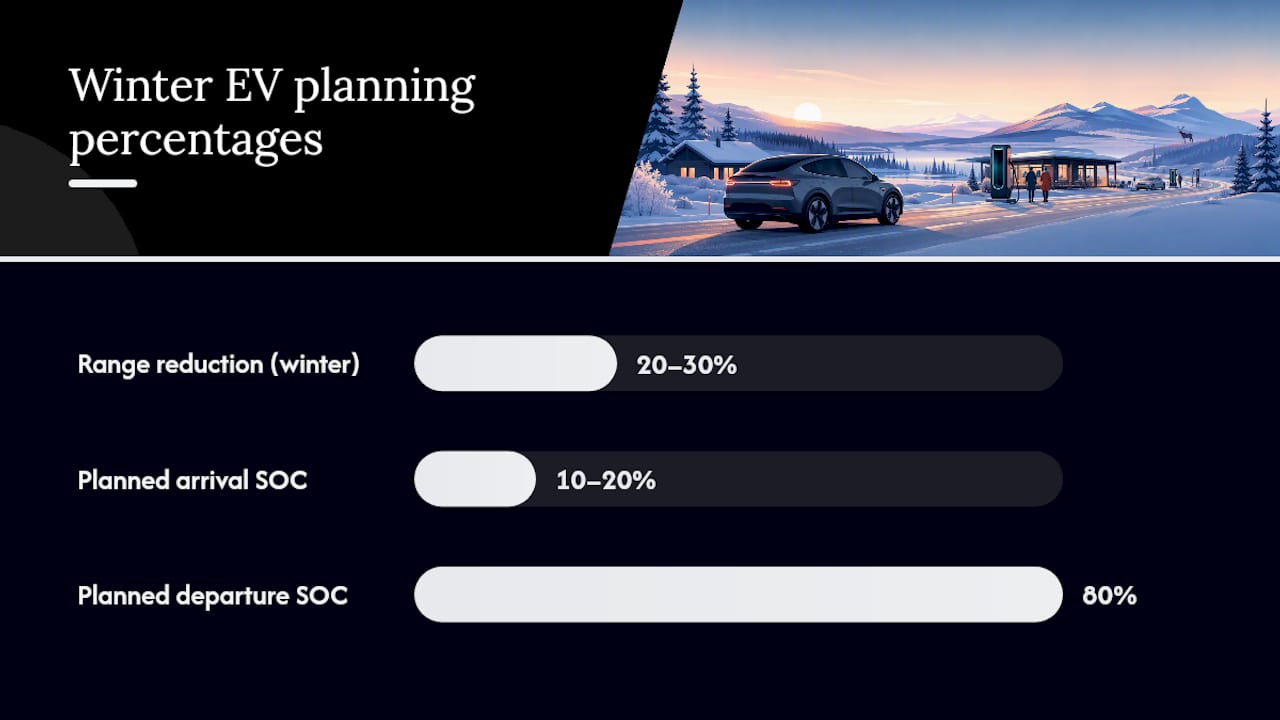
For a typical 800 to 1,100 km trip from southern Finland to Lapland, expect two to four fast-charging stops depending on your car’s battery size and the season. Moottori’s field test on the Helsinki to Levi route recorded a modern EV needing about three charging stops, each timed to overlap with a coffee or lunch break rather than sitting idle at a charger.
Reliable corridor hubs worth building your route around include:
- Palokka near Jyväskylä, a common first or second stop heading north
- Pyhäsalmi, useful for splitting the middle section of the drive
- Kempele outside Oulu, a well-stocked hub with food options nearby
- Sodankylä, one of the last major stops before the Arctic Circle
- Rovaniemi, where multiple networks converge near the Santa Claus Village area
If the drive itself feels like the obstacle rather than the charging, consider the VR night train to Rovaniemi, Kolari, or Kemijärvi. Your car travels overnight while you sleep, cutting daytime charging pressure entirely for that leg and freeing up a full day at the other end.
Winter Driving: How Cold Affects Range and What to Prepare
Cold weather is the real variable in any Lapland EV trip. Expect a 20 to 30% range reduction compared to summer figures, driven mostly by cabin heating and the battery’s own reduced efficiency in low temperatures. The only way to know your true number is to track a full tank-to-empty winter drive and calculate your own kWh/100km.
Battery preconditioning matters more than most drivers realize. Set your navigation to a fast charger as your destination, many EVs automatically start warming the battery on approach, and a warm battery can charge meaningfully faster than a cold one. Time this so the warming happens in the last 15 to 20 minutes before arrival, not the whole drive.
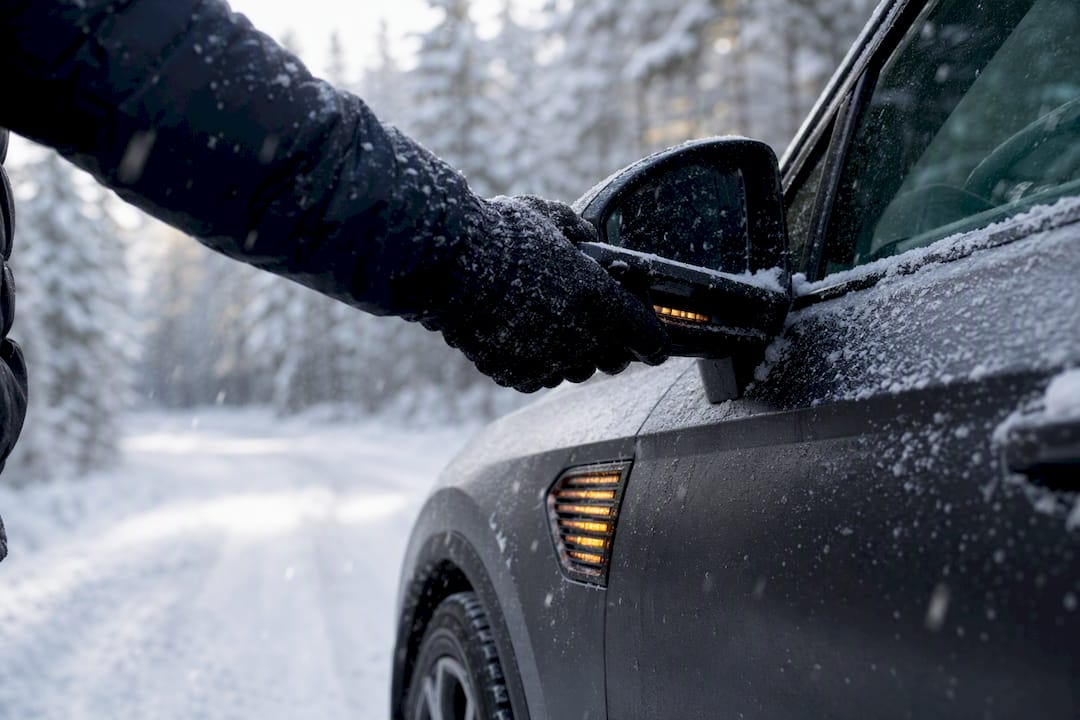
In cold conditions, shorter, higher-power stops usually beat one long stop. Charging curves taper off well before 100%, so two 20-minute stops at a strong charger often get you further, faster, than one 45-minute session.
Vehicle prep that actually matters:
- Genuine winter tires rated for Arctic conditions, not all-season tires
- An insulated charging cable if you’re bringing your own
- Use seat heating over cabin heating when possible; it draws far less power
Pro Tip: Preheat your cabin while still plugged in at home. It costs you nothing in range and means you’re not drawing extra battery power in the first ten minutes of driving.
Charging Infrastructure in Lapland: What to Expect
Lapland’s charging network has grown fast, but it’s still thinner than what you’ll find in southern Finland. PlugShare’s directory for Lapland shows hundreds of charging stations across the region, though DC fast chargers are noticeably less dense than farther south. This means backups matter more here than anywhere else on your route.
The major networks operating in the region include:
- Ionity, generally offering the highest power levels, often above 150 kW
- Recharge, with a growing footprint along main corridors
- St1, including the Rovaniemi Napapiiri station near Santa Claus Village, a large drive-through hub built to handle high traffic and even trailers
- ABC and K-lataus, often paired with fuel stations and food service
Local reporting consistently recommends prioritizing chargers rated 150 kW or higher and treating queues as a real possibility during Christmas week and February school holidays. If a hub looks busy in the app, having a second option mapped out saves you from sitting in a line.
Before you commit to a stop, check the app’s recent user reports, not just the pin on the map. A charger that shows as available might have a broken connector that only shows up in comments from the last few days.
What Do Real Trip Logs Show About Timing?
Numbers from actual test drives tell a more reassuring story than most people expect. Here’s what published tests found:
- Moottori’s diesel versus EV comparison on the Helsinki to Levi route logged around three charging stops for the EV, with charging sessions timed to overlap with the same breaks a combustion driver would take anyway.
- Volkswagen’s 1,000 km winter test found only a 22-minute total time difference between the EV and a comparable combustion car, with the EV costing about 20% less to run under the test’s conditions.
For families and leisure travelers who’d stop for food and stretching anyway, the EV essentially costs nothing extra in time. If you’re the type who wants to drive point-to-point with zero interruptions, you’ll notice the difference more.
Securing Charging at Your Lapland Accommodation
Confirming charging before you book saves you from a stressful first evening. Ask your accommodation directly:
- What connector type and power level does their charger support?
- Is there a fee, and does it need to be reserved in advance?
- Do they supply a cable, or do you need your own?
If your stay doesn’t offer charging, check for a public charger within a short drive and plan one evening charging session into your schedule rather than hoping to top up “eventually.” A property with dependable on-site charging, like Sunday Morning’s Lapland accommodations, lets you spend your days on activities instead of hunting for a plug.
Battery Health Over a Multi-Day Cold Trip
Extended cold-weather driving puts more demand on your battery than a single day trip, so a few habits protect both range and long-term battery condition.
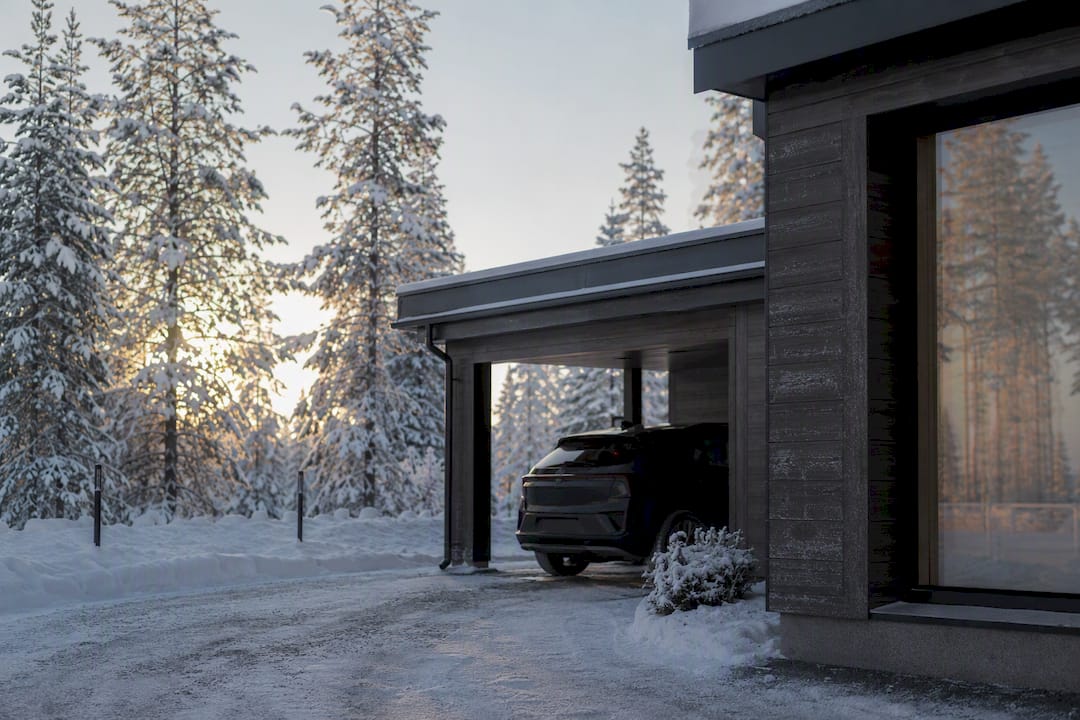
Where you park matters more in Lapland than almost anywhere else in Finland. A garage or even a sheltered spot reduces overnight temperature drop, which means less energy spent each morning just bringing the battery back to a usable operating temperature. If your accommodation offers covered parking near the charger, take it.
Limit fast charging to the sessions you actually need during the drive itself. Repeated back-to-back fast charges generate more heat cycling than the battery sees on a normal day, and while modern battery management systems handle this well, spacing out charging sessions when you have the option is still good practice on a multi-day trip.
Finally, keep an eye on your car’s own battery temperature readout if it has one. Many EVs show this in the energy menu, and a battery sitting well below its optimal range will both charge slower and deliver less usable capacity until it warms up.
Short Daylight Hours: Planning Around Darkness
Lapland winter daylight is genuinely limited, sometimes just a few hours around midday in December and January, and that changes how you should structure a driving day. Plan your longest driving segment for the daylight window when possible, since low light and potential snow glare make careful driving more demanding, and charging in daylight is simply easier for spotting connector issues or icy footing around the charger.
Build in a buffer for the drive to feel slower after dark. Reduced visibility means lower comfortable speeds on unlit stretches, and wildlife, particularly reindeer, is a real hazard on rural roads at dawn and dusk. Factor this into your estimated arrival time rather than assuming daytime driving speeds hold after sunset.
If you’re charging after dark, choose well-lit hubs near services over isolated rural stations. Rovaniemi’s hubs and larger stations like St1 Rovaniemi Napapiiri are better lit and safer to wait at than a single charger on an empty stretch of highway.
Why Charging Stops Matter More Than the Miles
The conventional wisdom treats EV charging as dead time to minimize. That framing misses what the actual trip data shows: Volkswagen’s own winter test found only a 22-minute difference over 1,000 kilometers compared to a combustion car. The time isn’t disappearing into charging, it’s overlapping with breaks you’d take anyway.
Where most planning guides fall short is treating every charger the same. A 50 kW rural charger and a 300 kW Ionity hub are not interchangeable, and building your route around the faster, service-adjacent stations changes your whole experience of the drive. The reader’s real priority should be choosing fewer, better stops over more, faster ones, since a 20-minute session at a strong charger paired with a proper meal often beats three rushed 10-minute top-ups.
If you take one thing from this guide, make it this: plan your stops around where you’ll actually enjoy stopping, not just where the electrons are cheapest.
— Juho
Sunday Morning: Where Your Charging Break Ends and Your Trip Really Begins
Sunday Morning is the alternative to guessing about accommodation logistics on your Lapland trip: our boutique resort and Parkside Pyhä Apartments in Pyhä-Luosto National Park are built around exactly the kind of relaxed, no-stress arrival that a well-planned EV drive deserves.
Between husky safaris, reindeer rides, snowmobiling, and Northern Lights tours, your charging stops can line up naturally with the same breaks you’d take for meals or rest, so the last leg of your drive feels like part of the holiday, not an obstacle before it. Sunday Morning’s sustainability practices, recognized through the Sustainable Travel Finland program, mean your low-emission arrival matches the ethos of the stay itself.
Before you book, confirm your charging setup with us directly. Then take a look at the Arctic Winter Getaway Package and check availability for your dates.
Sources
- Seikkailu: diesel vastaan sähköauto Lappiin – yhdellä istumalla vai matkalla lataillen?
- Lapland, Finland EV Charging Stations | PlugShare
- Lappiin junalla | VR
- St1 Rovaniemi Napapiiri - Santa Claus Village
