


TL;DR:
- Most successful Arctic team-building programs integrate outdoor challenges with indoor recovery to foster genuine trust. Privacy, high-quality accommodations, and thoughtful scheduling are essential for lasting psychological and social benefits. Proper logistics, safety planning, and balancing challenge with comfort transform Arctic retreats into memorable, impactful experiences.
Most managers assume that booking the most extreme Arctic challenge will produce the strongest team. The logic seems obvious: push people to their limits, and they will bond. But experienced corporate planners know that the real story is more nuanced. Research on restorative environments, combined with practical lessons from groups who have brought their teams to Finnish Lapland, tells a different story. Comfort, privacy, and thoughtful planning matter just as much as the adventure itself. This guide walks you through why Arctic team building works, what the science says, and exactly how to plan an event your team will genuinely remember.
Table of Contents
- Why Arctic adventures appeal for team building
- The science of team bonding in polar environments
- Planning for Arctic success: Comfort, logistics, and contingency
- Case studies: What works (and what doesn’t) in Lapland team building
- Our perspective: Why luxury AND logistics drive Arctic team-building success
- Ready to plan your team’s Arctic adventure?
- Frequently asked questions
Key Takeaways
| Point | Details |
|---|---|
| Comfort is crucial | Blending adventure with indoor comfort and privacy results in better team outcomes. |
| Plan for contingencies | Weather and logistics require backup plans and detailed preparation for Arctic events. |
| Restoration matters | Teams benefit most when challenges are balanced with restorative indoor time. |
| Choose the right partners | Work with knowledgeable, luxury-focused providers to deliver both safety and memorable experiences. |
Why Arctic adventures appeal for team building
There is something genuinely different about bringing a corporate team to the Arctic wilderness of Finnish Lapland. The setting creates an immediate psychological shift. People leave their routines, their screens, and their office hierarchies behind. That shift alone opens the door to real connection.
What draws managers to choose Arctic adventures for events? Several qualities stand out:
- Novelty: Most team members have never ridden a husky sled, navigated a snowmobile trail, or watched the Northern Lights from a frozen lake. Novel shared experiences create strong memories and natural conversation.
- Physical engagement: Cold air, movement, and mild physical challenge shift people out of passive meeting mode. Your team becomes present in a way that conference rooms rarely allow.
- Equality: Arctic gear looks the same on everyone. Titles blur. The CEO and the analyst wear the same thermal suit and face the same reindeer.
- Privacy and restoration: Finnish Lapland offers remarkable seclusion. Small boutique resorts in Pyhä-Luosto National Park place your group far from distractions, crowds, and urban noise.
That last point deserves emphasis. Research on Arctic environments shows that restorative outcomes and mental restoration are strongly influenced by privacy and perceived safety in the space. This is not simply about getting outside. It is about the quality and design of the environment itself.
“The Arctic isn’t just a backdrop. It is an active ingredient in how your team resets, connects, and rebuilds trust together.”
Finnish Lapland, and specifically the Pyhä region, offers a rare combination: genuine wilderness adventure paired with warm, high-quality indoor spaces. Your team can push their boundaries on a snowmobile trail and decompress afterward in a private sauna with locally sourced food and warm drinks. That blend is what separates a truly effective team retreat from a simple outing.
The science of team bonding in polar environments
Knowing why the Arctic appeals is one thing. Understanding what actually happens psychologically is what allows you to design a program that delivers lasting results.
Environmental psychology research consistently shows that natural settings support attention restoration, stress reduction, and improved social connection. Arctic environments, with their quiet landscapes, clean air, and low sensory overload, are particularly effective. However, the positive effects are not automatic. The design of your program and the quality of your facilities shape the outcome at least as much as the location.
Privacy of the space was identified as the most significant factor associated with restorative outcomes in Arctic research station environments. This finding has direct implications for corporate planners. A luxury boutique setting that offers your group exclusive access will outperform a busy resort with shared common areas, even if the outdoor activities are identical.
The table below compares three common formats for corporate team-building experiences:
| Format | Mental restoration | Physical safety | Comfort level | Bonding potential |
|---|---|---|---|---|
| Outdoor only | Moderate | Lower | Low | Variable |
| Indoor only | High | High | High | Limited |
| Blended outdoor and indoor | Highest | High | High | Strongest |
The blended approach consistently wins. Active challenge triggers bonding through shared effort and mild stress. Protected indoor time allows people to process those experiences together in a warm, relaxed environment. The sauna conversation after a husky safari often produces more honest team dialogue than a formal debrief session ever could.
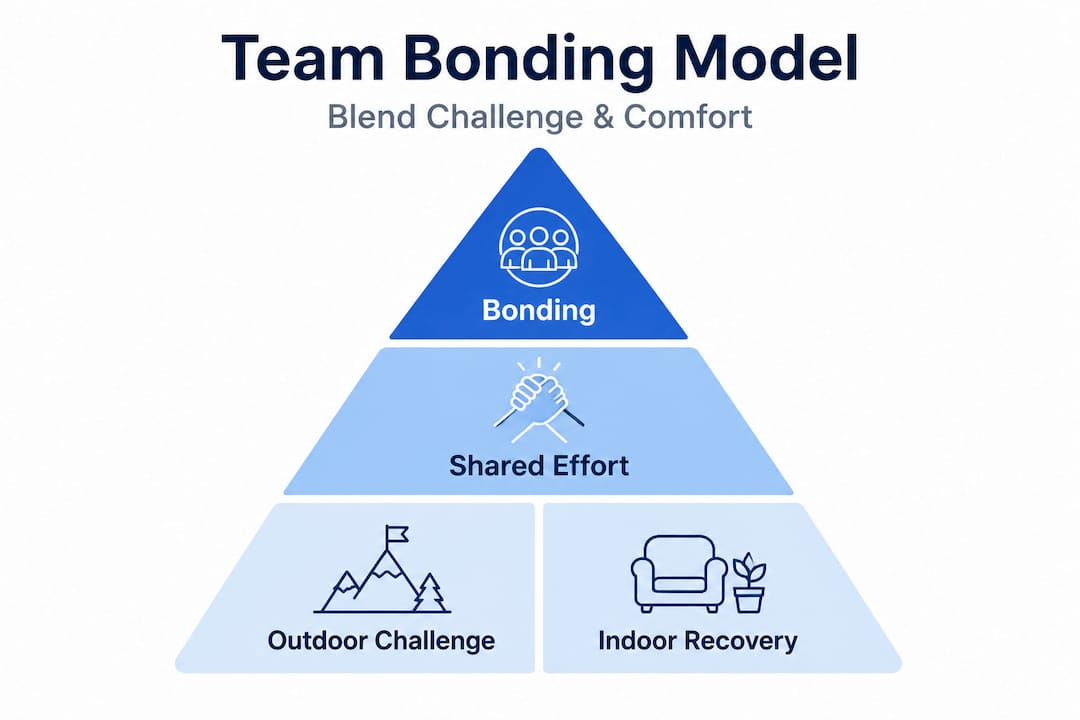
Luxury Arctic accommodations support this model directly. Boutique properties with private sauna facilities, cozy common areas, and attentive service make it easy to structure programs that alternate between outdoor energy and indoor recovery.
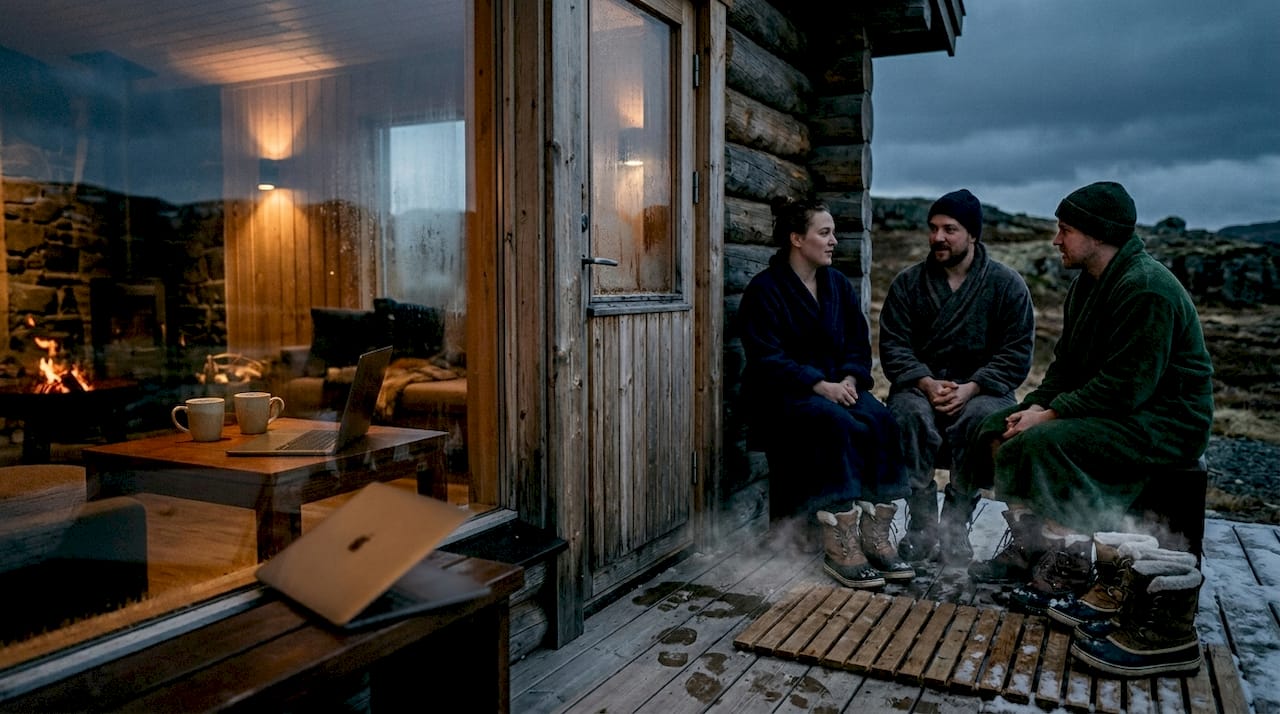
Pro Tip: The best team-building outcomes rely on blending challenge with recovery. Build your schedule so that every active outdoor session is followed by a warm, restorative indoor period. Active time plus recovery time is the formula that makes memories last.
Understanding this science changes how you approach your program design. Instead of stacking activity after activity to maximize adventure, you intentionally pace the experience. You create contrast: cold and warm, effort and ease, group challenge and quiet reflection.
Planning for Arctic success: Comfort, logistics, and contingency
With a solid scientific foundation, the next step is practical planning. Arctic events fail not because of the location but because of preventable logistics gaps. Understanding the most common risks ahead of time lets you build a program your team will enjoy rather than endure.
The top logistical risks for Arctic corporate events include:
- Underdressing: Participants from warmer climates routinely underestimate Finnish winter temperatures. Providing a detailed gear list, or better yet, offering rental thermal suits, eliminates this risk entirely.
- Weather disruptions: Arctic weather changes quickly. A planned Northern Lights snowshoe walk can be interrupted by wind, heavy snow, or a sudden temperature drop. Always have a parallel indoor activity scheduled and ready.
- Transport delays: Remote Lapland locations require careful coordination of transfers from Rovaniemi airport or local hubs. Delays in cold conditions are uncomfortable and set a negative tone before the program begins.
- Emergency contingencies: Every program should have documented weather thresholds at which outdoor activities pause, a clear communication plan, and a designated contact for medical or safety incidents.
Cold-weather conditions and logistics directly affect outcomes, and effective planning must include warm indoor alternatives, thorough dress guidance, and backup thresholds rather than assuming all activities can proceed outdoors as scheduled.
Here is a step-by-step framework for planning a flawless Arctic team event:
- Define your outcome first. Decide whether your primary goal is bonding, restoration, recognition, or strategic alignment. This shapes every subsequent choice.
- Choose a blended venue. Look for properties with both outdoor access and quality indoor facilities, including private saunas, dining areas, and comfortable lounge space.
- Brief your participants well. Send a detailed pre-arrival guide covering gear, weather expectations, physical requirements, and the daily schedule format.
- Build flexibility into the schedule. For every outdoor activity, have a warm indoor alternative that is equally engaging, not just a fallback but a genuine option.
- Hire local experts. Lapland-based guides understand the terrain, weather patterns, and safety protocols in ways that general event companies do not.
- Plan recovery time. Schedule sauna sessions, gourmet meals, and quiet evening time. These periods often generate the most valuable team conversations.
- Debrief intentionally. After each activity, hold a brief structured conversation that connects the shared experience back to your team’s real work challenges.
The Lapland experiential travel guide covers the regional context and activity options in useful detail, while insights from family adventure planning in Lapland offer useful parallel lessons on managing diverse groups with different comfort levels.
Pro Tip: Never treat indoor space as a fallback for bad weather. Great indoor facilities are a core part of the experience. Private sauna time, shared Nordic meals, and a cozy lounge by the fire are where some of the deepest team conversations happen.
Case studies: What works (and what doesn’t) in Lapland team building
Real scenarios illustrate the difference between programs that deliver results and those that fall short. These are not isolated exceptions. They reflect patterns that experienced Lapland planners observe regularly.
Scenario one: A blended program in Pyhä that delivered. A 16-person technology team from Helsinki spent three days at a boutique property in Pyhä-Luosto National Park. Their program combined a morning reindeer safari with an afternoon snowmobile trail, followed each day by a private sauna and a group dinner featuring local Lapland cuisine. Evenings included a guided Northern Lights walk. The program alternated outdoor challenge with warm recovery time throughout. Post-event feedback showed unusually high scores for trust, communication, and shared purpose. The manager noted that the dinner and sauna conversations produced more genuine openness than a year of office team meetings.
Scenario two: An outdoor-only group that struggled. A different group attempted a full-day snowshoeing program with minimal indoor breaks during an unexpectedly cold snap. Several participants were underdressed. There was no indoor backup activity available. By midday, energy was low, frustration was building, and the planned afternoon activities had to be canceled. The group spent the afternoon in a generic hotel lobby with no structured program. The event ended without the connection the manager had hoped for.
The contrast between these two outcomes comes down to planning and venue choice, not the location itself.
What to always do:
- Book venues with private indoor facilities, not just outdoor access
- Provide detailed gear guidance at least two weeks before arrival
- Build indoor backup activities that are as engaging as the outdoor ones
- Schedule meals as intentional bonding moments, not just fuel stops
- Set clear weather thresholds and communicate them to your group in advance
Pitfalls to avoid:
- Assuming everyone has the same cold tolerance or physical fitness level
- Overscheduling outdoor activities without recovery time
- Booking large public resorts that lack privacy and exclusivity
- Skipping the debrief process after key activities
Teams with backup plans and privacy-rated venues reported significantly higher satisfaction scores, with some studies noting up to 30% higher satisfaction versus adventure-only formats. Planning for sustainable Lapland travel also contributes to positive team sentiment, as eco-conscious groups respond well to knowing their event minimizes environmental impact.
Our perspective: Why luxury AND logistics drive Arctic team-building success
Here is the honest truth that most online guides skip over. The conventional approach to Arctic team building focuses almost entirely on the activity list. More snowmobiling. More extreme conditions. More adventure. The assumption is that intensity equals impact.
We disagree. And the teams who have the most positive experiences in Finnish Lapland consistently prove this point.
The events that create real, lasting team change are not the most extreme ones. They are the most thoughtfully designed ones. Physical challenge is valuable, but only when it is paired with genuine comfort, psychological safety, and protected time for people to connect as human beings rather than colleagues competing through discomfort.
Hosting events in Lapland works best when you resist the temptation to fill every hour with outdoor activity. The sauna session after a cold morning on a husky trail is not a luxury add-on. It is the core of the experience. That is where the masks come off and real conversations begin.
Luxury is also not about indulgence for its own sake. High-quality accommodation, good food, and attentive service remove friction. They keep your team energized, warm, and genuinely comfortable. When people feel cared for, they open up. When they open up, they bond. That is the mechanism that drives the results you are looking for.
The most experienced corporate planners we work with have all arrived at the same conclusion: challenge your team, yes. But protect them too. Build in the quiet evenings, the private saunas, the unhurried meals. Those moments are where the real team building actually happens.
Ready to plan your team’s Arctic adventure?
You now have the framework: blend challenge with restoration, prioritize privacy and quality indoor space, plan your logistics carefully, and trust that the most memorable moments will often happen around a sauna or a dinner table rather than on a snowmobile trail.
Sunday Morning Collection offers exactly this kind of thoughtfully designed Arctic experience in Finnish Lapland. Our boutique properties in Pyhä-Luosto National Park provide private, high-quality indoor facilities alongside access to the full range of Lapland’s winter activities. Whether your team is drawn to husky safaris, Northern Lights walks, reindeer experiences, or Nordic sauna evenings, we build programs that genuinely balance adventure with comfort. Explore our luxury accommodation in Lapland options and take a closer look at the Arctic Winter Getaway package to see how we bring this vision to life for corporate groups.
Frequently asked questions
What are the main risks of Arctic team-building programs?
The biggest risks are poor weather planning, inadequate indoor backup options, and underestimating cold-weather safety needs. Winter magnifies planning mistakes, so specifying weather thresholds and indoor contingencies from the start is essential.
Are indoor options really necessary for a successful Arctic adventure?
Yes, combining indoor comfort with outdoor activities ensures safety, restores energy, and prevents stress. Restorative environments with privacy and safety features directly support the mental restoration that makes team-building events effective.
How do privacy and venue design impact team-building outcomes?
Spaces with greater privacy and comfort boost mental restoration and positive team dynamics. Research on polar environments found that privacy of the space was the single most significant restorative factor identified.
What is the role of safety briefings for Arctic adventures?
Safety briefings ensure participants are prepared for Arctic conditions and set a calm, confident tone for the whole program. Planners who include multilingual briefings and detailed logistics support report higher comfort and satisfaction across all group types.
Can a team-building event in Lapland be sustainable?
Yes, by selecting venues focused on environmental responsibility and working with local guides and suppliers, you can run an event that is both memorable and low-impact. Eco-conscious groups consistently report higher engagement when their event aligns with their values.
