


TL;DR:
- Curated Nordic cuisine experiences emphasize connection to place, season, and fire through immersive, local, and story-driven multi-course menus. These events typically last four to five hours, involve small groups, and are set in natural environments that transform the dining experience. Booking in advance and embracing the journey are essential for authentic experiences rooted in landscape and tradition.
Curated Nordic cuisine experiences are defined by three principles: territory as larder, season as guide, and fire as soul. These are not restaurant dinners with a Scandinavian theme. They are immersive, multi-course tasting menus lasting four to five hours, set inside Swedish oak forests, on remote Norwegian fjord islands, or along the Arctic treeline. The food changes daily with the weather and the harvest. The setting is as deliberate as the menu. For culinary travelers who want more than a meal, these experiences offer something rare: a genuine, slow encounter with Nordic nature through food.
What makes curated Nordic cuisine experiences truly authentic?
Authenticity in Nordic dining is not about folk costumes or traditional recipes served in a tourist-friendly format. True curated Nordic experiences reject staged folklore entirely and focus instead on raw, unscripted connection to place. The philosophy is simple. The land provides. The season decides. The cook interprets.
The best Scandinavian dining experiences share a clear set of qualities:
- Small group sizes. Groups typically range from 2 to 12 guests, which keeps the experience intimate and personal.
- Ingredient-led menus. Menus change daily based on what is foraged, harvested, or caught that morning. Guests should expect the unexpected.
- Storytelling as structure. Each course carries a narrative, connecting the dish to a specific landscape, tradition, or ecological moment.
- Environmental transitions. Meals often move between indoor and outdoor settings mid-course, shifting temperature, light, and atmosphere deliberately.
- Logistics as ritual. Boat rides, forest walks, and private transfers are not inconveniences. They are intentional transitions that shift your mindset from ordinary life to something more attentive.
Pro Tip: Book experiences that include a physical journey to reach the table. The walk through a forest or the boat crossing to a remote island is the first course, even before you sit down.
What separates fine Nordic cuisine from standard fine dining is the refusal to perform. There is no tableside theater for its own sake. The drama comes from the place itself, and from the realization that the mushroom on your plate was picked two hours ago from the hillside you can see through the window.
Top curated Nordic culinary experiences to try
These are the experiences that define the category. Each one offers something specific and irreplaceable.
1. Culinary Tasting Under the Oaks, Sweden
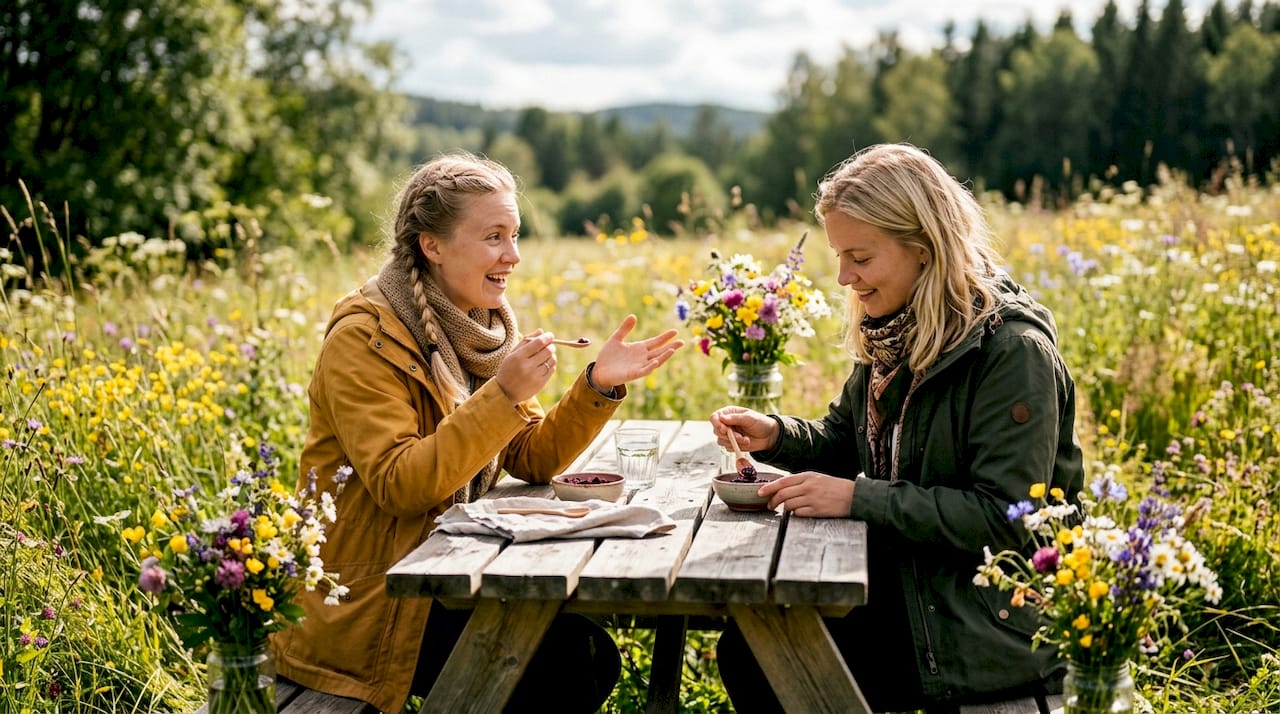
This open-air tasting experience takes place beneath ancient oak trees in the Swedish countryside. Group sizes stay between 2 and 12 guests, and the menu is built entirely from what is seasonal and local that day. The setting does most of the work. Dappled light, birdsong, and the smell of wood smoke frame every course. Shorter formats start around $300–$500 per person, making this one of the more accessible entry points into gourmet Nordic food.
2. Expedition dining at Iris, Norway’s Hardangerfjord
Iris is reached by boat. That journey across the Hardangerfjord to a remote island is not incidental. It is the experience beginning. Remoteness and challenging access amplify the exclusivity and the memory of everything that follows. The menu draws entirely from the fjord and the surrounding land. This is unique dining in Scandinavia at its most elemental.
3. Restaurang ÄNG, Sweden
Restaurang ÄNG holds a Michelin star and sits inside a building designed to dissolve the boundary between interior and landscape. Architecture, art, and nature combine to create a multi-sensory experience that goes well beyond what is on the plate. The tasting menu runs seasonally, typically from may through september, and lasts four to five hours. The pacing is slow and deliberate. You are not meant to rush.
4. Iceland and Faroe Islands luxury culinary expedition
This 10-day tour moves between two of the North Atlantic’s most geographically distinct food cultures. Geographic diversity shapes Nordic gastronomy in ways that a single-country tour cannot capture. Iceland’s volcanic soil and geothermal cooking traditions contrast sharply with the Faroe Islands’ wind-dried lamb and fermented fish. All-inclusive formats for multi-day luxury expeditions like this typically exceed $5,000–$10,000 per person.
5. Garden Dinner tasting menu, Sörmland, Sweden
This experience centers on a working farm in Sörmland, where the kitchen garden is the menu. Guests walk the garden before sitting down, which means they understand exactly where each ingredient came from. The connection between agriculture and plate is direct and visible. This is Nordic farm-to-table at its most literal and most honest.
6. Knystaforsen, Swedish forest
Knystaforsen sits beside a river in the Swedish forest and uses live fire as its primary cooking method. The experience embodies the “fire as soul” principle more completely than almost any other venue. Changing the dining environment mid-meal is a deliberate design choice here, moving guests between the riverbank and the interior as the evening progresses. The result is a meal that feels alive and responsive to the night around it.
“The most effective curated culinary experiences use storytelling menus that bridge ancient traditions with modern haute cuisine. Each course communicates a narrative, a culture, or a sense of place.”
How to plan and book Nordic culinary tours
Planning these experiences requires more lead time than a standard restaurant reservation. Here is what you need to know before you book.
Timing and availability
Most premium Nordic dining experiences run seasonally, from may through september. Some winter formats exist, particularly in Finnish Lapland, but the majority of open-air and garden-based experiences depend on the growing season. Select weekdays are typical, not full seven-day availability.
Booking in advance
Small group sizes of 2–12 guests mean these experiences sell out months ahead. Book three to six months in advance for peak summer dates. Many operators open their seasonal calendars in january or february.
What to expect on the day
- Arrive with time to spare. The journey to the venue is part of the experience.
- Dress in layers. Mid-meal environment shifts mean you may move outdoors during the evening. Comfortable, weather-appropriate clothing matters.
- Expect the menu to be a surprise. Ingredient-driven menus change daily and are rarely published in advance.
- Allow the full duration. These meals last four to five hours. Do not schedule anything immediately after.
Pro Tip: Contact the operator directly before booking to ask about dietary restrictions. Because menus are built fresh each day, most high-end Nordic experiences can accommodate restrictions with advance notice, but they need time to plan.
Budget planning
| Format | Typical price per person | Duration |
|---|---|---|
| Open-air tasting experience | $300–$500 | 2–3 hours |
| Single-venue tasting menu | $500–$1,500 | 4–5 hours |
| Multi-day culinary expedition | $5,000–$10,000+ | 7–10 days |
For a broader understanding of what defines a sensory culinary experience before you book, it helps to know what separates a curated format from a standard restaurant visit.
Why environment and storytelling define Nordic dining
The environment is not a backdrop. It is an equal partner in the meal. This is the principle that separates authentic Nordic food workshops and tasting experiences from ordinary fine dining, regardless of the quality of the cooking.
“Successful operators treat guests as travelers, not customers, fostering reflection and genuine connection with nature.”
Storytelling menus work because they give each course a reason to exist beyond flavor. A dish of reindeer with preserved cloudberries is not just a protein with a sauce. It is a statement about the Arctic winter, about preservation as survival, about the relationship between a herder and a landscape. When the menu explains that context, the food tastes different. You eat with more attention.
| Element | Role in the experience |
|---|---|
| Natural setting | Grounds the meal in a specific place and season |
| Storytelling menu | Connects each course to culture, ecology, or tradition |
| Environmental transitions | Engages multiple senses and shifts guest perspective |
| Local producers and foragers | Adds human narrative and supply chain transparency |
| Architecture and design | Frames the landscape and controls how guests perceive it |
Luxury culinary tourism in Lapland follows the same principles. The Arctic environment, the long winter darkness, and the short, intense summer growing season all shape what ends up on the plate. The storytelling writes itself when the ingredients are this specific to a place.
The slow luxury philosophy matters here. These experiences ask you to be present for four to five hours, to pay attention to each course, and to let the environment affect your mood. That is a different ask than a two-hour dinner. Travelers who embrace it consistently describe these meals as among the most memorable of their lives, not because the food was perfect, but because the whole experience was coherent.
Key takeaways
The most authentic Nordic dining experiences are defined by small groups, ingredient-led menus, and environments that treat landscape and storytelling as equal partners to the food itself.
| Point | Details |
|---|---|
| Book early | Group sizes of 2–12 guests mean peak dates sell out three to six months ahead. |
| Embrace the journey | Boat rides and forest walks are intentional transitions, not just logistics. |
| Expect daily menu changes | Ingredient-driven menus shift with weather and harvest, so flexibility is required. |
| Budget by format | Prices range from $300 for short tastings to $10,000+ for multi-day expeditions. |
| Environment is the experience | Landscape, architecture, and storytelling are as central as the food itself. |
What I’ve learned from slow Nordic dining
By Juho
The first time I sat through a four-hour tasting menu in a Swedish forest, I spent the first hour waiting for something to happen. That was the wrong mindset entirely. Nothing dramatic was going to happen. The point was the absence of drama, the slow accumulation of detail, the way the light changed between the third and fourth course.
What I’ve found is that travelers who get the most from these experiences are the ones who stop trying to evaluate the food and start paying attention to everything else. The temperature of the air. The sound of the river. The way the chef explains why this particular mushroom only appears for ten days each year. The food is the vehicle, not the destination.
The advice I give anyone planning their first Scandinavian dining experience is this: resist the urge to photograph every course. Put the phone away for at least the first half of the meal. The Nordic Reset approach only works if you actually slow down. You cannot slow down and document simultaneously.
The experiences I remember most vividly are the ones where I arrived uncertain and left changed. Not because the food was technically extraordinary, though it often was. Because the whole evening asked something of me, and I gave it. That is what eco-luxury Arctic travel does at its best. It makes you a participant, not a consumer.
— Juho
Nordic culinary travel pairs naturally with Sundaymorning
Sundaymorning offers luxury accommodation in Finnish Lapland that complements the Nordic culinary philosophy perfectly. The boutique Sunday Morning Resort and Parkside Pyhä Apartments sit inside Pyhä-Luosto National Park, where the wilderness is immediate and the food culture is deeply rooted in Arctic seasons.
Restaurant Aihki at Sundaymorning brings fine dining in Pyhä to the heart of Lapland, with menus built around local and seasonal Arctic ingredients. If you are planning a Nordic culinary trip and want a base that matches the quality of the experiences you are seeking, luxury accommodation in Lapland at Sundaymorning gives you exactly that. The wilderness is outside your door. The table is already set.
FAQ
What is a curated Nordic cuisine experience?
A curated Nordic cuisine experience is an immersive, small-group tasting menu set in a natural or architecturally significant Nordic environment, where the menu changes daily based on foraged and seasonal local ingredients. The experience typically lasts four to five hours and integrates storytelling, landscape, and food into a single coherent event.
When is the best time to book Nordic culinary tours?
Most experiences run from may through september, with peak dates selling out three to six months in advance. Book in january or february for the best summer availability.
How much do Scandinavian dining experiences cost?
Prices range from $300–$500 for shorter open-air tastings to $5,000–$10,000 or more for multi-day luxury culinary expeditions. The format and duration determine the price point.
Do I need to know the menu in advance?
No. Ingredient-driven menus change daily based on weather and what is available from local foragers and farms. Operators rarely publish menus in advance, though most accommodate dietary restrictions with prior notice.
What should I wear to an outdoor Nordic dining experience?
Dress in layers and bring weather-appropriate outerwear. Many experiences shift between indoor and outdoor settings mid-meal, and evening temperatures in Nordic regions can drop significantly even in summer.
Recommended
- Lapland culinary tourism: Arctic flavors and luxury | Sunday Morning Collection
- What is Nordic luxury? Sustainable Arctic elegance guide | Sunday Morning Collection
- Cozy Lapland getaways: luxury, sustainability & Arctic experiences | Sunday Morning Collection
- Arrange unique couple experiences in Lapland: a luxury guide | Sunday Morning Collection
