


TL;DR:
- A successful event dining experience relies on purposeful venue choice, enjoyable menu, and inviting atmosphere. Planning must focus on budget allocation, make-ahead dishes, and creative lighting to create memorable moments. Delegating logistics and designing engaging experiences ensure hosts stay present with guests and enjoy the celebration.
A great event dining experience is defined by three things: purposeful venue choice, a menu guests can actually enjoy, and an atmosphere that makes people want to stay. Whether you are planning a milestone birthday, a corporate dinner, or a romantic celebration in the Arctic wilderness, the food and setting together carry more weight than any single decoration or speech. This event dining experience guide walks you through every decision, from budget allocation to day-of execution, so you can focus on your guests instead of the kitchen. The industry term for this discipline is experiential dining design, and it applies whether you are hosting eight people or eighty.
What does a great event dining experience guide actually cover?
Experiential dining design covers four pillars: budget, venue, menu, and timeline. Get all four right and the event feels effortless. Miss one and guests notice, even if they cannot name exactly why.
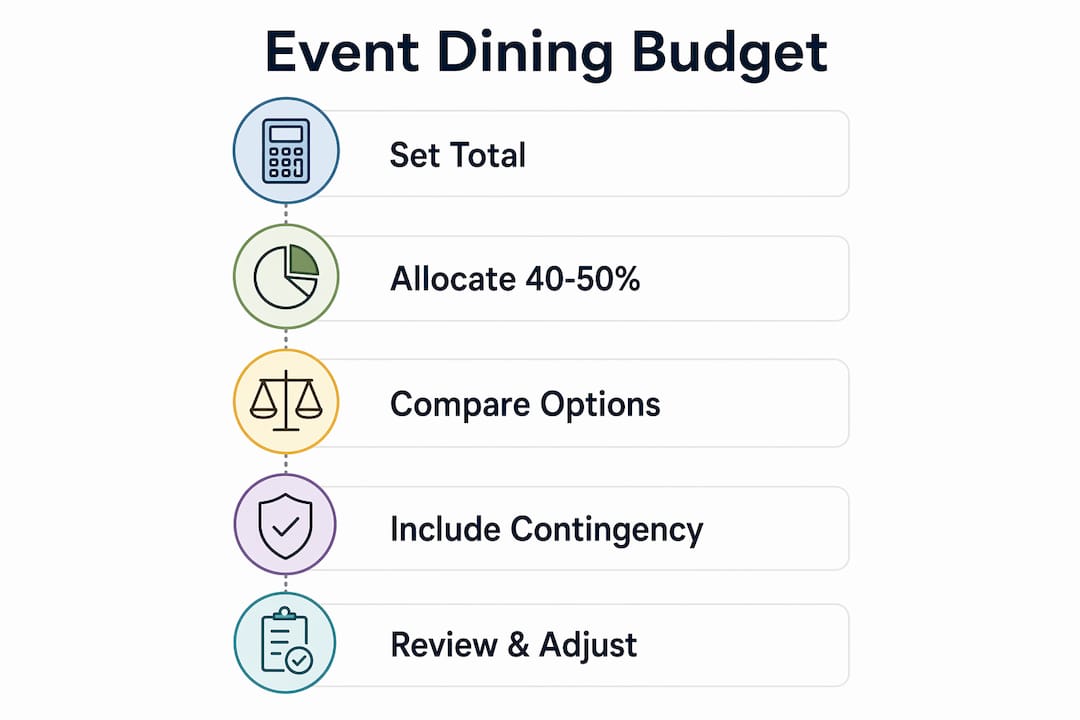
The most important planning decision you make is how you divide your money. Budget allocation for events follows a clear standard: 40–50% for food and beverage, 15–20% for venue, 10–15% for decor, and 10% held as a contingency fund. That contingency is not optional. Unexpected costs appear at almost every event, from last-minute dietary requests to a broken sound system.
Intentional design consistently outperforms high spending. Signature moments and strategic lighting create a luxury atmosphere far more effectively than an inflated catering bill. That insight should shape every decision you make from this point forward.
How do you plan your event dining budget for maximum impact?
Start with your total budget and divide it before you book anything. The 40–50% food and beverage allocation covers catering, beverages, and service. The 15–20% venue slice pays for the room, tables, and any rental fees. Decor gets 10–15%, and the remaining 10% sits untouched until something goes wrong.
Interactive food stations are worth comparing directly to plated dinners on cost. Live food stations require a minimum of 50–100 guests to be economically viable, but they often cost less per head than a fully plated service once you factor in the extra staff that plated dinners demand. Stations also create energy in the room that a seated, served meal rarely matches.
One budget move that consistently surprises planners: plant-forward menus reduce costs while impressing guests with creative vegetable dishes that align with current sustainability trends. You spend less on protein and more on presentation, and the result often feels more memorable than a standard meat-centered spread.
Gratuity is a line item many planners forget until the bill arrives. Standard event gratuity runs 18–22% and is often included automatically in private dining contracts. Build it into your budget from day one so it does not eat into your contingency fund.
- Allocate 40–50% of total budget to food and beverage first
- Reserve 10% as a contingency before committing to any vendor
- Compare interactive stations vs. plated service on total staffing cost, not just per-head catering price
- Factor gratuity (18–22%) into your venue contract review
- Consider plant-forward dishes to reduce protein costs without reducing guest satisfaction
Pro Tip: Ask your caterer for a plant-forward tasting menu before your final menu decision. Guests who expect a standard dinner are often more impressed by a creative vegetable course than a predictable entrée.
How do you choose a venue and build the right atmosphere?
The venue sets the emotional tone before a single dish arrives. Your selection criteria should cover location, noise level, private dining availability, and physical accessibility for all guests.
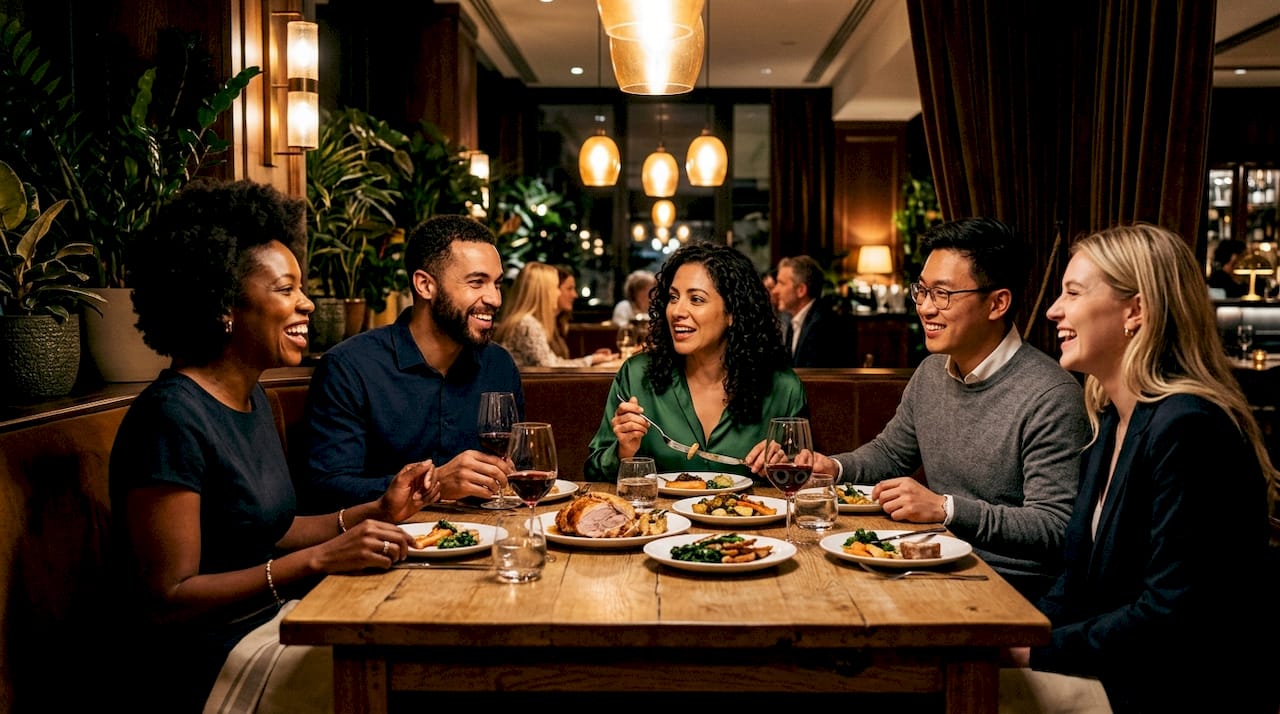
Private dining rooms work best for groups of eight or more. They give guests privacy, reduce ambient noise, and make conversation easier. Open restaurant floors work for casual group dining, but they rarely create the focused, intimate feeling that special celebrations need.
Lighting is the single most underused tool in event design. Warm LED uplighting and varied-height candle arrangements create an intimate, luxurious atmosphere at a fraction of what elaborate floral arrangements cost. Candles at different heights draw the eye across the table and make the space feel considered and warm. You can see this principle applied beautifully in Sundaymorning’s festive dinners at Aihki, where candlelight and Nordic wilderness combine to create something genuinely memorable.
Seating strategy matters more than most planners realize. Mixing personalities strategically and placing conversation-starters near quieter guests keeps energy moving around the table. Round tables encourage group conversation. Long banquet tables work better when you assign seats deliberately rather than letting guests self-select.
Thematic elements and signature moments give guests something to remember and talk about afterward. A single striking visual, a custom cocktail with a story behind it, or a live culinary demonstration creates a memory anchor that outlasts the meal itself. The culinary work of Anssi Riihimäki at Pyhä-Luosto is a strong example of how a chef’s personal story woven into a menu becomes the event’s defining moment.
- Confirm private dining availability for groups of 8 or more
- Check noise levels at the venue during the time of day you plan to host
- Verify accessibility for all guests before signing any contract
- Plan lighting in layers: ambient, candle, and accent
- Assign seats intentionally rather than using open seating for groups over 10
Pro Tip: Walk the venue 30–60 minutes before guests arrive. A final walkthrough catches small problems, a crooked centerpiece, a dim corner, a missing place setting, that you will not notice once guests are in the room.
How do you design a menu that lets you enjoy your own event?
The biggest mistake hosts make is choosing a menu that keeps them in the kitchen. 80% of food should be pre-prepared before guests arrive. That single rule separates a host who enjoys the evening from one who misses it entirely.
Service style shapes both guest experience and your workload. Here is how the three main formats compare:
| Service style | Guest interaction | Host workload | Best for |
|---|---|---|---|
| Plated dinner | Low to moderate | High (requires precise timing and more staff) | Formal, structured events |
| Family style | High | Moderate (dishes prepared ahead, passed at table) | Intimate celebrations, relaxed tone |
| Interactive stations | Very high | Low (stations run themselves once set up) | Large groups, casual or festive events |
Family-style and interactive stations consistently outperform plated service for social events. Plated dinners require more staff, precise timing, and carry a real risk of cold food or service delays. Stations and shared platters keep guests moving, talking, and engaged.
Dietary inclusivity is not optional. Every menu needs at least one dish that works for guests with common restrictions: gluten-free, dairy-free, and vegetarian at minimum. Preparing universal dietary-friendly dishes as a contingency covers unexpected disclosures on the day and prevents any guest from feeling like an afterthought.
Local and seasonal ingredients add depth to any menu without adding complexity. Sundaymorning’s approach to Nordic cuisine, rooted in Lapland’s natural larder, shows how local cuisine in tourism can become the most talked-about element of an event. Guests remember food that tells a story about where they are.
- Build your menu around dishes that can be fully prepared the day before
- Choose at least one interactive station to encourage guest movement and conversation
- Include gluten-free, dairy-free, and vegetarian options as standard
- Use seasonal and local ingredients to add authenticity without adding cost
- Avoid any dish that requires active cooking or plating during the event itself
What is the right planning timeline for a dining event?
Start earlier than you think you need to. Event planning timelines recommend beginning 6–8 weeks before a polished dinner and 12 or more weeks before a large event. That window gives you time to confirm vendors, finalize menus, and handle the inevitable changes without stress.
A practical timeline looks like this:
- 8–12 weeks out: Set your budget, confirm the venue, and send save-the-dates or invitations.
- 6–8 weeks out: Finalize your menu with your caterer or kitchen plan. Collect dietary restrictions from guests.
- 3–4 weeks out: Confirm all vendor bookings in writing. Finalize seating arrangements.
- 1–2 weeks out: Confirm headcount, finalize the run-of-show, and brief your point person on their responsibilities.
- 1–2 days before: Complete all food prep that can be done ahead. Set up decor and lighting if the venue allows early access.
- Day of: Arrive 60–90 minutes early. Run your walkthrough. Confirm payment and gratuity arrangements with the venue before guests arrive.
Assigning a point person is non-negotiable for events over 20 guests. This person handles logistics, vendor questions, and timing so you can be present with your guests. Pre-arranging payment and gratuity with the venue before the event eliminates the awkward billing moment that disrupts the end of an otherwise elegant evening.
Pro Tip: Brief your point person with a written timeline, not just a verbal rundown. A one-page schedule with specific times and contact numbers for each vendor prevents confusion when things move fast.
Key Takeaways
The most effective event dining experience combines intentional budget allocation, a make-ahead menu, purposeful lighting, and a clear planning timeline starting at least 6–8 weeks before the event.
| Point | Details |
|---|---|
| Budget allocation | Spend 40–50% on food and beverage; hold 10% as a contingency from the start. |
| Menu strategy | Pre-prepare 80% of food so you can be present with guests, not stuck in the kitchen. |
| Service style | Choose family-style or interactive stations over plated dinners for better guest engagement. |
| Venue and lighting | Use warm LED uplighting and candles to create atmosphere affordably in any space. |
| Planning timeline | Start 6–8 weeks out for smaller events and 12 or more weeks out for large gatherings. |
What I have learned from planning dining events that actually work
By Juho
The conventional advice on event dining focuses almost entirely on food. Pick a good caterer, choose a nice venue, and the rest will follow. That is not wrong, but it misses the point.
The events I have seen guests talk about for years afterward were not the ones with the most expensive menus. They were the ones where something unexpected happened at the table. A chef came out to explain a dish. The lighting shifted at a specific moment. Guests were seated next to someone they would never have met otherwise. Those moments are designed, not accidental.
The mistake I see most often is a host who disappears into logistics. They chose a menu that required constant attention, did not assign a point person, and spent the evening managing instead of hosting. The food was good. The experience was not. A make-ahead menu and one trusted person managing the floor changes everything.
My honest recommendation: spend less time worrying about the menu and more time thinking about one moment you want guests to remember. A signature cocktail with a story. A single local ingredient with a connection to the place. A view revealed at exactly the right time. Sundaymorning’s Champagne dinner at Aihki is a perfect example of this principle. The setting, the timing, and the curation created something that no catering budget alone could buy.
Plan the logistics well enough that you forget about them on the day. Then show up and be a host.
— Juho
Sundaymorning and the art of curated event dining
If you are planning a celebration that deserves a setting as memorable as the meal itself, Sundaymorning offers something genuinely different. The boutique Sunday Morning Resort and Parkside Pyhä Apartments sit inside Pyhä-Luosto National Park in Finnish Lapland, where the wilderness becomes part of the dining experience itself.
Sundaymorning hosts private events and corporate events with Nordic cuisine rooted in local, seasonal ingredients. Every detail, from the candlelit dining room to the chef’s menu, is designed to let guests be fully present. The Arctic Winter Getaway Package pairs luxury accommodation with curated dining in a setting that does the atmospheric work for you. If you want your next celebration to feel like it could not have happened anywhere else, this is where to start.
FAQ
What percentage of an event budget should go to food and beverage?
The standard allocation is 40–50% of your total event budget for food and beverage. This covers catering, drinks, and service staff.
How far in advance should I plan a dining event?
Start planning 6–8 weeks before a smaller dinner and 12 or more weeks before a large event. Final preparations should be complete 1–2 days before the event.
What is the best service style for group dining events?
Family-style and interactive food stations work better than plated dinners for most social events. They encourage conversation, reduce service delays, and often cost less in total staffing.
How do I handle dietary restrictions at a dining event?
Collect dietary information from guests at the time of invitation. Prepare at least one universal dish that is gluten-free, dairy-free, and vegetarian to cover unexpected disclosures on the day.
How do I avoid being stuck in the kitchen during my own event?
Build your menu so that 80% of the food is fully prepared before guests arrive. Choose dishes that hold well at temperature and require no active cooking or plating during the event.
