


TL;DR:
- Choosing low-carbon transportation methods like trains and direct flights significantly reduces the environmental impact of winter trips.
- Supporting locally owned accommodations, authentic activities, and regional foods enhances community benefits and sustainability.
Winter is one of the most beloved travel seasons, but it also carries one of the heaviest environmental footprints. From long-haul flights to energy-hungry resorts, the hidden costs of a dream winter getaway can add up fast. This guide to sustainable winter holidays walks you through every stage of planning, from how you get there to what you eat and how you celebrate, so you can enjoy an authentic Arctic experience without leaving more of a mark than you should. If you have been dreaming of Finnish Lapland, this is where responsible travel and real adventure meet.
Table of Contents
- Key takeaways
- Planning sustainable winter travel
- Choosing eco-friendly winter accommodations
- Sustainable winter activities and gear
- Supporting local communities during winter trips
- Verifying your actual sustainable impact
- My honest take on sustainable winter travel
- Experience sustainable Lapland with Sundaymorning
- FAQ
Key takeaways
| Point | Details |
|---|---|
| Transport matters most | The largest carbon contributor on any winter trip is getting there, so prioritize trains, slow travel, and direct flights. |
| Fewer, longer trips win | One longer holiday produces far less carbon than several short breaks across the same period. |
| Certifications reveal the truth | Look for recognized labels like Green Key, Travelife, or Sustainable Travel Finland to filter out greenwashing. |
| Local spending multiplies impact | Choosing locally owned stays, guides, and restaurants keeps money in the community and supports authentic experiences. |
| Track and reflect | Use carbon calculators and ask direct questions to resorts so you can measure your actual impact and improve trip by trip. |
Planning sustainable winter travel
Most people focus on what they do at the destination. The reality is that transport to the destination outweighs every other carbon decision you make on a winter holiday. Getting that part right is where eco-friendly winter travel actually begins.
Choose your mode of travel wisely
Rail travel consistently ranks among the lowest-emission ways to reach a winter destination. If you are traveling from central or northern Europe toward Scandinavia or Finland, overnight trains can replace a short-haul flight entirely, and the journey itself becomes part of the experience. Slow travel through snowy landscapes is genuinely one of the most peaceful ways to arrive somewhere new.
When flying is the only realistic option, a few choices still make a difference:
- Book direct flights whenever possible. Takeoffs and landings account for a disproportionate share of a flight’s emissions.
- Fly economy class. Business and first-class seats have a larger carbon footprint per passenger because they take up more physical space.
- Choose fewer, longer trips. One three-week holiday produces significantly less carbon than seven weekend breaks spread across the year.
- At the destination, use public transport, shared shuttles, or trains to get between towns rather than renting a car.
Pro Tip: Carbon offset programs are not a substitute for reducing emissions at the source, but they can be a useful supplement. Look for verified projects through Gold Standard or Plan Vivo that fund reforestation or clean energy in communities that need it most.
Packing light is one of the simplest things you can do. Reduced luggage weight lowers fuel consumption on every leg of your journey, and switching to solid toiletries eliminates plastic bottles while keeping you within cabin bag limits.
Choosing eco-friendly winter accommodations
Once you are at your destination, where you sleep matters more than most travelers realize. The right accommodation can support local employment, run on clean energy, protect the surrounding wilderness, and give you a genuinely authentic stay. The wrong one can undo a lot of good intentions.
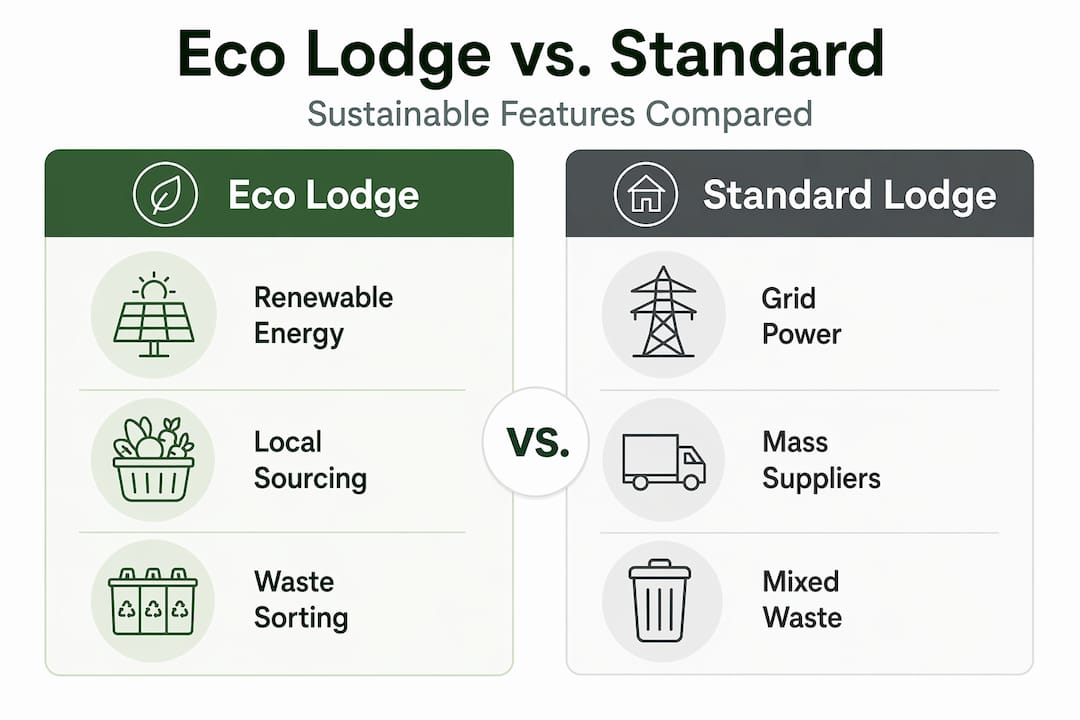
What to look for in a sustainable Arctic lodge
Recognized sustainability certifications are the clearest signal you can find. In Finland, the Sustainable Travel Finland label is awarded by Visit Finland and covers everything from energy management to community involvement. Internationally, look for Green Key, Travelife, or Green Globe accreditation. These programs require documented evidence, not just a well-written website.
Here is a side-by-side look at what separates genuinely sustainable Arctic stays from those that only claim to be:
| Feature | Sustainable property | Standard property |
|---|---|---|
| Energy source | Renewable (solar, biomass, hydro) | Mixed or unspecified grid energy |
| Snowmaking (if applicable) | Energy-efficient systems with verified source | Conventional, high-consumption systems |
| Food sourcing | Local, seasonal, and traceable | Imported, convenience-focused |
| Ownership | Locally owned and operated | Large international chain |
| Certification | Verified third-party label | Self-reported or none |
| Waste management | Composting, minimal packaging | General waste with no separation |
Smaller, locally owned properties tend to prioritize regional suppliers and community employment naturally, without needing a corporate sustainability report to prove it. A family-run Arctic lodge in Finnish Lapland is far more likely to serve local reindeer and cloudberry preserves than a chain hotel pulling from a centralized supply chain.
Pro Tip: Before booking, email the property directly and ask two questions: what is your energy source, and do you hold any third-party sustainability certification? The quality of the answer tells you almost everything.
Sustainable Lapland travel at its best is when a property treats the surrounding wilderness as an asset worth protecting rather than a backdrop to exploit.
Sustainable winter activities and gear
Choosing responsible activities and gear is where green winter vacations start to feel genuinely different from the average trip, in a good way. The Arctic wilderness rewards slow, quiet exploration more than any motorized shortcut.
Low-impact activities to prioritize:
- Snowshoeing and cross-country skiing let you move through the forest on your own terms, with no engine noise and no emissions.
- Wildlife watching with a knowledgeable local guide keeps you informed about animal behavior and prevents inadvertent habitat disturbance.
- Guided nature walks in national parks like Pyhä-Luosto give you access to expert knowledge about the ecosystem while staying on marked trails.
- Traditional sauna experiences rooted in Finnish culture are about as low-impact as a holiday activity gets, especially when the sauna uses locally sourced firewood or a wood-burning stove.
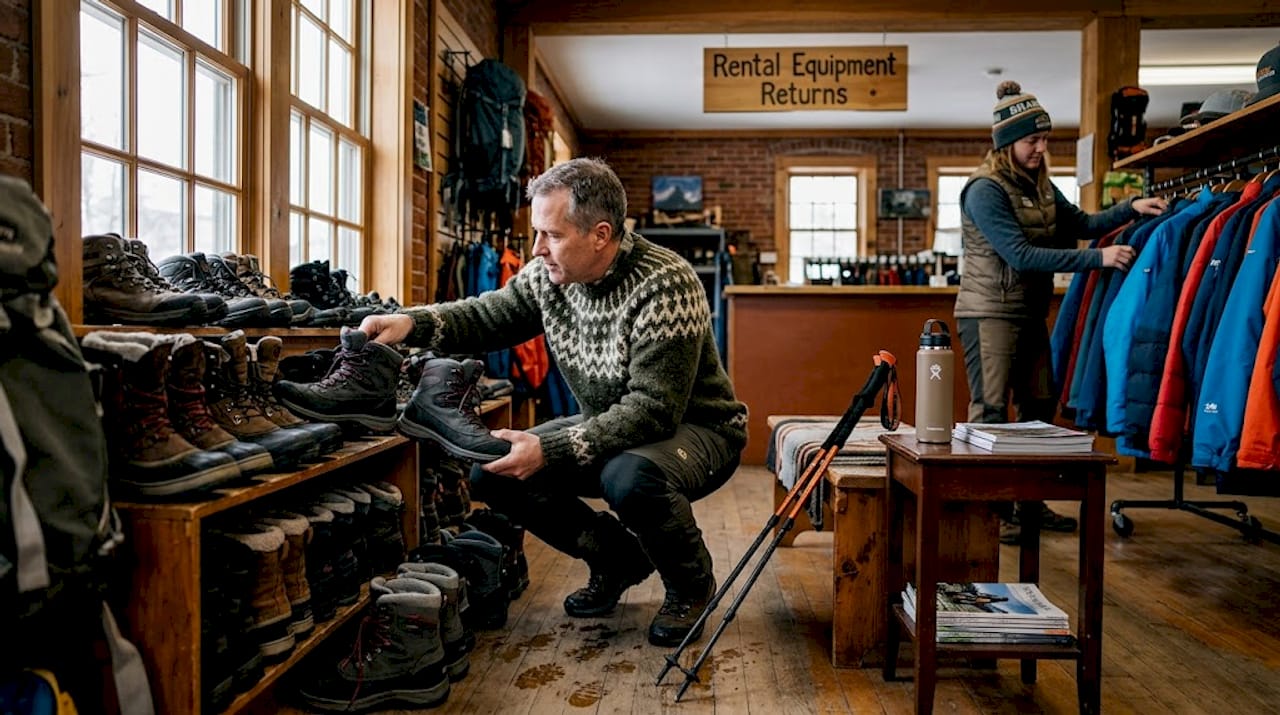
When it comes to gear, renting is often the smarter choice. You avoid the production footprint of buying new equipment, and most reputable Arctic destinations have quality rental options for skis, snowshoes, and cold-weather layers. If you do buy gear, look for brands using recycled materials or committed to repair programs.
Carrying reusable drinkware is a small habit with a real cumulative effect. A refillable insulated bottle keeps your drink warm in below-zero temperatures and eliminates dozens of single-use cups across a week-long trip.
Pro Tip: Ask your accommodation or local tourism office if there are any organized conservation days or trail clean-up programs during your stay. Active participation in local conservation efforts leaves a positive mark that outlasts your visit by years.
Explore what is available through winter activities curated specifically for the Pyhä-Luosto area to find options that balance adventure with environmental respect.
Supporting local communities during winter trips
A sustainable winter holiday is not just about carbon math. It is about who benefits from your spending and how you engage with the place you are visiting.
Here is how to make your winter trip genuinely community-centered:
- Eat locally. Choosing restaurants that source local food and visiting farmers’ markets reduces food miles and keeps money with local producers. In Lapland, this means dishes built around reindeer, Arctic fish, wild mushrooms, and foraged berries.
- Book local guides. Independent guides and small family businesses invest their earnings back into the community. A local reindeer herder leading a sleigh tour shares genuine cultural knowledge that no corporate operator can replicate.
- Buy local gifts. Handmade crafts from Sámi artisans or Finnish makers are more meaningful than mass-produced souvenirs, and the money stays local.
- Rethink holiday decorations and gifting. Reusing decorations and giving experience-based gifts rather than physical items cuts holiday waste significantly. A sauna session or a Northern Lights excursion makes a far better gift than something wrapped in plastic.
- Attend community events mindfully. Join local winter festivals or markets without overwhelming the space. Be present, spend intentionally, and leave the area as you found it.
These choices feel better too. Travelers who engage this way consistently report richer, more memorable trips than those who move through destinations as passive consumers.
Verifying your actual sustainable impact
Feeling good about your trip is not the same as actually reducing your footprint. Here is how to move from good intentions to measurable choices.
| Question to ask | Why it matters |
|---|---|
| What energy source powers your property? | Identifies real versus claimed sustainability credentials |
| Do you hold a third-party sustainability certification? | Filters greenwashing from verified performance |
| How do you manage food waste on site? | Reveals operational commitment beyond marketing |
| Do you source food and supplies locally? | Confirms economic and environmental alignment |
| What transport options connect your property to nearby towns? | Flags whether car dependency is built into the stay |
Several free tools can help you estimate the carbon footprint of your travel before you book. The International Civil Aviation Organization offers a passenger emissions calculator. Atmosfair and Myclimate both provide detailed flight-specific assessments.
Verifying certifications directly and asking precise questions is also the most reliable way to spot greenwashing. A property that genuinely performs well on sustainability will answer these questions clearly and with specifics. Vague language about “caring for nature” without any supporting evidence is a warning sign, not a reassurance.
Pro Tip: Keep a simple note on your phone during the trip to track sustainable habits: meals from local restaurants, reusable items used, plastic refused, or conservation activities joined. Reviewing it at the end of your holiday is motivating and helps you set a higher bar for next time.
My honest take on sustainable winter travel
I have spent years watching the sustainable travel conversation evolve, and one thing I keep noticing is how much energy goes into optics rather than outcomes. Properties invest in beautiful language about nature and responsibility, and travelers accept that language at face value because they want to believe it. That gap between narrative and reality is where most of the damage happens.
What I have actually seen work is simpler than most marketing suggests. Travelers who ask one direct question before booking, who choose the train over the plane when they realistically can, and who spend their money at locally owned places instead of chains, these are the people having a measurable positive impact. It does not require perfection.
The Arctic, in particular, demands a more honest approach. These are fragile ecosystems. Climate change is already reshaping Lapland’s snowpack, its wildlife patterns, and the rhythms of indigenous communities. Visiting this region responsibly is not a nice-to-have add-on to the trip. It is part of the respect that this place deserves.
My practical wisdom: book fewer trips, stay longer, ask harder questions, and eat what grows nearby. That combination does more for genuinely environmentally conscious winter travel than any carbon offset or eco-label used purely as marketing decoration.
— Juho
Experience sustainable Lapland with Sundaymorning
If you want to put this guide into practice without compromising on comfort, Sundaymorning has done the hard work of verifying what genuinely sustainable Arctic hospitality looks like. Their boutique accommodation options within Pyhä-Luosto National Park are designed around real sustainability principles: local food, responsible energy use, and activities that connect you to the wilderness rather than extract from it.

From guided snowshoe walks under the Northern Lights to reindeer safaris led by local experts, every experience is built around low-impact immersion in one of Europe’s most pristine winter environments. Whether you are planning a romantic winter retreat or a family adventure, the Arctic Winter Getaway Package makes it easy to book a stay that aligns with your values. You can also explore the full range of luxury eco-lodging options available in Finnish Lapland to find the right fit for your trip.
FAQ
What makes a winter holiday sustainable?
A sustainable winter holiday minimizes environmental impact through low-carbon transport choices, eco-certified accommodations, local spending, and low-impact activities. Verifying third-party certifications and asking direct questions about energy and sourcing helps confirm real credentials.
Is flying to Lapland environmentally responsible?
Flying is the highest-carbon component of any winter trip, but choosing direct routes, economy class, and fewer longer stays reduces the impact significantly. Supplementing with carbon offset programs through verified schemes adds a further layer of accountability.
How do I know if a resort is genuinely eco-friendly?
Look for recognized third-party certifications such as Green Key, Travelife, or Sustainable Travel Finland. Ask the property directly about energy sources, food sourcing, and waste management. Properties with nothing to hide will give clear, specific answers.
What are the best low-impact Arctic activities?
Snowshoeing, cross-country skiing, wildlife watching with local guides, and traditional sauna experiences are all low-impact options that let you engage with the Arctic environment without motorized emissions. Staying on marked trails and following Leave No Trace principles protects fragile ecosystems.
How can I support local communities while on a winter holiday?
Book locally owned accommodations, hire independent guides, eat at restaurants sourcing regional ingredients, and buy handmade gifts from local artisans. These choices keep economic benefits within the community and create a more authentic travel experience.
Recommended
- Sustainable Lapland Travel, Done Beautifully | Sunday Morning Collection
- Lapland experiential travel guide 2026: eco luxury Arctic | Sunday Morning Collection
- Luxury family adventures in Lapland: Complete guide | Sunday Morning Collection
- 10 reasons to visit Arctic Finland for a luxury retreat | Sunday Morning Collection
