


TL;DR:
- Luxury in Finnish Lapland emphasizes thoughtful design that promotes calm and connection to nature over ostentatious excess. Spatial clarity, intuitive circulation, and invisible sustainability create effortless comfort while enhancing ecological and local community health. Regenerative principles and authentic natural materials ensure lasting quality, emotional resonance, and positive environmental impact.
When you picture a luxury hotel, you might imagine marble counters, gold fixtures, and rooms packed with statement pieces. But in Finnish Lapland, true luxury works very differently. The best Arctic accommodations strip away excess and replace it with something far more powerful: thoughtful design that makes you feel calm, cared for, and genuinely connected to the landscape around you. Understanding how design drives this shift helps you make smarter choices when planning a sustainable, high-quality Arctic stay.
Table of Contents
- Why spatial design is the foundation of luxury comfort
- Invisible sustainability: embedding eco-luxury in design
- Material choices for longevity and authentic Arctic appeal
- Regenerative design: creating net-positive luxury experiences
- Arctic innovations: addressing guest psychology and sense of place
- The uncomfortable truth: luxury design is about invisibility and anticipation
- Discover Lapland’s luxury accommodation for your next Arctic journey
- Frequently asked questions
Key Takeaways
| Point | Details |
|---|---|
| Spatial design drives comfort | Thoughtful space planning ensures effortless comfort and smooth experiences for guests. |
| Sustainability is integrated | Eco-friendly systems and local materials are seamlessly built into luxury designs, enhancing both environmental and guest value. |
| Material longevity matters | Durable, natural materials create lasting value and authentic appeal in high-use Arctic hotels. |
| Regenerative impact is key | Leading Lapland accommodations use regenerative frameworks for net-positive community and ecological outcomes. |
| Innovative design shapes emotions | Arctic-specific innovations—from curvy shapes to narrative headboards—boost calm and a sense of place. |
Why spatial design is the foundation of luxury comfort
Now that we’ve seen why design matters at all, let’s examine how its foundational aspects set the tone for both comfort and efficiency.
Spatial design is more than floor plans and furniture placement. It’s the invisible logic behind why some rooms make you exhale the moment you walk in, while others leave you strangely tense. Luxury accommodations prioritize spatial clarity, intuitive circulation, and balanced proportions to create effortless comfort and operational efficiency. In a Lapland setting, this philosophy takes on extra meaning, because the Arctic environment already creates emotional intensity through long dark winters, dramatic snowscapes, and deep silence.
Spatial clarity eliminates visual clutter. When every element in a room has a clear purpose and a clear place, your brain registers it as safe and restful. This is especially relevant in winter lodging, where outdoor conditions are demanding and guests need genuine recovery space indoors.
Intuitive circulation means you can find the sauna, the kitchen, the coat hooks, and the entry without thinking. Arctic accommodation types vary widely, from glass igloos to forest cabins, and the best ones always share this quality: moving through the space feels natural, not like solving a puzzle.
A well-designed digital guest experience also plays a role. Smart controls for lighting, temperature, and blackout curtains reduce friction so guests spend less time figuring out their environment and more time enjoying it.
| Design element | Guest benefit | Operational benefit |
|---|---|---|
| Spatial clarity | Reduced stress, easier relaxation | Faster cleaning and turnover |
| Intuitive circulation | Seamless movement through spaces | Lower staff time spent on guidance |
| Balanced proportions | Sense of comfort and visual calm | Efficient furniture and fixture use |
| Smart environmental controls | Personalized comfort at any hour | Energy monitoring and savings |
“The best room you’ve ever stayed in probably didn’t shout at you. It simply worked, and you felt it.”
Invisible sustainability: embedding eco-luxury in design
With spatial comfort as the starting point, sustainability is woven into design for an experience that’s as ecological as it is elegant.
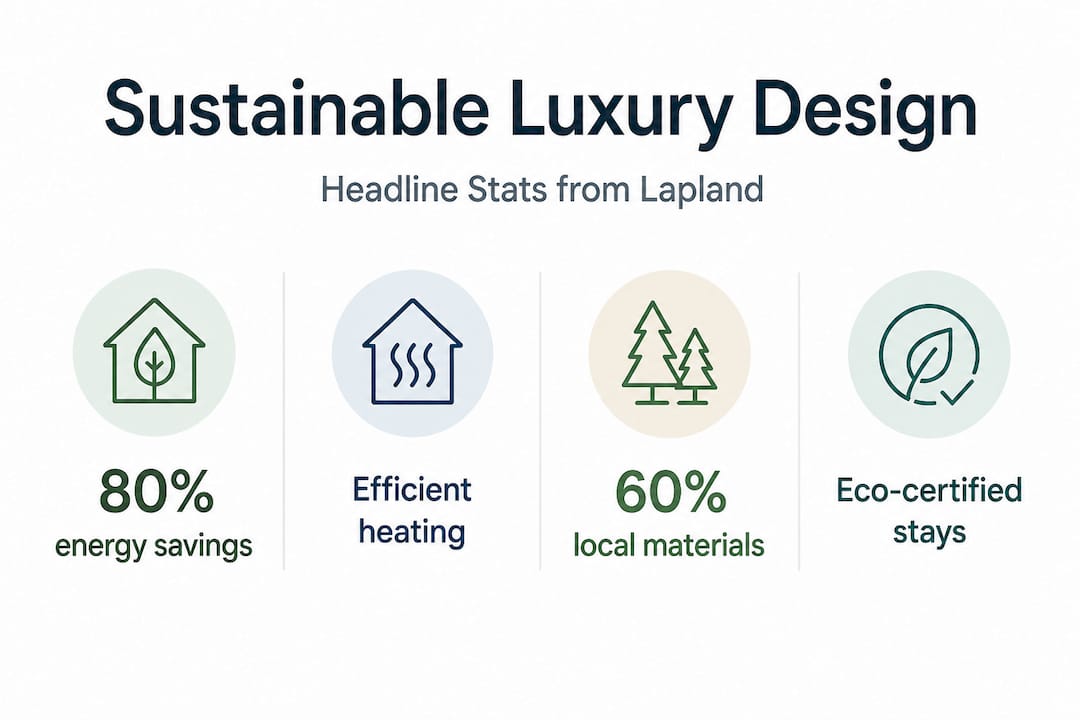
One of the most important shifts in contemporary luxury hospitality is how sustainability has become invisible. Sustainable luxury embeds eco-friendly systems invisibly through energy-efficient technology, local materials, and regenerative practices, without overt signals, enhancing both guest experience and economic viability.
This is a meaningful distinction. Performative sustainability means green labels on every wall and recycling bins prominently displayed in the lobby. Deeply embedded sustainability means the building itself generates minimal waste, local wood paneling makes the space feel rooted in Lapland, and a heat recovery system keeps the room warm without you ever knowing it’s running. You experience the benefit without being reminded of the effort.
Here’s what embedded sustainability typically looks like in a high-end Lapland property:
- Passive solar design that maximizes winter daylight and reduces artificial lighting needs
- Triple-glazed windows that keep warmth in and the Arctic cold out, without heavy curtains that block the forest view
- Locally sourced timber and stone that carry the identity of northern Finland into every corner
- Ground-source heat pumps that use the earth’s stable temperature to regulate interior warmth
- Low-flow water systems designed to be invisible to guests while dramatically reducing consumption
You can read more about this approach in our guide to sustainable travel in Lapland, which covers how responsible choices enhance rather than restrict your experience.
Statistic to know: Properties that integrate energy-efficient systems into their design framework from the ground up report operating costs 20 to 30 percent lower than retrofitted equivalents, while maintaining or improving guest satisfaction scores.
Pro Tip: When comparing Lapland stays, look for properties that describe how they achieve sustainability, not just that they do. Specific mentions of geothermal heating, local materials, or passive design are reliable markers of genuine commitment. You can also explore cozy sustainable getaways that balance comfort with genuine eco-credentials.
Material choices for longevity and authentic Arctic appeal
Beyond using sustainable strategies, material selection shapes both the true luxury feel and the Arctic character of accommodations.
Materials are where design becomes tangible. You can feel them, smell them, and watch them respond to the seasons. Natural materials like stone, wood, and lime plaster age gracefully and develop patina over time, ensuring longevity in high-use environments. This aging quality is not a drawback. It’s the point.
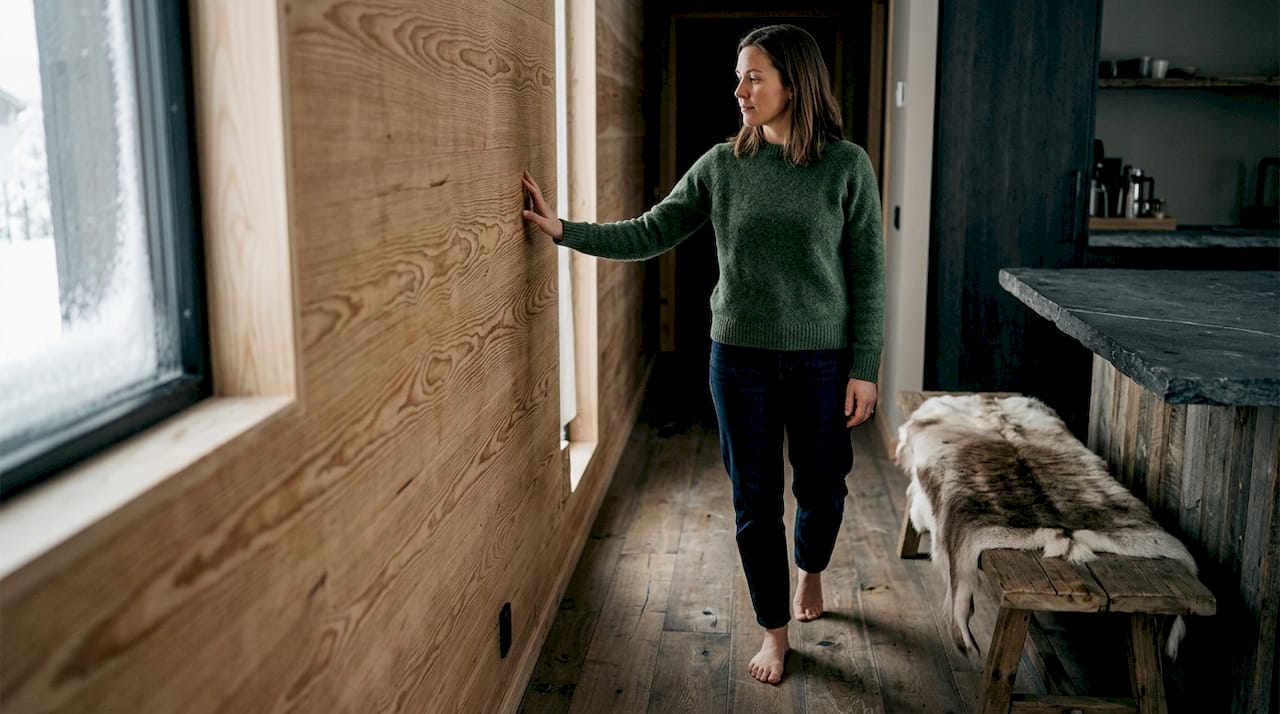
A wooden wall that shows five winters of subtle change tells a story. Rough-cut local stone that develops a deeper tone over years becomes part of the place. These are materials that improve with time, not wear out. In a high-traffic Arctic lodge, that distinction matters enormously for both aesthetics and maintenance economics.
Here’s how material choices play out in practice for Lapland luxury accommodations:
- Finnish pine and spruce create warm, golden interiors that contrast beautifully with the blue and white Arctic exterior
- Natural stone flooring from local quarries provides thermal mass, absorbing daytime warmth and releasing it slowly through cool evenings
- Matte finishes throughout reduce glare and create a visual softness that makes spaces feel more peaceful
- Lime plaster walls regulate indoor humidity naturally, improving air quality without mechanical systems
- Hand-crafted textile elements in neutral tones reference traditional Sámi design without cultural appropriation
Material choices also extend to the culinary environment. The connection between tactile design and sensory pleasure is strong, and you’ll notice it in how Lapland culinary aesthetics use natural tableware, raw-edge wood surfaces, and locally fired ceramics to create an immersive dining atmosphere.
Pro Tip: Don’t overlook materials when reading accommodation descriptions. References to “birch,” “slate,” or “hand-finished joinery” signal a genuine investment in quality and local character. They also indicate the kind of luxury events in Lapland environments that photograph and function beautifully for high-end corporate retreats and celebrations.
Regenerative design: creating net-positive luxury experiences
Material choice isn’t the end. Regenerative design frameworks take sustainability to the next level, ensuring positive impact for nature and community.
Regenerative design goes beyond reducing harm. It actively works to restore ecosystems, strengthen local communities, and create conditions where both guests and landscapes benefit from a property’s existence. Regenerative methodologies involve baseline diagnostics, customized blueprints, KPIs aligned with UN Sustainable Development Goals, biophilic design, and continuous audits for net-positive impact on ecosystems and communities.
In practice, a Lapland property pursuing regenerative design might follow this sequence:
- Baseline ecological audit to map existing biodiversity, water flow, and soil health around the property site
- Custom design blueprint that incorporates findings, protecting key habitats and using passive systems where possible
- KPI framework tied to UN SDGs, covering energy use, water consumption, local employment, and carbon sequestration
- Biophilic design integration including living moss walls, natural water features, and large windows that maintain visual connection with the surrounding forest
- Annual third-party audit to measure outcomes, adjust practices, and verify progress toward net-positive benchmarks
| Approach | Focus | Guest experience outcome |
|---|---|---|
| Standard eco design | Reduce negative impact | Neutral, invisible sustainability |
| Sustainable design | Minimize footprint | Conscious, intentional experience |
| Regenerative design | Net-positive ecosystem impact | Deep sense of place and purpose |
“Guests increasingly want to leave a place better than they found it. Regenerative design makes that possible without guests needing to think about it consciously.”
The regenerative travel approaches that resonate most in Lapland are those tied to real, measurable local outcomes: reindeer habitat preservation, indigenous plant restoration, and local artisan partnerships. These aren’t marketing points. They’re verifiable changes that reflect genuine commitment.
Arctic innovations: addressing guest psychology and sense of place
Now, let’s look at the emotional dimension of design and how Arctic accommodations use innovative elements to create a sense of calm, belonging, and well-being.
Design has always influenced mood, but luxury hospitality is now applying that knowledge with more precision than ever. Curvy shapes in luxury hotels reduce stress, headboards function as narrative focal points, and Arctic-specific features like matte finishes, geothermal heating, and structural stilts allow properties to integrate authentically into the natural landscape.
Why curves? Sharp corners and rigid geometry trigger a low-level alertness response in the brain. Gentle curves, arched doorways, and rounded furniture edges do the opposite. They signal safety and softness. In an environment as visually dramatic as Lapland, where the landscape is already full of stark contrasts, a curved interior gives your nervous system room to relax.
Statistic to know: Studies in environmental psychology show that guests in rooms with curved design elements report falling asleep faster and rating their overall stay higher than guests in traditionally angular spaces.
Arctic-specific innovations you’ll find in the most thoughtful Lapland properties include:
- Matte exterior and interior finishes that reduce light bounce and keep spaces visually calm even during summer’s midnight sun
- Geothermal heating systems that draw steady warmth from beneath the permafrost zone without combustion
- Elevated stilts or platform foundations that allow buildings to sit above the snowpack without disturbing root systems, reducing ecological impact and improving drainage
- Narrative headboards carved from local wood or featuring traditional motifs, giving guests a visual anchor that grounds them in Finnish culture from the first moment they enter their room
An Arctic winter getaway that incorporates these elements delivers something genuinely different from a standard winter hotel stay. The design becomes part of your memory of the place. For ideas on how these elements come together in a real stay, Lapland cozy getaways shows you what thoughtfully designed comfort looks like in practice.
Pro Tip: When viewing accommodation photos, look past the dramatic landscape shots. Check the interior details: ceiling lines, furniture profiles, material textures. These elements tell you more about how the space will actually feel than any marketing description.
The uncomfortable truth: luxury design is about invisibility and anticipation
Here’s what years of watching travelers return from Lapland has taught us. The guests who feel most transformed by their stay are almost never the ones who can name the most impressive features. They’re the ones who say, “I can’t quite explain it, but I just felt completely at ease.” That feeling is not accidental. It is the direct result of design doing its job so well that it becomes invisible.
True luxury design shifts from visual extravagance to experiential calm, place-specific identity, and operational intelligence. This is crucial for affluent travelers who value authenticity over ostentation. The guests who travel to Lapland in 2026 are not looking to be impressed by the size of a chandelier. They’re looking for the feeling of waking up in a warm, perfectly quiet room while snow falls outside a window that frames the forest like a painting.
Luxury design anticipates guest psychology through layered lighting, intuitive technology, and emotional resonance, while sustainability drives loyalty through a sense of shared purpose. The key word here is anticipation. Great design solves problems you haven’t encountered yet. The coat hooks positioned at exactly the right height for wet outerwear. The reading light that activates without disturbing your partner. The sauna that reaches the right temperature before you’ve thought to check it.
Lapland’s luxury accommodation tradition is particularly well-suited to this kind of design intelligence because the environment demands it. You cannot fake warmth in a Finnish winter. You cannot manufacture calm in a space that hasn’t been thoughtfully built for it. The cold, the silence, and the landscape are honest, and the best properties match that honesty with design that earns your trust. For a fuller picture of what this looks like across the region, the Lapland experiential travel guide is an excellent starting point for planning a stay that delivers on every level.
Discover Lapland’s luxury accommodation for your next Arctic journey
Everything you’ve read here comes to life in the lodging and experiences we offer in Finnish Lapland. Sustainable design, natural materials, regenerative practices, and a genuine sense of place are not abstract ideals for us. They’re the foundation of every stay we create.
If you’re ready to experience design-driven Arctic hospitality for yourself, explore our curated Lapland luxury accommodation options within Pyhä-Luosto National Park. Our Lapland holiday guide walks you through every season, activity, and detail you need for a confident booking decision. For travelers specifically drawn to eco-conscious stays, our Lapland eco luxury guide shows exactly how we balance comfort with responsibility at every touchpoint.
Frequently asked questions
How does design contribute to guest comfort in luxury Arctic accommodations?
Spatial clarity and intuitive circulation make luxury spaces feel effortless, meaning guests can relax and navigate their environment without friction. Balanced proportions also reduce visual stress, which is especially valuable in intense Arctic settings.
What materials are preferred in sustainable luxury hotels in Lapland?
Hotels favor durable natural materials like stone, timber, and lime plaster that develop rich character over time and require less frequent replacement. These materials also reflect the local landscape, creating a genuine sense of place throughout the property.
What role does sustainability play in luxury accommodation design?
Sustainability is embedded invisibly through energy-efficient systems, locally sourced materials, and regenerative practices that improve the guest experience without drawing attention to themselves. This approach also strengthens the property’s long-term economic viability.
What is regenerative design in Lapland luxury hospitality?
Regenerative design uses diagnostics and tailored blueprints with biophilic strategies aligned to UN Sustainable Development Goals, working toward a net-positive impact on the surrounding ecosystem and local communities. It goes beyond reducing harm to actively restoring the environment around a property.
Recommended
- Top 5 types of Arctic accommodations for luxury stays | Sunday Morning Collection
- Sustainable Lapland Travel, Done Beautifully | Sunday Morning Collection
- What is Nordic luxury? Sustainable Arctic elegance guide | Sunday Morning Collection
- Cozy Lapland getaways: luxury, sustainability & Arctic experiences | Sunday Morning Collection
- Why sustainable luxury matters for brand value in 2026 - Corrado Manenti
