


Pyhä-Luosto offers about 150 km of interconnected cross-country ski trails, with illuminated sections in both Pyhä and Luosto for early mornings and dark evenings. A paid digital trail map (€10) shows live grooming status, difficulty ratings, and your GPS location. Check it before you leave, especially if you’re planning the 35 km one-way traverse between Pyhä and Luosto, which needs a return plan built in.
TL;DR:
- The digital trail map costs €10 and provides live grooming updates, difficulty ratings, and offline GPS functionality, vital for planning routes and avoiding tired or unmaintained tracks.
- The 35 km one-way traverse between Pyhä and Luosto requires advanced planning, including ski transportation and bailout points, as it is a remote and demanding route typically handled as a logistics or multi-day trip.
- Grooming priorities focus on illuminated tracks near villages and are usually completed by around 10:00 in early season, with full network grooming starting around week 8, and conditions can change rapidly due to weather.
- Staying close to the main trailheads near Naava or Pohjoisrinne offers logistical advantages, such as quick access to groomed loops and early starts, which significantly enhance the ski experience and recovery.
Table of Contents
- Pyhä-Luosto Trail Network at a Glance
- How to Use the Pyhä-Luosto Digital Trail Map
- Which Routes Suit Your Skill Level?
- When Are Trails Actually Groomed?
- Getting There: Parking, SkiBus, and Rentals
- Staying Safe in Changing Arctic Conditions
- Where to Rest: Huts, Cafes, and Trail Stops
- What Makes a Ski Trip Here Actually Comfortable
- Book a Sustainable Base Near the Trailheads
- Sources
Pyhä-Luosto Trail Network at a Glance
You’ve got a big, well-connected system to work with. Roughly 150 km of cross-country trails link the Pyhä and Luosto sides of the national park, so you can start in one village and ski toward the other without leaving groomed track. That connection is what makes Pyhä-Luosto feel bigger than either resort on its own.
Here’s what you’re working with before you even lace up:
- Total network: around 150 km, Pyhä and Luosto trails fully connected
- Illuminated trails: 18 km in Luosto and 14 km in Pyhä, lit roughly 07:00 to 21:30, dimming in stages from 21:00
- Early season (ensilumen): limited groomed sections as soon as snow allows, often patchy
- Main maintenance period: begins around December 1
- Full network availability: from around week 8, maintained through roughly April 30
If you’re visiting in early winter, don’t expect the whole map to be open. The lit tracks near the villages come online first, and the wider wilderness network fills in as the season builds.
How to Use the Pyhä-Luosto Digital Trail Map
The single most useful tool for planning any route here is the Pyhä-Luosto digital trail map, sold as a one-time €10 purchase through the official trail service. It’s not just a static PDF. It layers live grooming status, difficulty grading, and your own GPS position on top of the trail network, so you can see exactly which loops were groomed this morning and which ones haven’t seen a machine in days.
Using it is simple:
- Buy access through the official trail map portal on your phone or laptop.
- Open the seasonal winter layer once you’re on-site.
- Check the “kunnostustilanne” (maintenance status) overlay for the routes you’re considering.
- Plan your route around what’s actually groomed, not what the map shows in summer mode.
The €10 fee isn’t just a paywall. It directly funds the grooming operation that keeps tracks skiable, which matters most in shoulder-season weeks when machines are stretched thin across a 150 km network.
Pro Tip: Screenshot your planned route before leaving cell coverage. GPS positioning works offline once the map is loaded, but redownloading data mid-trail on patchy Lapland signal is not something you want to rely on.
Which Routes Suit Your Skill Level?
Route choice here really comes down to how much day you want to commit to. A short loop near the village is a different trip than a wilderness traverse, and picking the wrong one for your fitness or daylight window is the most common planning mistake.
- Family and beginner loops: the Orresokka area in Pyhä and the Perheluosto segments offer shorter, gentler grades, good for building confidence before a longer outing.
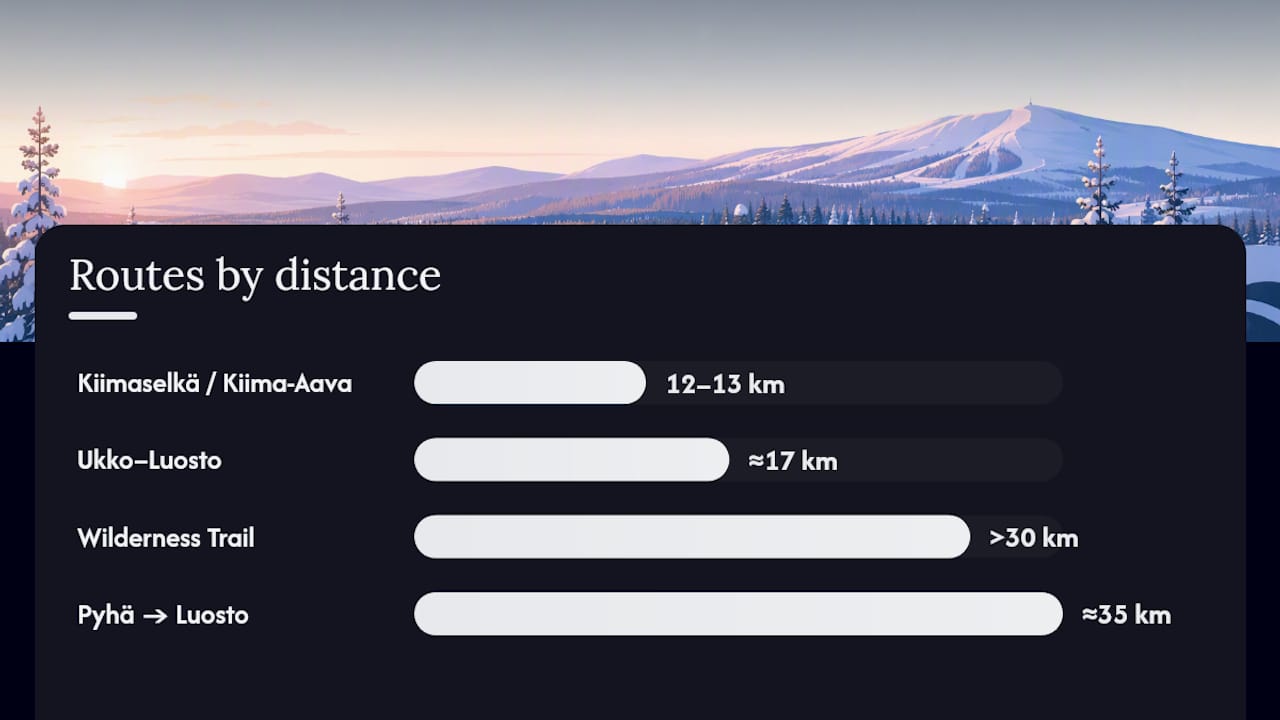
- Popular circuits: the Ukko-Luosto loop runs about 17 km with real scenery payoff, while Kiimaselkä and Kiima-Aava cover roughly 12 to 13 km and pass a laavu and café stop along the way.
- The full traverse: Pyhä to Luosto is about 35 km one-way, a serious day out that most skiers handle with SkiBus or a prearranged transfer for the return leg.
- Advanced wilderness: the Pyhä Wilderness Trail opens around week 8 and runs over 30 km through remote terrain, with far fewer bailout points than the shorter loops.
That 35 km figure is worth sitting with for a second. Skiing it one direction at a moderate pace typically takes several hours depending on snow conditions and your fitness, which is why experienced local skiers treat it as a logistics project, not just a long ski.
If you’re eyeing the Wilderness Trail, pack for genuine remoteness: extra food, spare layers, and a clear sense of your bailout points before you commit to the far side of the loop.
When Are Trails Actually Groomed?
Grooming follows a clear priority order, and knowing it saves you from skiing on tired snow. Illuminated tracks near the villages get serviced first, since they carry the most daily traffic. Early in the season, grooming is lighter and less predictable than during the full maintenance window.
- Early-season lit tracks are typically groomed by around 10:00.
- By week 7 or 8, once the full network opens, grooming deadlines shift later in the day to cover more kilometers.
- During continuous snowfall, certain lit tracks get groomed twice a day, with the second pass scheduled at least four hours after the first.
If you’re chasing the freshest tracks, check the live map for grooming timestamps rather than guessing based on the weather outside your window. A morning snowfall doesn’t always mean an afternoon regroom.
Getting There: Parking, SkiBus, and Rentals
Where you park shapes your whole day, so match your starting point to the route you’ve actually picked. The main trailheads cluster around Luontokeskus Naava, Pohjoisrinne, and Rykimäkero, and each feeds into a different part of the network.
- Naava and Pohjoisrinne work best for Pyhä-side loops and for starting the long traverse toward Luosto.
- Rykimäkero gives quicker access to the Luosto side circuits and the Ukko-Luosto loop.
- SkiBus runs between the villages and is the standard way to handle a one-way traverse without doubling your ski distance.
- Rental and waxing services (voitelupalvelu) operate near the main trailheads, but hours vary by season, so call ahead rather than assuming they’re open.
Booking your SkiBus return before you start the 35 km traverse is the single logistics step that prevents a long, cold wait at the far end.
Staying Safe in Changing Arctic Conditions
Lapland weather turns fast, and the open marsh sections of the network are where conditions shift the most. Wind-blown snow can bury a freshly groomed track within hours, which is exactly why checking the live map before departure matters more here than on a sheltered forest loop.
- Pack layered clothing, food, a thermos, and a phone with a spare power source.
- Carry a basic repair kit and a whistle in case you need to signal for help.
- Bring a paper map as backup if you’re heading into the Wilderness Trail or the full traverse.
Pro Tip: If the live map shows a lit track was groomed twice in one day, treat that as a signal the weather is actively working against the trail. Shorten your route rather than betting on conditions holding.
Keep your phone’s GPS running against the digital map as you ski, know your bailout points in advance, and follow posted track directions inside the national park boundaries.
Where to Rest: Huts, Cafes, and Trail Stops
Longer routes have real stopping points, but don’t expect hotel service. Torvisen Maja and the Lampivaara café offer rustic breaks along the network, while Kopara’s reindeer park café works well as a shorter detour if you’re not tackling the full traverse.
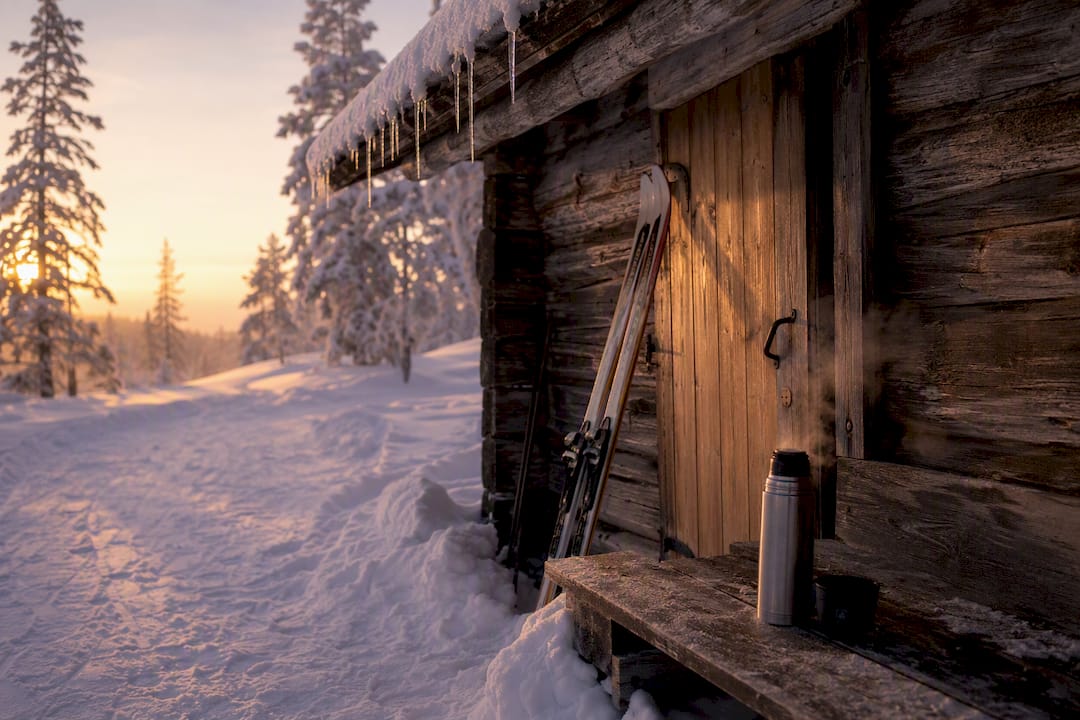
Some huts run without electricity or running water, so if you want a hot drink partway through a long loop, bring your own thermos rather than counting on a stove being lit. Opening hours shift by season, so check the official winter route guide or a current pocket map rather than assuming last year’s schedule still applies.
What Makes a Ski Trip Here Actually Comfortable
The biggest logistics win in Pyhä-Luosto isn’t a route choice. It’s where you sleep. Staying close to Naava or Pohjoisrinne cuts your morning transfer down to minutes, which means you’re on freshly groomed track before the day-trippers arrive from farther out.
Pairing long ski days with a proper recovery routine, sauna, a good meal, somewhere warm to dry gear, matters more on a multi-day trip than most first-time visitors expect. A scenic wilderness base near the trailheads turns a demanding ski day into a sustainable rhythm across three or four days, rather than a one-shot effort followed by exhaustion.
— Juho
Book a Sustainable Base Near the Trailheads
Sundaymorning gives skiers something the trail network itself can’t: a comfortable, sustainable base close enough to Pohjoisrinne and Naava that you’re on groomed snow before the crowds, not stuck driving in from a village further out. Between long days on the Ukko-Luosto loop or the full Pyhä-Luosto traverse, you’ll want somewhere warm to dry gear, store equipment, and eat well without planning a second outing just for dinner.

Sunday Morning Resort and the Parkside Pyhä Apartments both sit within easy reach of the trail system, with curated winter packages that bundle activities like husky safaris and Northern Lights tours around your ski days. Breakfast starts early enough for a first-light start on the illuminated tracks, and the on-site sauna is exactly what a 35 km day calls for afterward. Check current dates and book your luxury Lapland accommodation to lock in a base for your ski trip before peak season fills the calendar.
