


Yes, saunajooga is available across Finnish Lapland, and it delivers exactly what it promises: gentle, seated movement in a mildly heated sauna that eases stiff shoulders and quiets a busy mind. You sit on a bench, move slowly with your breath, and let the warmth do the rest. Boutique properties like Sundaymorning in Pyhä-Luosto build this kind of sauna-based wellness into their Lapland stays.
TL;DR:
- Saunajooga sessions are typically held at 40 to 50 degrees Celsius, focusing on seated, slow movements suitable for all skill levels.
- Private or small group sessions cost more but offer personalized pacing, often bundled with dinners and transportation, especially in winter months.
- The practice emphasizes gentle stretches like spine lengthening and neck rolls, with safety advice for those with health conditions or pregnancy.
- Experience varies by season, with winter offering the Northern Lights and snow contrasts, while summer features daylight and lake dips.
- Saunajooga is a natural extension of Finnish sauna tradition, promoting slow pace and stillness, and is often integrated into multi-day wellness stays.
Table of Contents
- Where to try saunajooga in Lapland
- What actually happens in a saunajooga session
- Simple saunajooga moves and how to stay safe
- Booking a session: cost, timing, and what to bring
- How saunajooga fits into a Lapland wellness stay
- Winter versus summer: does the season change the experience?
- Where saunajooga came from in Finnish sauna culture
- Why we build saunajooga into our Lapland experience
- Book a sauna yoga experience with Sunday Morning Finland
- Sources
Where to try saunajooga in Lapland
You won’t find saunajooga bolted onto every ski resort menu, but it’s easy to find once you know where to look. Boutique hotels in Pyhä-Luosto and around Rovaniemi increasingly offer it as a bookable add-on, while multi-day wellness retreats in places like Inari build entire itineraries around it, pairing sauna sessions with hiking, cold dips, and evening stretching.
The right venue depends on what you’re after:
- Boutique resort spas work well for couples or solo travelers who want one polished session rather than a full program.
- Multi-day retreats suit visitors who want saunajooga woven into a broader nature and yoga routine over several days.
- Private group bookings fit families or friend groups who’d rather have the sauna to themselves than share a public schedule.
- Hotel-organized sauna evenings often bundle the practice with dinner, making it a low-effort way to try it without planning a separate outing.
When comparing offers, check whether the session is led by a trained instructor, how many people share the sauna, and whether the price includes anything beyond the sauna itself, since that’s usually where the real value sits.
What actually happens in a saunajooga session
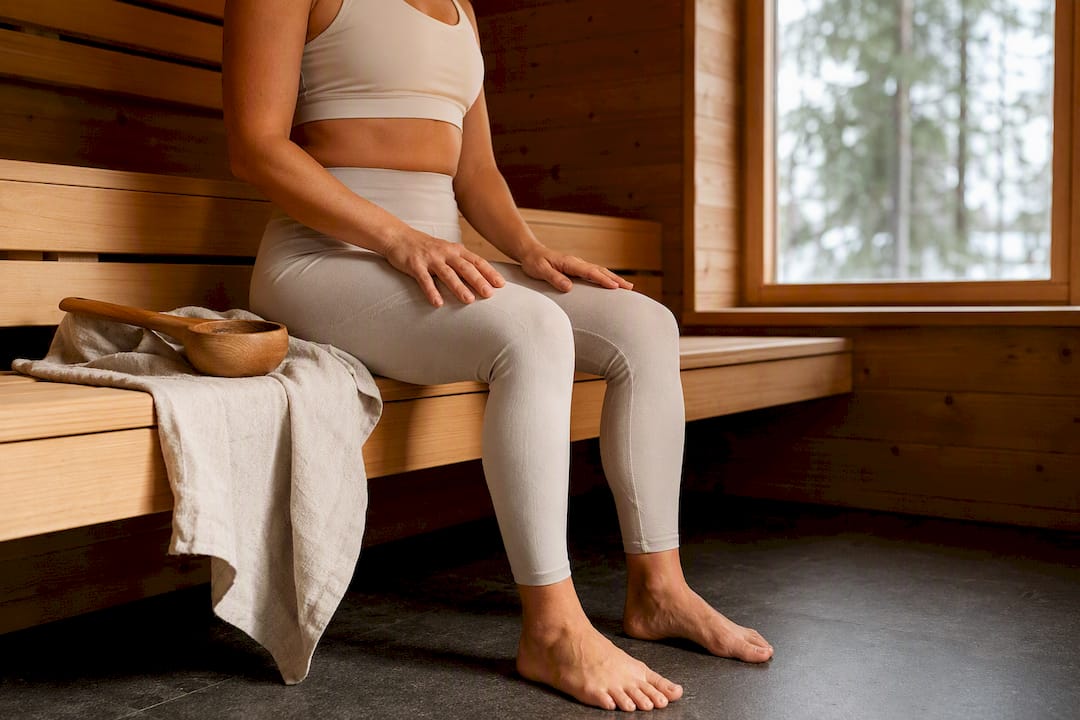
A session runs nothing like a hot yoga class. You keep the temperature mild, the pace slow, and the whole thing seated. Most sessions run at 40 to 50 degrees Celsius, noticeably cooler than a typical Finnish sauna, precisely so participants can hold gentle poses for the full 20 to 45 minutes without overheating.
An instructor usually walks the group through the format: settle in, breathe, move through a short sequence of seated stretches, then rest quietly as the heat works into tight muscles. Sessions are built for comfort and accessibility, so nobody needs prior yoga experience to keep up.
A few etiquette points matter if you’re new to Finnish sauna culture:
- Nudity is the norm in traditional Finnish saunas, but mixed-gender or tourist-facing sessions almost always ask guests to wear a swimsuit or wrap a towel.
- Bring your own towel to sit on; it’s standard practice and considered polite, not optional.
- Speak up early if the heat feels like too much. Instructors expect it and will happily adjust.
- Shower before entering, as you would for any Finnish sauna, saunajooga included.
Simple saunajooga moves and how to stay safe
Every move in saunajooga stays seated and low-impact, which is the entire point. The heat loosens muscles faster than at room temperature, so a small stretch goes further, but that same heat means you need to move with more care, not less.
- Spine lengthening. Sit tall on the bench’s front edge, feet flat, and stretch your arms overhead on an inhale. Hold for a few breaths, then release.
- Neck rolls. Drop your chin gently toward your chest and roll slowly side to side. Skip the full backward roll; it strains the neck for no real benefit.
- Shoulder shrugs and rolls. Lift shoulders toward your ears, hold, then roll them back and down. This releases tension that builds up fast in a heated room.
- Seated spinal twist. Place one hand behind you on the bench and twist gently toward it, looking over your shoulder. Switch sides after a few breaths.
- Gentle hip opener. Cross one ankle over the opposite knee and lean slightly forward, keeping your spine long rather than rounding it.
- Forward fold, seated. Hinge forward from the hips with a straight back, letting gravity and warmth do the stretching instead of forcing it.
Selkäkanava, Finland’s Back Association, notes that seated saunajooga can suit people with back issues well, provided posture stays correct and movements stay conservative. Anyone with heart conditions, low blood pressure, or who is pregnant should check with a doctor before a heated session. Stay hydrated before and after, and cap your time inside if you feel light-headed.
Pro Tip: Sit on the front edge of the bench, not the back, so your feet stay grounded and your spine has room to lengthen without pressing against the wall behind you.
Booking a session: cost, timing, and what to bring
Most travelers find saunajooga through three channels: a resort’s activity desk, a tour operator’s wellness listings, or a direct message to a hotel that mentions it in its spa offerings. Retreats in areas like Inari list availability directly on their own booking pages, while a property like Visit Rovaniemi’s sauna packages show how sauna experiences typically get bundled with dinner and transport.
Price depends on a few factors:
- Private sessions cost more per person than group classes, but you get a quieter, more personalized pace.
- Add-ons like dinner, transport, or an aurora-viewing walk push the price up but often deliver more value than a standalone sauna slot.
- Winter months tend to command a premium given the added draw of the Northern Lights.
Arrive a few minutes early, bring your own towel and a swimsuit if the session isn’t private, and confirm transport in advance since many Lapland properties sit well outside town centers.
How saunajooga fits into a Lapland wellness stay
Lapland’s environment does something a city spa can’t replicate: it lets you pair deep warmth with genuine cold, all within a few steps. Step out of a 45-degree sauna into fresh Arctic air, or straight into snow, and the contrast resets your body in a way that flat, indoor comfort never quite matches.
Boutique providers in Pyhä-Luosto build on that contrast deliberately, following insights on how to combine lodging and gastronomy to enhance the guest experience. A private sauna experience often gets paired with:
- A gourmet dinner using local ingredients, turning the sauna into the opening act of a longer evening.
- A guided walk or Northern Lights viewing once the body has cooled and the sky has darkened.
- Quiet time afterward in a private cabin or terrace, extending the sense of calm rather than rushing back into a schedule.
The appeal isn’t the yoga alone. It’s the sequencing: warmth, movement, cold air, food, stillness. Lapland hospitality providers increasingly treat sauna-based practices this way, as one movement in a longer, deliberately paced evening rather than an isolated activity squeezed between excursions.
Winter versus summer: does the season change the experience?
Season changes the mood of saunajooga more than the mechanics. The moves stay the same, the temperature stays the same, but what happens outside the sauna door shifts completely.
Winter sessions carry an obvious draw: step outside afterward and you might catch the Northern Lights overhead, especially on clear nights between late August and April. The cold air outside also sharpens the contrast with the sauna’s heat, which many visitors find makes the relaxation phase feel more intense. Darkness sets in early, so evening sessions often flow straight into an aurora walk or a candlelit dinner, stretching the wellness experience across several hours rather than confining it to one room.
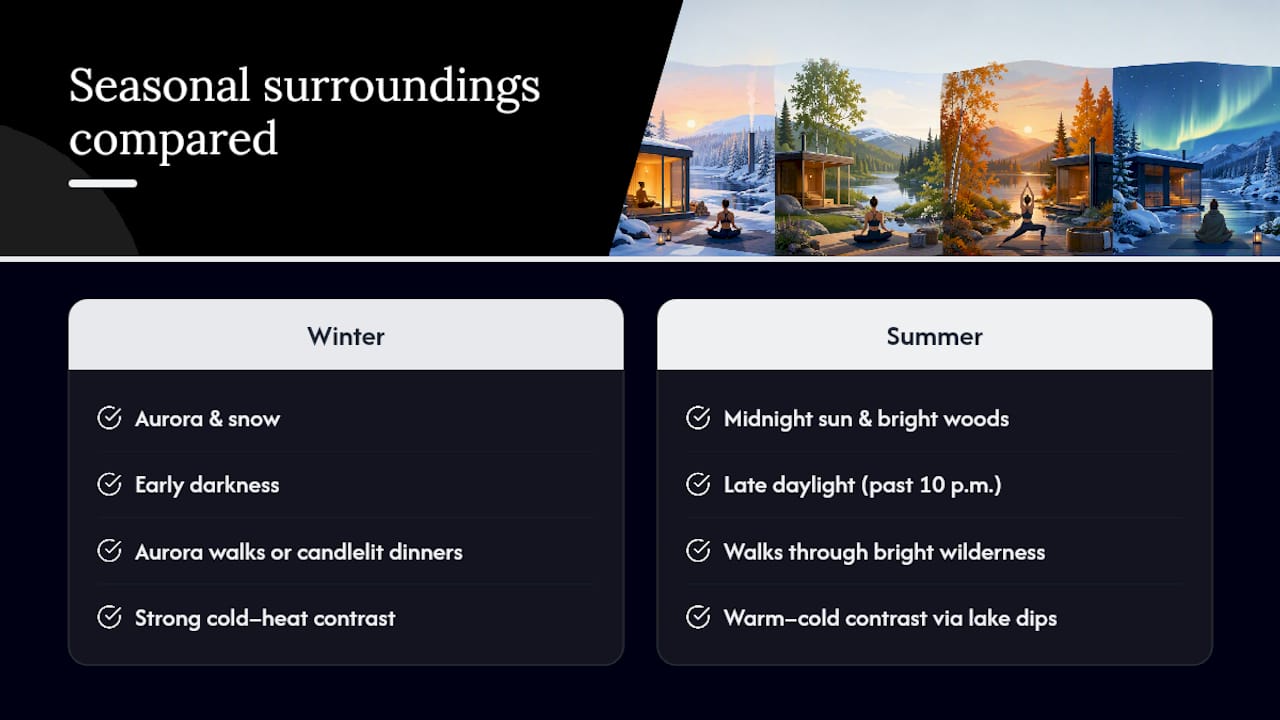
Summer flips the atmosphere entirely. The midnight sun means daylight lingers well past 10 p.m., so a saunajooga session might end with a walk through still-bright wilderness rather than a starlit one. Some resorts pair summer sessions with a lake dip instead of a snow plunge, keeping the warm-cold contrast intact even without winter conditions. Bugs can be a factor near water in June and July, so indoor or covered outdoor saunas tend to work better than fully open-air setups during peak summer.
Neither season makes the practice more or less effective on the body. The difference is entirely about what surrounds it: aurora and snow in winter, endless daylight and open water in summer. Choose based on which atmosphere you’d rather have your relaxation wrapped in.
Where saunajooga came from in Finnish sauna culture
Sauna culture in Finland goes back over a thousand years, rooted in bathing, birthing rooms, and even preparing the dead for burial. It has always been treated as a place of cleansing, both physical and mental, long before wellness tourism gave it a marketing angle. Saunajooga is a distinctly recent addition to that history, emerging as sauna culture met the modern yoga movement’s spread through Finland over the past couple of decades.
What makes saunajooga fit so naturally into that older tradition is the pace. Finnish sauna use has never been about intensity. It’s about sitting quietly, letting heat work slowly, and treating the sauna as a pause rather than a workout. Saunajooga simply adds structured movement to that pause, using stretches that respect the same unhurried rhythm sauna-goers have followed for generations.
That continuity matters in Lapland specifically. The region’s relationship with sauna culture sits close to its relationship with the wilderness itself: respect the environment, move at its pace, and let stillness do some of the work. A saunajooga session in a Lapland resort isn’t a foreign wellness trend grafted onto a Finnish tradition. It’s a small, sensible extension of a practice locals have shaped for over a millennium, adapted for guests who want to understand it rather than just visit it.
Why we build saunajooga into our Lapland experience
Sustainable luxury means slowing guests down, not just dressing up their surroundings. Saunajooga does that better than most add-ons we offer, because it asks nothing of guests beyond sitting still and breathing. We design the flow around it deliberately: sauna, movement, cold air, then dinner, so the practice feels like part of an evening rather than a scheduled task.
Juho has spent years covering Arctic tourism and sustainable hospitality across Lapland, with a particular focus on how boutique properties balance guest comfort with genuine environmental responsibility.
— Juho
Book a sauna yoga experience with Sunday Morning Finland
Sundaymorning is the alternative to piecing together a wellness stay yourself, since sauna time here isn’t an afterthought bolted onto a room booking; it’s built into the flow of the stay from the start. Our Arctic Winter Getaway Package commonly includes private sauna access alongside Northern Lights viewing and Lappish dining, while the Romantic Escape Package is a favorite for couples wanting a quieter, private sauna evening without a group schedule.
Every package runs through direct online booking, with real-time availability so you can check dates before committing. We keep the model simple: boutique accommodation in Pyhä-Luosto, sustainably run, with gourmet Lappish dining and wellness experiences built around each guest’s stay rather than sold as a separate add-on. Check current dates and rooms on our luxury accommodation page and see what’s included before you book.
Sources
- Saunajooga, Anna
- Saunayoga — training and practice
- Selkäkanava — saunajooga
- Visit Rovaniemi — sauna experience and dinner package
