


The best defense against Lapland’s mosquitoes combines four things: timing your trip around the räkkä season, choosing windy and open terrain over sheltered wetlands, wearing a DEET or icaridin repellent, and packing a head net with loose, long clothing. Finnish researchers and regional tourism guides agree this layered approach beats any single trick on its own.
TL;DR:
- Optimal mosquito protection relies more on choosing windy, open locations and timing activities, rather than solely on repellents or gear quality.
- Mosquito abundance varies significantly based on weather, snowmelt timing, and location, making timing and terrain more critical than fixed calendars.
- DEET and icaridin are the most effective repellents, but applying them frequently and wearing loose, light-colored, long clothing provides strong defense.
- Site selection, such as elevated or exposed campsites, and scheduling outdoor activities during windier hours greatly reduce mosquito encounters.
- Mosquito bites usually require minimal treatment, but serious reactions or symptoms suggest seeking medical help, and Finnish authorities report no significant disease risk.
Table of Contents
- Hyttysten Torjunta Lapissa: Your Quick-Reference Checklist
- When and Where Mosquitoes Take Over the Landscape
- Which Repellents, Clothing, and Head Nets Actually Work
- Picking Campsites and Timing Activities to Skip the Worst of It
- What to Pack for a Mosquito-Aware Trip
- Treating Bites and Knowing When to Get Help
- How Sundaymorning Builds Mosquito Comfort Into the Lapland Stay
- What the Conventional Advice Gets Wrong
- Sources
Hyttysten Torjunta Lapissa: Your Quick-Reference Checklist
You don’t need a lab coat to fight off Lapland’s mosquitoes effectively. You need the right timing, the right spot, and a few items in your daypack.
- Time it right: early June or mid-August often see lower mosquito numbers than the peak räkkä weeks.
- Pick your ground: windy felltops and open lakeshores beat marshy lowlands, especially after dusk.
- Carry a repellent: DEET or icaridin, reapplied per the product label.
- Bring a head net: it weighs almost nothing and covers the worst nights completely.
- Wear loose, long layers: synthetic or wool fabric in light colors.
- Use smoke wisely: a campfire or screened terrace cuts local nuisance fast.
- Pack a spare net: useful for older wilderness huts that lack screens.
Pro Tip: Stuff a head net in your jacket pocket even on a “safe” windy day. Wind can drop to nothing within an hour once the sun dips behind a fell, and that’s exactly when mosquitoes reappear.
When and Where Mosquitoes Take Over the Landscape
Räkkä season in Lapland typically peaks from late June into July, but the exact window shifts with snowmelt timing and summer weather. A cold spring can push the worst weeks later; a warm one can bring them forward. Regional reporting also shows mosquito abundance swings sharply from year to year, so what your friend experienced last July might not repeat this season.
Location matters as much as the calendar. Mosquitoes cluster around:
- Still water and marshy lowlands
- Sheltered forest edges with little air movement
- Calm evenings near ponds or slow streams
They largely vanish from:
- Windy felltops and exposed ridgelines
- Open lakeshores with a steady breeze
- Towns and resort centers, where buildings break up airflow
Wind is the simplest natural deterrent available, as discussed in detail in Banya vs Sauna: Heat, Ritual and What to Expect, where outdoor comfort and climate considerations play a key role. Mosquitoes are weak fliers, and a steady breeze makes sustained flight difficult for them. Shifting a hike’s start time by a few hours, or choosing a ridge route over a lakeside trail, often does more for your comfort than any product in your pack.
Which Repellents, Clothing, and Head Nets Actually Work
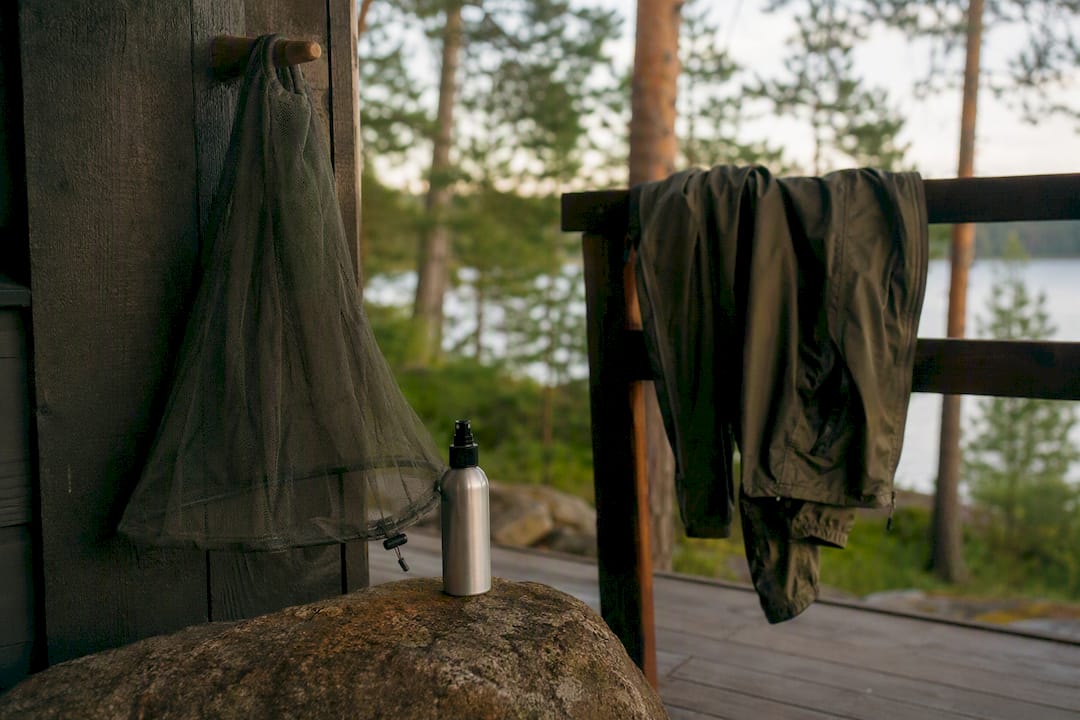
Science reporting in Finland consistently points to two active ingredients: DEET and icaridin remain the most reliable topical repellents available, and both require reapplication according to the product’s own label, since sweat, water, and time all shorten their effect. Icaridin tends to feel less irritating on skin and doesn’t damage synthetic fabrics or plastics the way strong DEET formulas can, which matters if you’re also handling camera gear or rain shells.
Clothing does heavier lifting than most travelers expect. Experienced Lapland hikers and field researchers point to protective clothing and smart site choice as the most dependable combination, ahead of any single gadget. Favor:
- Light-colored fabric (mosquitoes key in on darker contrasts)
- Loose, long sleeves and trousers rather than tight layers
- Quick-dry synthetic material over cotton
- Thin gloves and a brimmed hat for exposed hands and neck
A head net earns its spot even on a short day hike. Wear a cap underneath it. That single habit keeps the mesh lifted off your scalp and ears, since fabric resting directly on skin still lets a determined mosquito bite through.
If you’re considering a heated insect-diffuser device for a cabin porch, check first whether the property or campsite permits it. Enclosed huts and shared terraces sometimes restrict them for fire-safety or air-quality reasons.
Picking Campsites and Timing Activities to Skip the Worst of It
Site selection and scheduling do more real work than most gear lists suggest. A few adjustments to where and when you move through the landscape:
- Choose exposed, elevated campsites. Avoid pitching a tent in a low, damp hollow near still water, even if it looks scenic at sunset.
- Front-load activity into windier hours. Midday and early afternoon tend to carry more breeze than the still calm of late evening.
- Favor felltops, lakeshores, and moving activities. Paddling, cycling, or ridge walking keeps you in airflow that mosquitoes struggle against.
- Lean on smoke for comfort, not control. A campfire or a few burnable coils on a private terrace reduce local nuisance noticeably, though they’re a short-range comfort measure rather than a lasting solution.
- Pack a spare net for huts. Older wilderness cabins in Lapland don’t always have intact window screens.
Experienced hikers often split their tactics by mode: lightweight repellent and steady movement while walking, versus nets and screened sleeping once at camp. That distinction is worth planning around rather than treating every hour of the trip the same way.
What to Pack for a Mosquito-Aware Trip
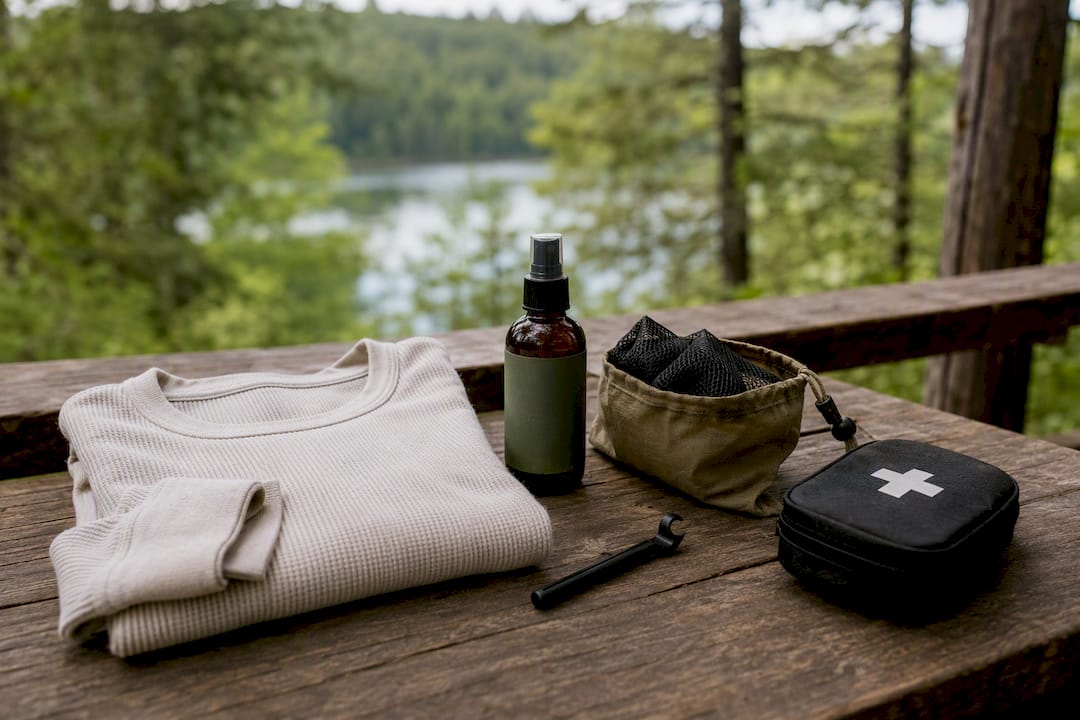
Weight matters on any Lapland trek, so prioritize by what actually earns its space in your bag.
Essentials:
- DEET or icaridin repellent, sized for the trip length
- A head net (pack two if traveling with a companion)
- Long-sleeve, quick-dry layers
- Wool or synthetic socks and lightweight gloves
Worth the extra grams:
- A compact mosquito hat if you expect long still evenings
- Small smoke coils for a private terrace or campsite
- A heat-based bite-relief pen
- A spare mesh panel for older huts
Nets and mesh compress down to almost nothing, so there’s little reason to leave them behind. Repellent volume and clothing layers are where you’ll actually make weight tradeoffs depending on your route.
Treating Bites and Knowing When to Get Help
Most Lapland mosquito bites need nothing more than basic care. Wash the area, apply a cool compress, and use a topical anti-itch cream or gel. A heat-based bite-relief pen is a reasonable non-prescription option some travelers carry for immediate relief on the trail.
Seek medical attention if you notice:
- Swelling that spreads well beyond the bite site
- Fever or flu-like symptoms following multiple bites
- Signs of a severe allergic reaction, including difficulty breathing
On disease risk, Finland-based reporting is reassuring: Lapland mosquitoes are not known to transmit common human diseases, and abundance itself varies enormously year to year depending on winter severity and spring snowmelt. If you’re still concerned about a bite’s appearance or your reaction to it, contact local health services rather than guessing.
How Sundaymorning Builds Mosquito Comfort Into the Lapland Stay
We chose our locations in Pyhä-Luosto with more than views in mind. Open, wind-exposed positioning and screened terraces aren’t an afterthought here. They’re part of why a summer evening outdoors still feels relaxed rather than defensive.
A guest shouldn’t have to choose between eating dinner outside and getting bitten repeatedly. Site selection and screened spaces solve that trade-off before it becomes a problem.
If you’re booking a summer stay, ask about screened dining areas or sheltered outdoor seating when you arrive, and still bring a light head net and repellent for excursions off the property. Our luxury accommodation in Lapland sits in terrain chosen partly for airflow, and travelers who prefer to skip räkkä season altogether often look at our Arctic winter getaway package instead, when the fells are snow-covered and mosquitoes aren’t a factor at all.
What the Conventional Advice Gets Wrong
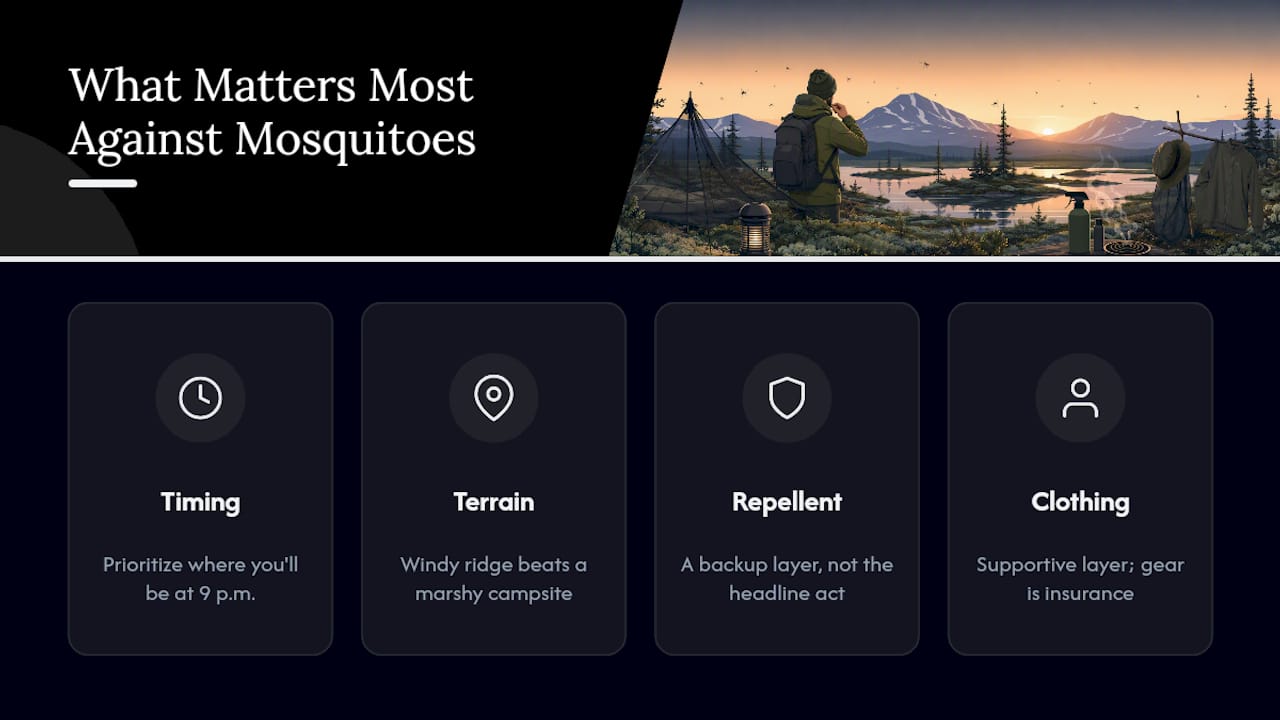
Most mosquito advice for Lapland treats gear as the whole answer: buy the strongest repellent, get the finest-mesh net, and you’re covered. That’s backward. The research and expert reporting behind this guide point to timing and terrain as the bigger levers, with repellent and clothing as the backup layer, not the headline act.
I’d also push back on the idea that räkkä season is a fixed, predictable window you can circle on a calendar months in advance. It isn’t. Snowmelt and weather move the peak weeks enough that a trip planned for “late June” one year could land right in the thick of it, or miss it entirely, depending on how the spring played out.
If you take one thing from this guide, prioritize where you’ll be standing at 9 p.m., not what’s in your pack. A windy ridge with basic repellent beats a marshy campsite with premium gear every time. Gear is insurance. Location is strategy.
— Juho
Sources
A few references are worth checking again closer to your travel dates, since räkkä timing shifts yearly:
- Parhaat keinot torjua hyttysiä: Lapin luonnossa liikkuvat kertovat vinkit (Ilta-Sanomat)
- Levi
- Hyttysten vihaajille hyviä uutisia – lauha talvi vei mukanaan miljoonia hyttytoukkia (Yle)
Check a current local forecast or your destination’s tourism page before departure, since räkkä conditions can shift within a single season.
Recommended
- Lapland Travel Guide Finland | Plan Your Arctic Trip | Sunday Morning Collection
- Lapland experiential travel guide 2026: eco luxury Arctic | Sunday Morning Collection
- Autumn Foliage in Finnish Lapland: Discover Ruska | Sunday Morning Collection
- Boutique Resort in Pyhä, Lapland | Sunday Morning Collection
