


TL;DR:
- Unique retreat activities focus on engaging, hands-on experiences that foster connection and personal growth. The most memorable activities include nature immersion, creative workshops, and physical challenges, tailored to the environment. Balancing structured programs with ample unstructured time creates meaningful experiences that participants will remember for years.
Unique retreat activities are specialized experiences designed to enhance connection, creativity, and well-being beyond standard retreat agendas. The best retreat programs go far beyond passive seminars or generic yoga sessions. They combine nature immersion, creative workshops, and adventure challenges to create moments that participants remember for years. This unique retreat activities list covers the full range, from sound healing circles to Arctic snowshoeing, so you can build a retreat that genuinely transforms how people feel and connect. Whether you are planning a solo wellness escape or a group bonding experience, the right mix of activities makes all the difference.
1. What belongs on a unique retreat activities list?
Unique retreat activities are purpose-built experiences that go beyond what participants could easily do at home or in a hotel conference room. They prioritize engagement, emotional safety, and genuine skill-building over passive consumption. Successful retreats focus on “reset” rather than “output,” creating space for experimentation without pressure to produce finished work. That framing changes everything about how you design a program.
The best retreat activity ideas share three traits: they are hands-on, they connect participants to each other or to their environment, and they leave people with something they can carry home. Activities that check all three boxes consistently outperform passive formats. 70% of participants report significantly higher engagement with structured, interactive activities versus passive retreats. That gap is large enough to treat active programming as a non-negotiable.
2. Creative pottery and natural pigment workshops
Hands-on craft sessions are among the most effective creative retreat activities because they require full attention and produce visible results within hours. Pottery, watercolor painting, sketchnoting, and textile embroidery all work well in retreat settings. Each medium demands enough focus to quiet mental chatter, which is exactly the mental reset most participants are seeking.
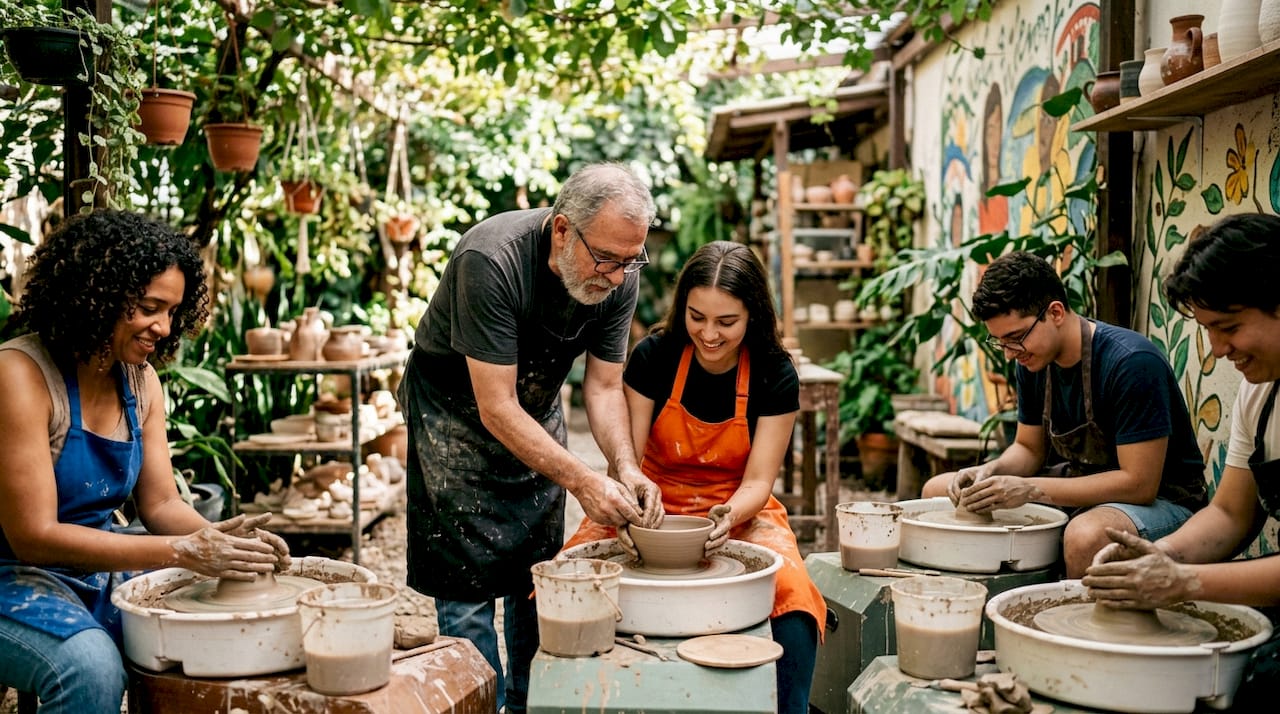
Themed travel retreats focused on specific craft techniques like natural pigment making or textile embroidery are increasingly popular. The appeal is clear: participants learn a real skill rather than attending a generic team exercise. Natural pigment workshops, where participants grind local minerals and plants into paint, are particularly memorable because the materials come directly from the surrounding landscape.
Pro Tip: Send participants home with a small kit of materials from the workshop. Welcome kits with creative materials encourage people to continue practicing new skills after the retreat ends, extending the experience well beyond the final day.
3. Open studio and choose-your-own workshop formats
Rigid schedules frustrate creative people. Open studio formats give participants a block of time and a room full of materials, then step back. This structure suits introverts who want to work quietly alongside others without being forced into group exercises. It also suits extroverts who naturally drift toward collaboration.
Boutique creative retreats typically cap attendance at 30–40 participants to maintain a personalized atmosphere. Smaller groups allow facilitators to give individual attention, which raises the quality of the experience considerably. When you combine an open studio with one or two optional skill sessions per day, you create a program that feels both free and supported.
4. Forest bathing and nature immersion sessions
Forest bathing, known formally as Shinrin-yoku in Japanese wellness practice, is a guided slow walk through natural surroundings with the specific goal of sensory awareness rather than physical exercise. It is one of the most effective mindfulness retreat exercises available because it requires no prior experience and works across all fitness levels. The practice reduces cortisol levels and lowers blood pressure, making it a strong anchor activity for wellness-focused retreats.
Retreats that address burnout through digital detox and community building are among the most successful formats right now. Forest bathing delivers both. Participants leave their phones behind, move slowly, and talk quietly or not at all. The contrast with daily life is immediate and powerful.
5. Sound healing and breathwork circles
Sound healing uses instruments like singing bowls, gongs, and tuning forks to create vibrations that participants experience physically as well as aurally. It is a genuinely unconventional retreat option that surprises most first-timers. Many participants describe it as the most relaxing hour of their entire year.
Breathwork sessions, particularly techniques like box breathing or the Wim Hof method, pair well with sound healing because both work through the nervous system rather than the muscles. Offering these as optional morning or evening sessions respects the fact that not every participant wants the same intensity. Local culture and wellness programming at Sundaymorning in Finnish Lapland integrates this kind of body-centered practice with the natural Arctic environment, which amplifies the effect considerably.
6. Qi gong and mindful movement at dawn
Qi gong and tai chi are slow, flowing movement practices rooted in Chinese wellness traditions. They work exceptionally well as morning retreat activities because they are gentle enough for all fitness levels and set a calm, focused tone for the rest of the day. Unlike high-intensity exercise, they do not deplete energy. They build it.
Group sharing circles and gratitude rituals fit naturally after a qi gong session. The physical practice opens people up emotionally, making the verbal sharing feel less forced. This sequence, movement followed by reflection, is one of the most reliable formats for building genuine group connection on a retreat.
7. Guided snowshoeing and Arctic nature hikes
Nature adventure retreats gain enormous power from location. Matching activities to location energy greatly enhances participant experience and engagement. A snowshoe hike through a snow-covered national park delivers something a city-based scavenger hunt simply cannot: genuine silence, scale, and the feeling of being small inside something vast.
Guided hikes work for group bonding activities because they create shared physical effort without competition. Everyone moves at a pace that works for the group. Conversations happen naturally on the trail in ways they rarely do in a conference room. Sundaymorning’s location inside Pyhä-Luosto National Park makes guided snowshoe hikes a natural centerpiece for winter retreat programs in Finnish Lapland.
8. Raft building and survival cooking challenges
Physical team challenges like raft building or survival cooking push groups out of their comfort zones in a controlled, safe way. The key is that the challenge requires genuine collaboration. No single person can complete it alone. That dynamic builds trust faster than almost any other team building retreat idea.
Survival cooking, where groups prepare a meal using only fire, basic tools, and locally foraged ingredients, adds a culinary dimension that connects participants to the environment. Culinary experiences in travel settings create strong memories precisely because food engages all five senses at once.
Pro Tip: Balance high-intensity challenges with genuine rest periods. Back-to-back physical activities without recovery time leads to fatigue rather than bonding. Schedule at least 90 minutes of unstructured time after any physically demanding session.
9. Geocaching and nature-themed photo walks
Geocaching, the practice of using GPS coordinates to find hidden objects in natural settings, turns any landscape into an adventure. It works as a group bonding activity because it combines problem-solving, navigation, and physical movement. Teams develop their own strategies, which reveals personality dynamics in a low-stakes, enjoyable way.
Nature-themed photo walks are a quieter alternative. Participants receive a list of subjects to photograph, from frost patterns on bark to animal tracks in snow, and spend an hour moving through the landscape with genuine attention. The resulting images make excellent shared memories and often surprise participants with how much beauty they had been walking past without noticing.
10. Northern Lights watching as a group ritual
Watching the Northern Lights together is one of the most powerful shared experiences available on a nature adventure retreat. The event is unpredictable, which means the group must wait together, often in cold and darkness, before the reward arrives. That shared anticipation creates a bond that structured activities rarely match.
Sundaymorning’s Northern Lights Retreat in Finnish Lapland is built around exactly this kind of experience. The combination of waiting, witnessing, and then gathering afterward to share reactions creates a natural group ritual. It is the kind of moment that participants describe to friends for years.
11. Practical tips for tailoring activities to diverse groups
The most common mistake in retreat planning is over-scheduling. Balancing structured time with 30–50% unstructured free periods prevents burnout and encourages organic socializing. Participants need time to process what they have experienced, rest, and connect informally.
Here is a practical framework for building an inclusive program:
- Offer 3–4 optional workshops daily rather than mandatory group sessions. Optional workshops respect diverse energy levels and preferences, which raises overall satisfaction.
- Mix activity types across each day. Alternate between physical, creative, and reflective activities so participants with different preferences each find something that resonates.
- Match activities to your location. A lakeside retreat calls for paddleboarding and open-water swimming. An Arctic forest retreat calls for snowshoeing and fire-making. The environment should shape the program, not the other way around.
- Use themed days to add structure without pressure. A “creativity day” or a “nature day” gives the schedule a coherent feel without locking participants into mandatory attendance.
- Prepare welcome kits. A small bag of materials related to the retreat’s theme, whether art supplies, a journal, or a local ingredient, signals care and sets expectations from the first moment.
Travelers increasingly seek personalized, niche retreat experiences that cater to specific interests and facilitate unplugging from digital fatigue. A program that offers genuine choice, rather than a single mandatory agenda, meets that expectation directly.
Key takeaways
The most effective retreat programs combine hands-on creative activities, nature immersion, and optional wellness sessions within a schedule that reserves at least 30–50% of time as unstructured.
| Point | Details |
|---|---|
| Prioritize active programming | Interactive activities drive significantly higher engagement than passive formats. |
| Build in unstructured time | Reserve 30–50% of the schedule for free time to prevent burnout and encourage organic connection. |
| Match activities to location | The environment should shape the program; Arctic, forest, and lakeside settings each call for different experiences. |
| Offer optional workshops | Giving participants 3–4 daily choices respects diverse energy levels and raises overall satisfaction. |
| Send participants home with materials | Welcome kits and takeaway supplies extend the retreat’s impact well beyond the final day. |
What I have learned about curating retreat experiences
A note from Juho on what actually makes retreats memorable
The retreats I have seen work best are never the ones with the longest activity lists. They are the ones where participants feel safe enough to try something they would normally avoid. That emotional safety does not come from a perfectly designed schedule. It comes from the environment and the people facilitating it.
The biggest mistake I see is treating a retreat like a conference with better scenery. When every hour is filled with structured content, participants never get the chance to process what they are experiencing. The conversations that matter most happen during the unscheduled walk before dinner or the quiet hour by the fire after the evening session.
Nature does a lot of the work when you let it. Placing people in a genuinely wild setting, somewhere with real weather, real silence, and real darkness, strips away the performance most of us maintain in daily life. That is when authentic connection becomes possible. I have watched groups who struggled to communicate in a workshop find genuine rapport on a snowshoe trail an hour later.
My honest advice: resist the urge to fill every gap. Choose five or six activities that are genuinely excellent rather than ten that are merely good. Give participants real choices. And pick a location that does some of the heavy lifting for you. The Arctic does that particularly well.
— Juho
Plan your retreat at Sundaymorning in Finnish Lapland
Sundaymorning offers luxury accommodation in Lapland inside Pyhä-Luosto National Park, where the landscape itself becomes part of your retreat program. The boutique Sunday Morning Resort and Parkside Pyhä Apartments provide a warm, comfortable base for groups seeking authentic Arctic experiences combined with genuine comfort.
The Arctic Winter Getaway Package combines guided outdoor activities, Nordic sauna sessions, gourmet local cuisine, and Northern Lights experiences into a ready-made retreat framework. Whether you are planning a group wellness escape, a creative gathering, or a corporate retreat, Sundaymorning’s team can help you build a program that fits your group’s needs and energy. Packages are available for couples, families, and corporate groups, with sustainable practices built into every experience.
FAQ
What makes a retreat activity truly unique?
A unique retreat activity goes beyond what participants can easily access at home. It combines hands-on engagement, a distinctive setting, and a clear benefit, whether that is creative expression, physical challenge, or genuine relaxation.
How many activities should a retreat program include?
Offering 3–4 optional activities per day, rather than a single mandatory agenda, gives participants real choice and prevents fatigue. Reserve at least 30–50% of the schedule as unstructured time.
What are the best group bonding activities for retreats?
Physical challenges like guided hikes, raft building, and geocaching build group cohesion quickly because they require genuine collaboration. Shared experiences in nature, like watching the Northern Lights together, create lasting bonds.
Are creative workshops effective for wellness retreats?
Yes. Hands-on creative activities like pottery, watercolor painting, and natural pigment making produce a meditative focus that supports mental reset. They work well alongside traditional wellness practices like breathwork and forest bathing.
What is the ideal retreat setting for unique activities?
The best settings match the activities you plan to offer. Arctic and forest environments support nature immersion, snowshoeing, and fire-based challenges. Aligning activities with location maximizes participant engagement and enjoyment.
