


TL;DR:
- Planning luxury events in Lapland requires embracing the environment’s unique challenges and advantages to create authentic, responsible experiences. Key steps include early, long-term logistics planning, implementing recognized sustainability standards, and designing adaptable itineraries that leverage local partnerships. Genuine Arctic luxury stems from operational flexibility, local sourcing, and measurable environmental commitment, ensuring memorable events that honor both landscape and guests.
Many planners assume that staging a high-end event in the Arctic means choosing between an unforgettable experience and responsible stewardship of a fragile environment. That assumption is wrong. Lapland, and Finnish Lapland in particular, offers a genuinely rare combination: pristine wilderness, rich cultural traditions, world-class local cuisine, and a growing ecosystem of operators who treat sustainability as a core operating standard, not an afterthought. This article gives you concrete frameworks, practical tools, and honest perspective so you can plan an Arctic event that is both deeply luxurious and genuinely responsible.
Table of Contents
- What makes Arctic event planning unique?
- Prioritizing sustainability at every stage
- Low-carbon and local: Operationalizing authenticity
- Arctic-specific logistics and safety: From timing to contingency planning
- Benchmarking and measuring impact: What actually works?
- Our perspective: Why true Arctic luxury means mastering adaptability
- Partner with Arctic event experts for your next luxury retreat
- Frequently asked questions
Key Takeaways
| Point | Details |
|---|---|
| Logistics take time | Arctic events require long lead times for successful coordination and compliance. |
| Sustainability is proactive | Measuring and reporting emissions and waste is essential at every planning stage. |
| Authenticity boosts impact | Local sourcing and genuine partnerships create both memorable and responsible experiences. |
| Adaptability is critical | Flexible planning for weather and logistical surprises is the secret to Arctic event success. |
What makes Arctic event planning unique?
Planning a luxury gathering in Lapland is not simply a colder version of planning one in Paris or Singapore. The environment shapes every decision, from the moment you choose a venue to the final guest transfer.
The biggest immediate realities are:
- Remoteness and infrastructure: Road access to the most spectacular locations in Finnish Lapland is limited, and certain activities depend entirely on seasonal conditions like snow depth and ice thickness.
- Weather unpredictability: Blizzards, sudden temperature shifts, and the polar night all demand flexible schedules and robust backup plans.
- Environmental compliance: Protected areas inside Pyhä-Luosto National Park require permits, adherence to nature conservation rules, and careful waste management.
- Long logistics chains: Specialty food, audio-visual equipment, and décor often travel long distances, making lead time critical.
At the same time, these very challenges create advantages that no urban venue can replicate. Exclusivity is built into the setting. Guests arrive knowing they are somewhere genuinely rare. The pristine environment sets an emotional tone that no amount of staging budget can manufacture indoors. And authentic cultural elements, from reindeer herding traditions to Sámi joik music, create moments guests remember for years.
“Arctic experiences require ‘low-carbon and local’ operational choices.” — This is Arctic code of conduct
Understanding the unique event benefits in Lapland early in your planning process will help you align your event concept with what this environment genuinely delivers, rather than trying to import a concept that fights against it.
One often overlooked detail is that planning timelines should include long lead times for logistics feasibility, environmental compliance, and third-party coordination, according to NSF’s Arctic Research Support and Logistics program. In practice, this means that events with more than thirty guests in remote Lapland locations should begin detailed planning at least twelve to eighteen months ahead.
Prioritizing sustainability at every stage
With these unique factors in mind, the next challenge is integrating genuine sustainability into every facet of your event. This is not about greenwashing your event with a few recycling bins. It means treating sustainability the way serious operators treat safety: as a structured operational discipline with measurable outcomes.
The most effective sustainability frameworks for Arctic events draw on recognized standards:
| Framework | What it covers | Why it matters for events |
|---|---|---|
| ISO 14001 | Environmental management systems | Ensures systematic control of emissions, waste, and resource use |
| ISO 9001 | Quality management | Structures supplier vetting and service consistency |
| ISO 26001 | Social responsibility | Guides community engagement and local sourcing decisions |
| Eco Lighthouse certification | Operational sustainability for Nordic businesses | Demonstrates verified commitment beyond self-reporting |
Leading Arctic operators treat sustainability as a risk-and-operations discipline, focusing on the biggest emission drivers, typically vehicles, using certified processes, and measuring and reporting emissions and waste through a designated platform. This is the standard you should expect from any partner you choose.
For your event specifically, the biggest emission categories are almost always:
- Guest transportation to and from Lapland (flights and ground transfers)
- On-site activity vehicles such as snowmobiles and coaches
- Accommodation energy use during cold-weather operations
- Food and beverage sourcing, particularly items shipped from outside the region
Pro Tip: Before signing any supplier contract, ask providers to share their emissions measurement methodology and their most recent environmental report. A credible provider will have this ready. One who cannot produce it is not ready to be a part of a genuinely responsible event.
Sourcing local cuisine is one of the most satisfying ways to reduce emissions while elevating the guest experience. Wild Arctic berries, locally caught fish, reindeer dishes prepared by skilled Finnish chefs, and foraged herbs are not just low-carbon. They are the kind of authentic, place-specific food your guests cannot find anywhere else. Explore Lapland sustainability in action to understand how local sourcing becomes a genuine competitive advantage rather than a compromise.
Low-carbon and local: Operationalizing authenticity
A true hallmark of modern Arctic event planning is designing every detail for low-carbon impact while elevating the local experience. The goal is not to restrict your event but to make every operational choice count in two directions at once: for the environment and for guest delight.
Here is a practical numbered checklist for operationalizing this approach:
- Audit your activity providers. Ask each operator how they minimize carbon output. Do they use electric snowmobiles where available? Do they offset fuel use? Do they hire locally?
- Consolidate guest transfers. Shared transport from Rovaniemi or Kemijärvi airports eliminates the single largest per-guest emission source in ground logistics.
- Rent and reuse gear. Avoid importing single-use Arctic clothing kits. Partner with local outfitters who rent high-quality gear that is cleaned, maintained, and reused season after season.
- Eliminate single-use plastics. Replace packaged snacks and plastic water bottles with reusable thermoses, locally sourced food stations, and biodegradable packaging.
- Book activity operators from the local community. A reindeer safari run by a local Sámi family delivers cultural authenticity and economic benefit simultaneously.
- Report, don’t just promise. Collect data during the event and produce a simple impact summary for your stakeholders after.
Arctic event execution should operationalize low-carbon and local behaviors throughout: gear reuse and rental, low-carbon transport choices, local operators, and reduced waste at every touchpoint.
The table below compares traditional and low-carbon event approaches side by side:
| Element | Traditional approach | Low-carbon and local approach |
|---|---|---|
| Guest transport | Individual taxis and rental cars | Shared coaches, electric transfers |
| Activity gear | Imported single-use kits | Locally rented, reused quality gear |
| Catering | International food suppliers | Local Finnish producers and foragers |
| Activities | Any available operator | Vetted local and Sámi-run experiences |
| Waste handling | Standard disposal | Pre-sorted recycling, composting |
Pro Tip: When planning luxury Arctic experiences, brief your guests before arrival. A short pre-event communication about shared transport arrangements, gear rental, and local dining not only sets expectations but builds genuine excitement about the authentic experience ahead.
Arctic-specific logistics and safety: From timing to contingency planning
Once the operational heart of your event is established, the secret to success is how you plan for inevitable surprises. The Arctic does not negotiate with fixed schedules. Ice conditions change overnight. A snowstorm can delay ground transfers by hours. Northern Lights appearances are never guaranteed on any particular night.
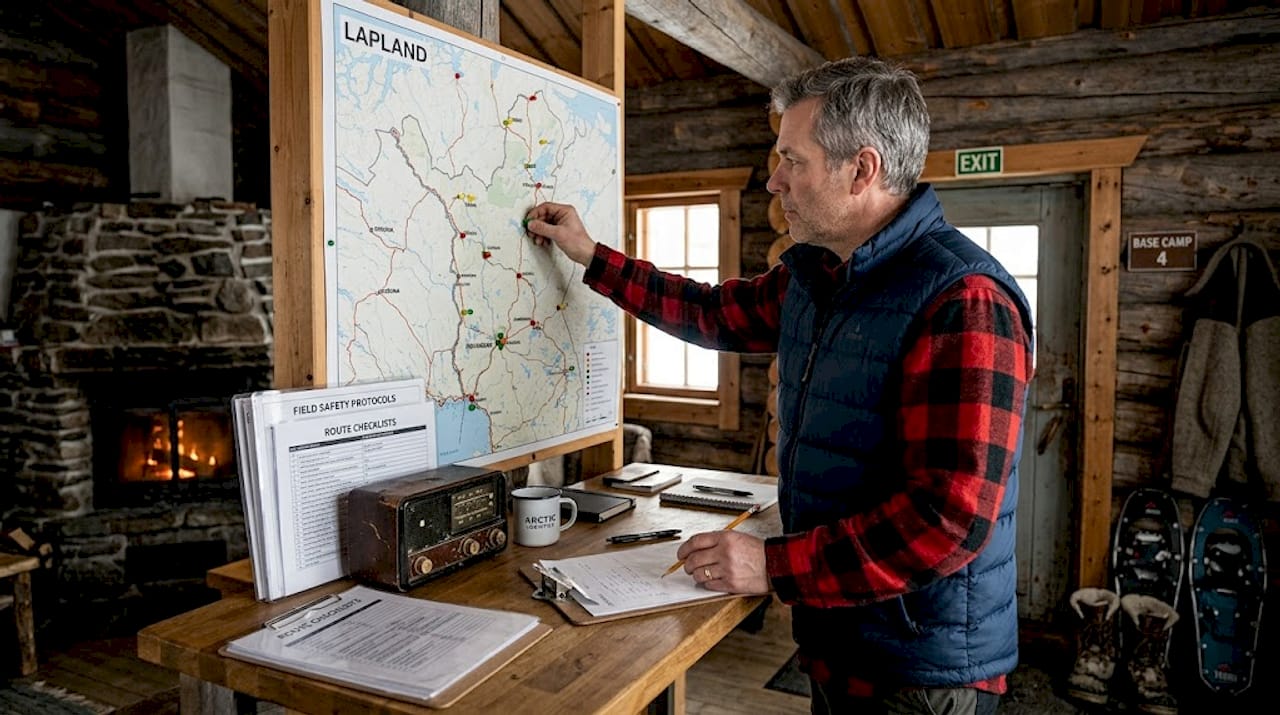
The most resilient event planners build adaptive flexible itinerary strategies directly into their program, not as a fallback but as a feature. When guests understand that the schedule breathes with the environment, they experience the Arctic on its own terms, which is actually more memorable than a rigid timeline.
Key logistical steps for Arctic event safety and resilience:
- Start planning twelve to eighteen months out. Long lead times for logistics feasibility, environmental compliance, and third-party coordination are not optional in the Arctic. They are the standard.
- Coordinate all third-party providers early. Activity operators, catering teams, transport companies, and accommodation staff must all be briefed on each other’s roles and timelines.
- Run tabletop exercises. Before the event, walk through “what if” scenarios with your core team: what happens if the road from the airport closes, if a key activity cannot run, or if a power outage affects the venue?
- Establish digital security protocols. Remote venues often rely on satellite connectivity, which can be disrupted. Have offline backup versions of all critical event documents, schedules, and guest information.
- Prepare safety and health checklists. Review safety and health checklists adapted for cold-climate conditions, covering hypothermia risk, frostbite awareness, and emergency contact protocols.
“Many Arctic areas remain uncharted to modern standards. Planning should include extensive voyage planning, emergency procedures, and appropriate survival equipment.” — Arctic Council advisory
For events that include any activity on frozen lakes or waterways, this advisory is especially relevant. Always confirm with local operators that ice thickness has been professionally measured and that safety protocols including rescue equipment are in place before any guest activity begins.
Comprehensive Lapland adventure planning tips for families and corporate groups consistently show that the events guests remember most fondly are the ones where something unexpected happened and the team handled it beautifully. That is only possible with contingency plans built in from the start.
Benchmarking and measuring impact: What actually works?
Last, bringing clarity to your event’s impact requires more than a simple checklist. It demands real data and adaptive modeling.
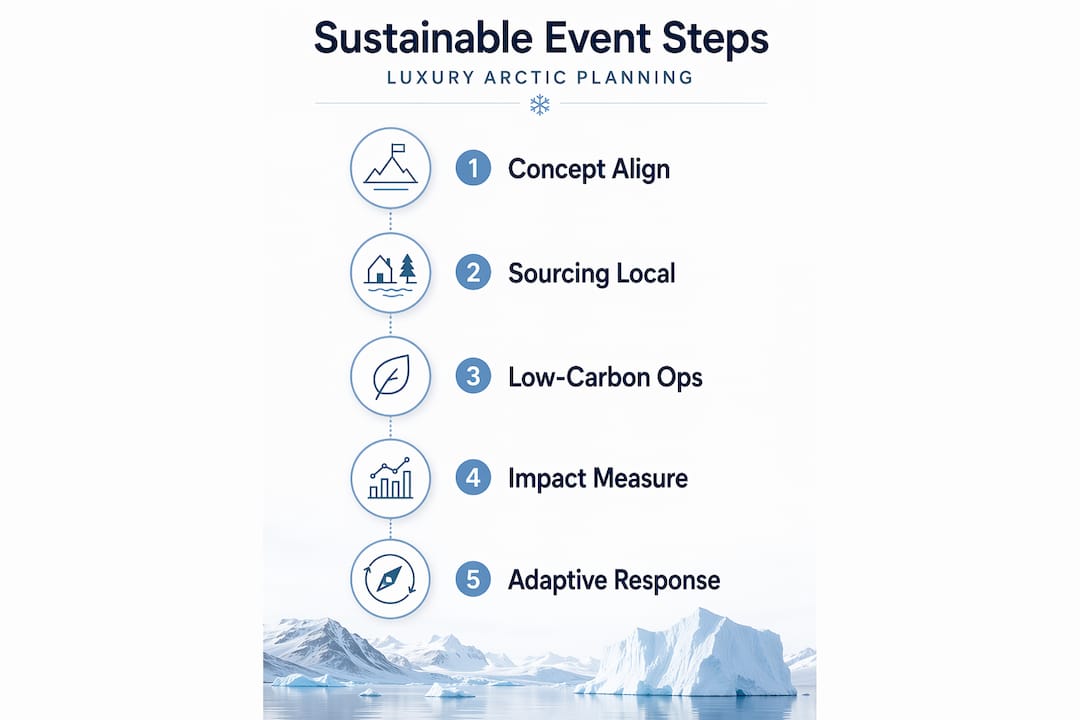
Static benchmarks, such as “one ton of CO2 per guest,” rarely reflect the complexity of an Arctic event. The right approach is scenario-based measurement: modeling different transport combinations, accommodation options, and activity mixes before the event to understand which choices deliver the most meaningful reductions.
Key areas to measure during and after your event:
- Transport emissions: Total kilometers traveled per guest, mode of transport, and fuel type
- Energy consumption: Accommodation and venue energy use during the event period
- Waste generation: Total waste by category, diversion rate from landfill
- Local spend: Percentage of total event budget directed to local Lapland suppliers
| Measurement area | Data to collect | Tool or method |
|---|---|---|
| Transport emissions | Distance, mode, headcount | Carbon calculator or provider data |
| Energy use | kWh consumed at venue | Utility meter readings |
| Waste volume | Kg per waste category | On-site waste audit |
| Local economic impact | Supplier invoices by origin | Budget breakdown by geography |
A 2025 study using a system dynamics model confirmed that empirical benchmarks for emissions policy effectiveness in Arctic contexts require scenario-based evaluation rather than fixed standards. For event planners, this means building measurement into your event design from the start, not adding it as a post-event reporting task.
Collecting this data also makes future events better. Year-on-year comparison lets you identify where your event is improving and where you still have opportunities to reduce impact or increase local value.
Our perspective: Why true Arctic luxury means mastering adaptability
Bringing all these lessons together, here’s what years of Arctic event experience have revealed. The single most common misconception among first-time Lapland event planners is that a larger budget automatically produces a better outcome. It does not.
We have seen beautifully funded events fall flat because the planning team tried to control every variable in an environment that simply will not allow it. And we have seen modest events become unforgettable because the team trusted their local partners, built slack into the schedule, and let the landscape do the work.
The clients who leave Lapland the most satisfied are not the ones who experienced a flawlessly executed agenda. They are the ones whose plans shifted, who ended up watching the Northern Lights from an unplanned roadside stop, or who spent an extra hour in a smoke sauna because the snowstorm made the scheduled activity impossible.
Operational adaptability is not a backup plan. It is the plan. And it only works when you have genuine trust in your local operators, clear communication with your guests, and a team confident enough to pivot without panic.
The evolving event trends in Lapland for 2026 show that MICE and luxury retreat clients are actively seeking this kind of experience. They want to be surprised. They want authenticity. They want to feel the place, not just observe it from a perfectly controlled distance. When your event is designed around adaptability and local partnership, you deliver exactly that.
Partner with Arctic event experts for your next luxury retreat
If you’re ready to turn Arctic event planning insight into unforgettable experience, here’s how to take the next step.
Planning a luxury, sustainable event in Finnish Lapland is genuinely achievable when you work with partners who understand both the environment and the guest experience. At Sunday Morning Finland, we combine boutique accommodation, authentic Nordic cuisine, and a deep network of local activity operators to help you design retreats and corporate gatherings that leave a positive mark on guests and the landscape alike.

Discover luxury retreats in Pyhä designed for groups and couples who want something genuinely different from a conventional hotel package. From snowshoe hikes through Pyhä-Luosto National Park to candlelit reindeer dinners sourced from local farms, every experience is built around authentic place and responsible practice. You can also learn more about our responsibility commitments to understand how we measure and report our own environmental impact.
Frequently asked questions
What are the biggest operational risks in Arctic event planning?
Unpredictable weather, long logistics lead times, and the need for rigorous contingency planning are the top risks. NSF’s Arctic logistics guidance recommends building in extended lead times for environmental compliance and third-party coordination to manage these risks effectively.
How can I make my Arctic event both luxurious and sustainable?
Choose certified local suppliers, prioritize low-carbon transport, and measure emissions and waste throughout your event. Providers who treat sustainability as a risk discipline with ISO certifications and verified emissions reporting are your best partners.
How far in advance should I start planning an event in Lapland?
Begin planning at least one year in advance to ensure logistical feasibility and compliance. Long lead times for logistics, permits, and supplier coordination are standard practice for complex Arctic events.
What should I look for in a responsible Arctic event provider?
Look for ISO or comparable sustainability certifications, transparent emissions reporting, and local community engagement. Providers who report emissions and waste through a verified platform demonstrate operational accountability beyond marketing promises.
How do expert planners handle last-minute changes in the Arctic?
They use adaptive itineraries, maintain strong local partnerships, and have backup plans ready for weather or logistics disruptions. Building “planned flexibility” into the guest experience transforms unexpected changes into moments guests actually celebrate rather than complain about.
Recommended
- Why host events in Lapland for unique luxury success | Sunday Morning Collection
- Top 5 types of Arctic accommodations for luxury stays | Sunday Morning Collection
- Sustainable Lapland Travel, Done Beautifully | Sunday Morning Collection
- Cozy Lapland getaways: luxury, sustainability & Arctic experiences | Sunday Morning Collection
